- Home
- About Us
About Us
Mission – Working together to improve the community’s quality of life by providing safe, secure, efficient, and reliable customer-focused public transportation.
Vision – Sun Tran, Sun Link, and Sun Van enhancing lives through mobility.
Sun Tran’s 50th Anniversary
Past, Present & Future
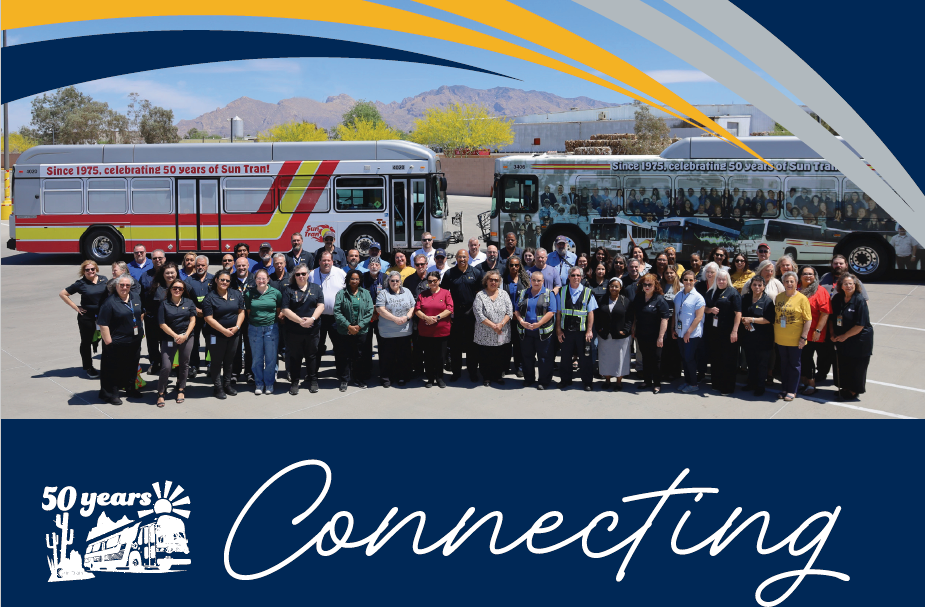
As we celebrate 50 incredible years of serving Tucson, we want to thank you—our riders, employees, and community partners—for being part of this journey. Whether you’ve been with us since our first ride or just hopped on recently, you’re the reason we’ve been able to keep Tucson moving. Here’s to the memories we’ve made together and the road ahead!
Tucson Transit & Sun Tran Journey
Discover the rich history of public transportation in Tucson. This page highlights Sun Tran’s incredible journey since its founding in 1975 and showcases the broader story of transit in Tucson – from horse-drawn carriages and electric streetcars to the modern, innovative network we are today. At Sun Tran, we pride ourselves on being more than just a bus company. We are an integral part of Tucson’s vibrant transit community, connecting people to their destinations, fostering sustainability, and contributing to the city’s growth. Our employees take great pride in their work, helping to make public transit accessible, reliable, and welcoming for all.
Early Transit in Tucson (1870-1960)
Views early transit in Tucson from 1870 – 1966 below.
1879
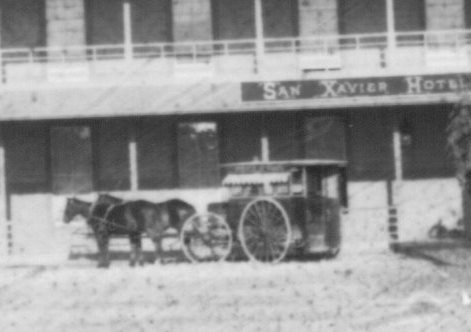
The town of Tucson was served by a herdic line – small two wheeled carriages with rear entrance – operating with a schedule based on passenger demand.
1882
The Tucson Land and Herdic Coach Company was organized and began service on April 30. Regular trips continued until 1888.
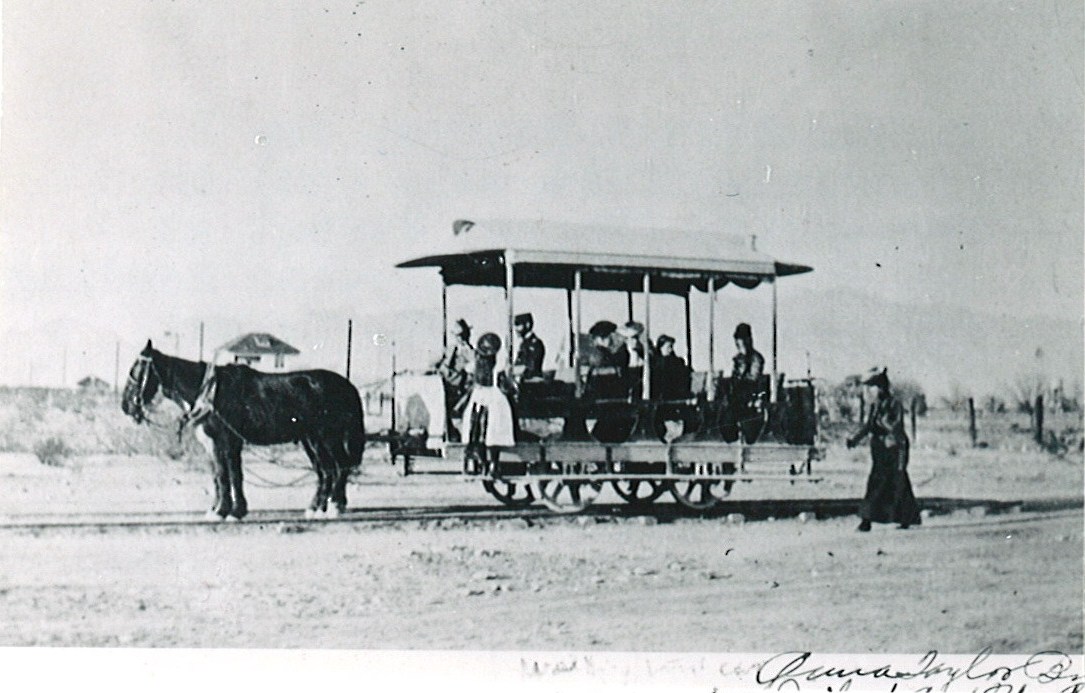
1897
The Tucson Street Railway was organized and regular service began in November 1897. Service to the University of Arizona began in 1898.
Two mule-car routes were in operation by 1900.
By 1903, trackage was extended and a third route was added.
1905-1906
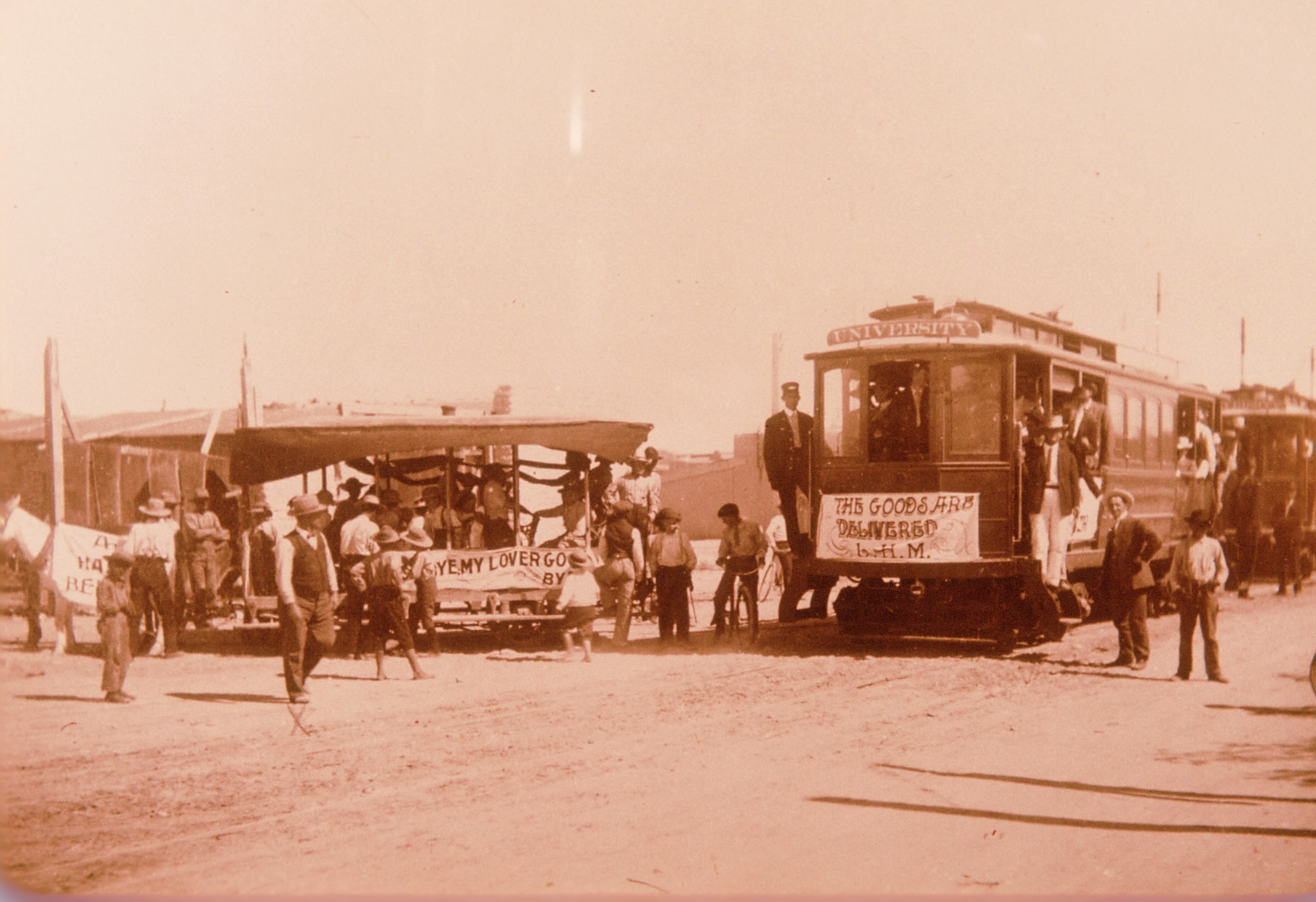
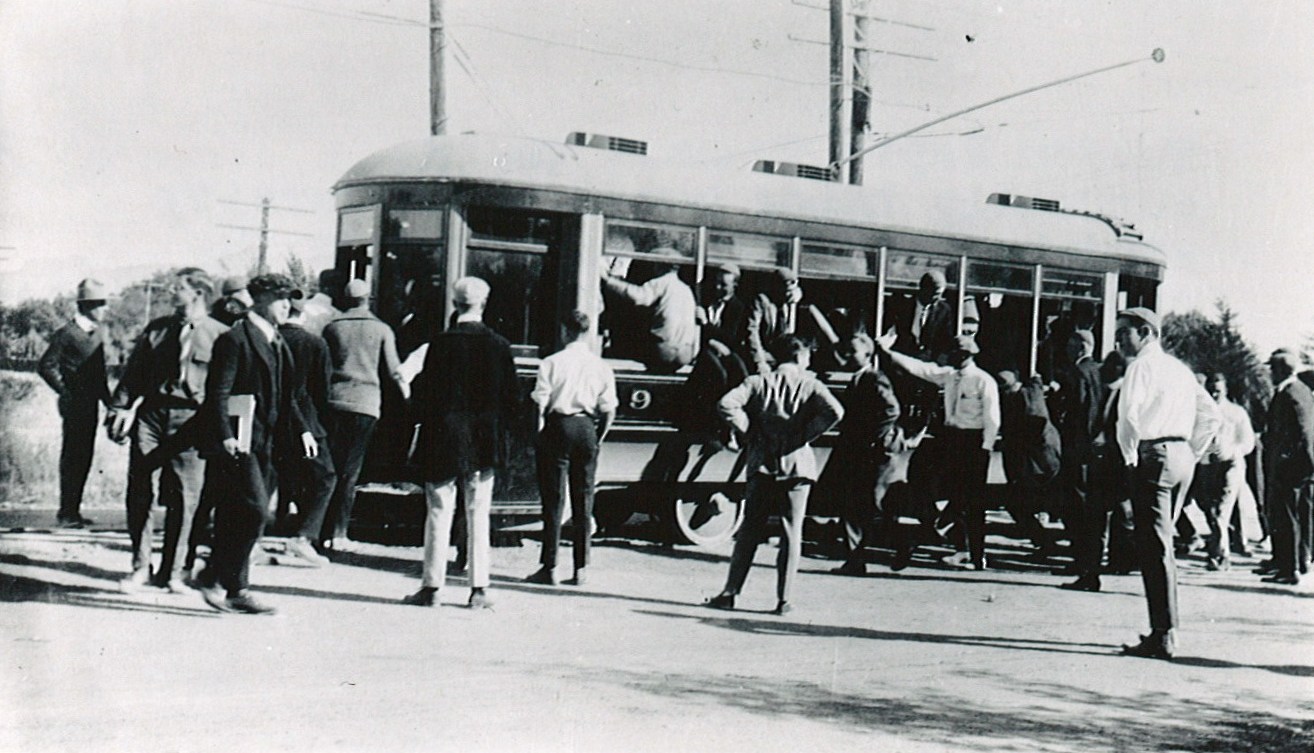
In 1905 the Tucson Street Railway was reorganized as Tucson Rapid Transit Company (TRT)
By 1906, TRT replaced mule powered transit to an electric streetcar system. Electric service began June 1, 1906 with five used streetcars.
1916-1922
In 1916, Shad Bowyer created Blue Bar Auto & Taxi Livery which serviced areas not visited by the streetcars.
In 1918, TRT purchased the Blue Bar Auto & Taxy Livery adding two buses to the streetcar service. After that the buses were only used when streetcar service was interrupted. TRT continued bus service until October 1918. This opened the way for competition.
White Star Bus Line is incorporated in 1922 and competes with TRT by looping around the University of Arizona.
1924-1925
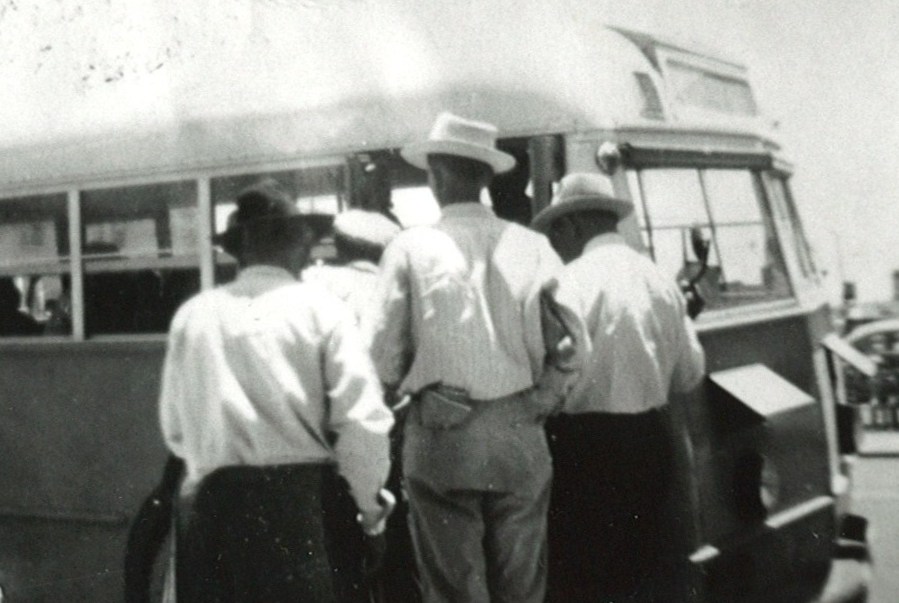
More competition arrived in 1924 by Roy Laos. He started the Occidental Bus Line which served southern and western parts of Tucson. Service began in June 1925 with the first route starting at South Meyer Street/8th Avenue.
In 1925 TRT buys White Star Bus Line and starts permanent bus service around the university.
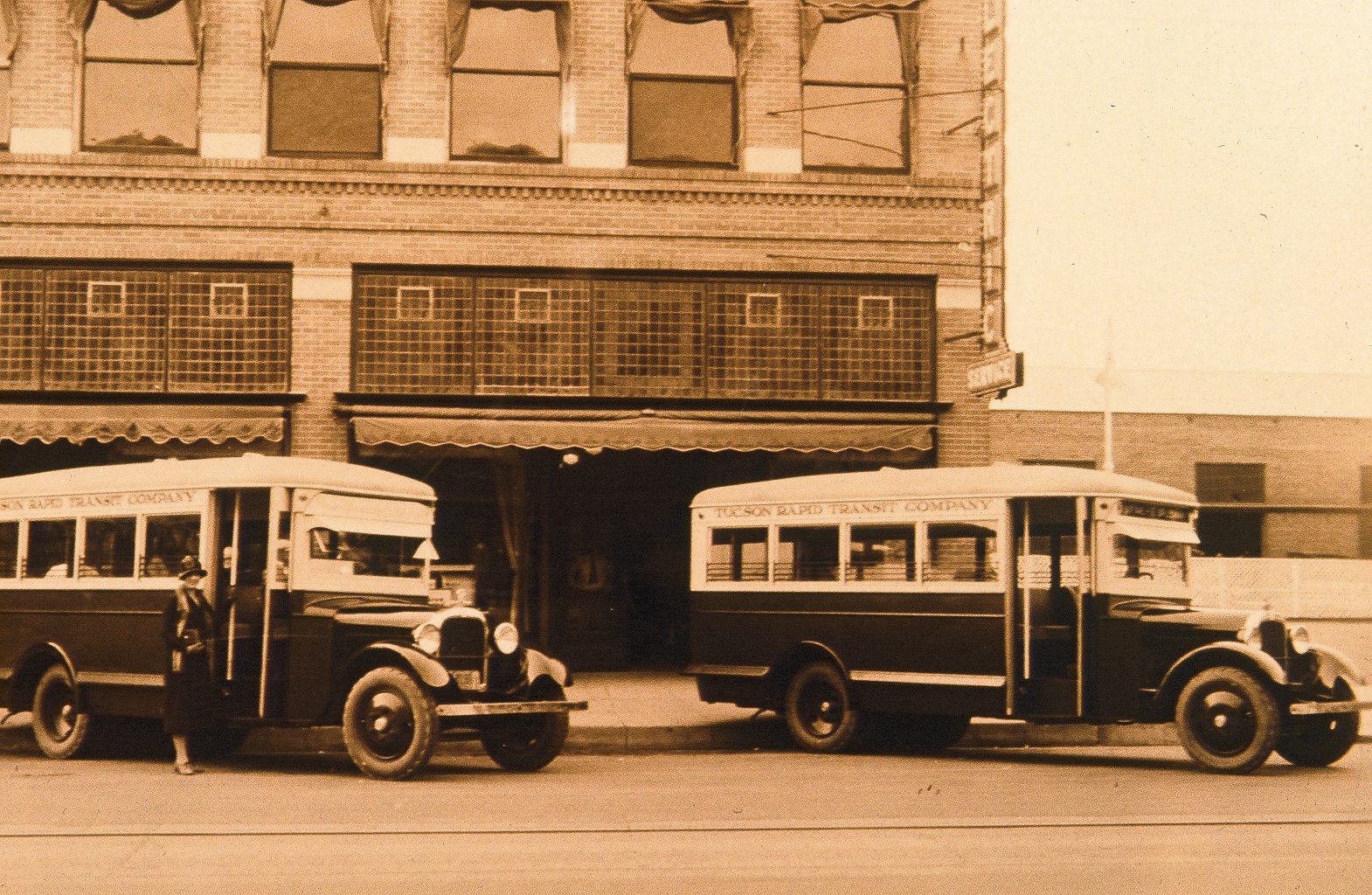
1930
Streetcar service ends December 31, 1930.
The following day buses took over the streetcar runs and TRT began servicing the entire city.
1931-1936
Ridership was dramatically impacted by the Great Depression. In 1933 ridership was less than 500,000.
TRT perseveres despite limited maintenance and aging buses.
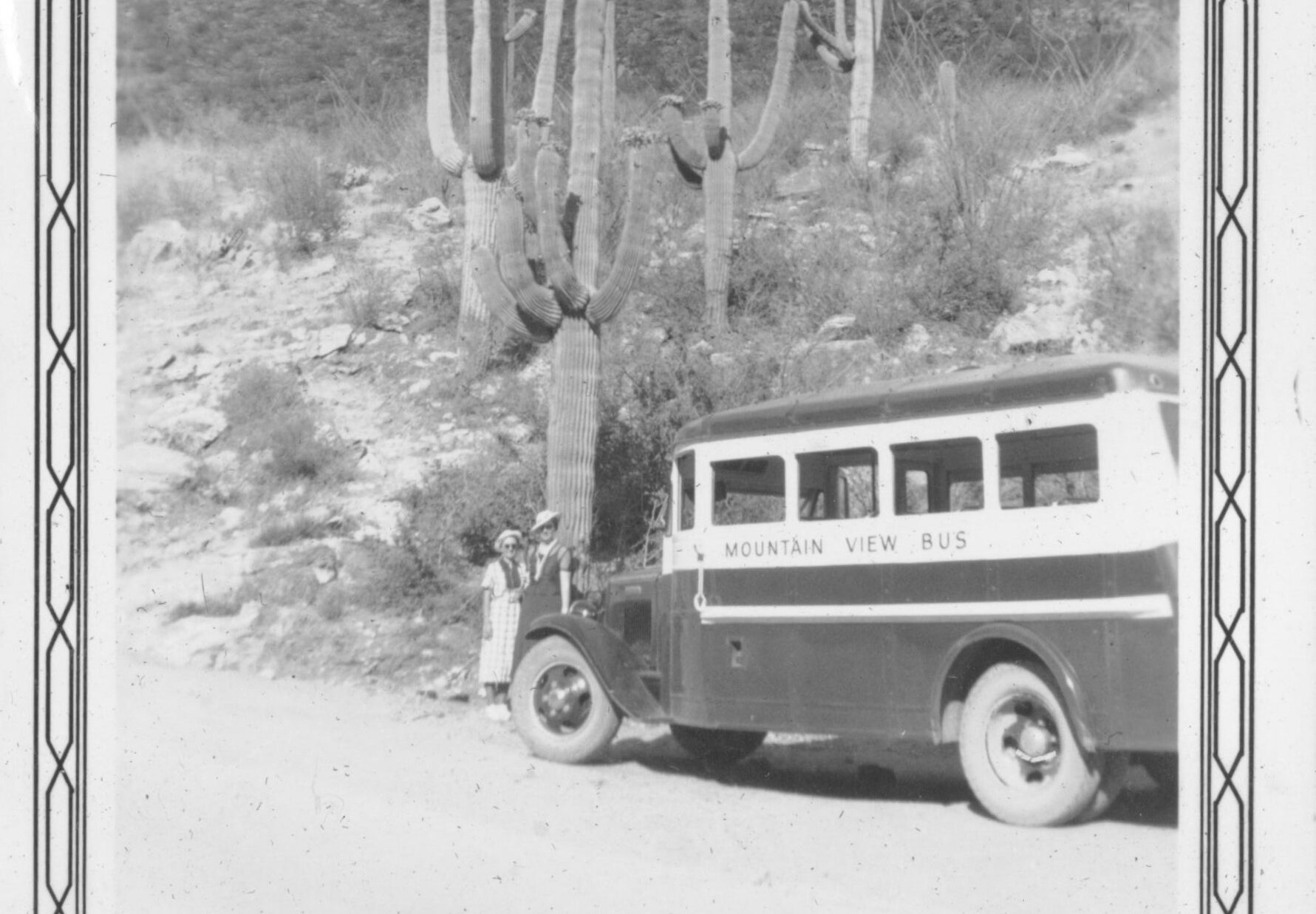
Mountain View Bus Line was established providing suburban service to Tucson Medical Center, Oracle Road and Broadway.
1940-1949
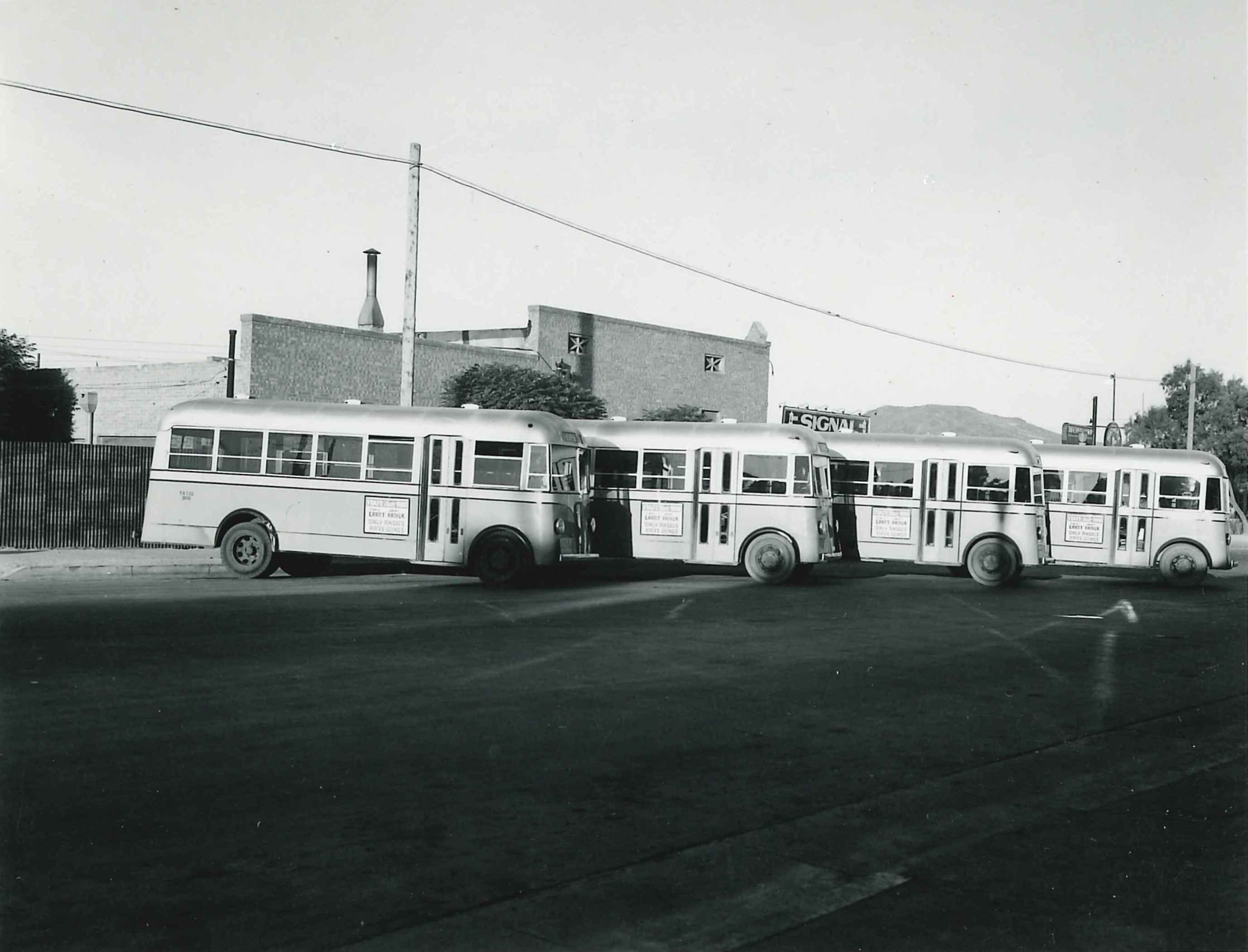
TRT buys Mountain View bus lines and integrates their routes into the TRT system using five additional Yellow Coaches.
During World War II ridership increases to over 7 million and TRT increases their buses from 15 to 38.
TRT gets new ownership which results in a purchase of 21 new buses and extended service.
In 1949 peak ridership reached 8.9 million between TRT and Occidental Bus Line.
Occidental Bus Line becomes Old Pueblo Transit Co.
1950-1966
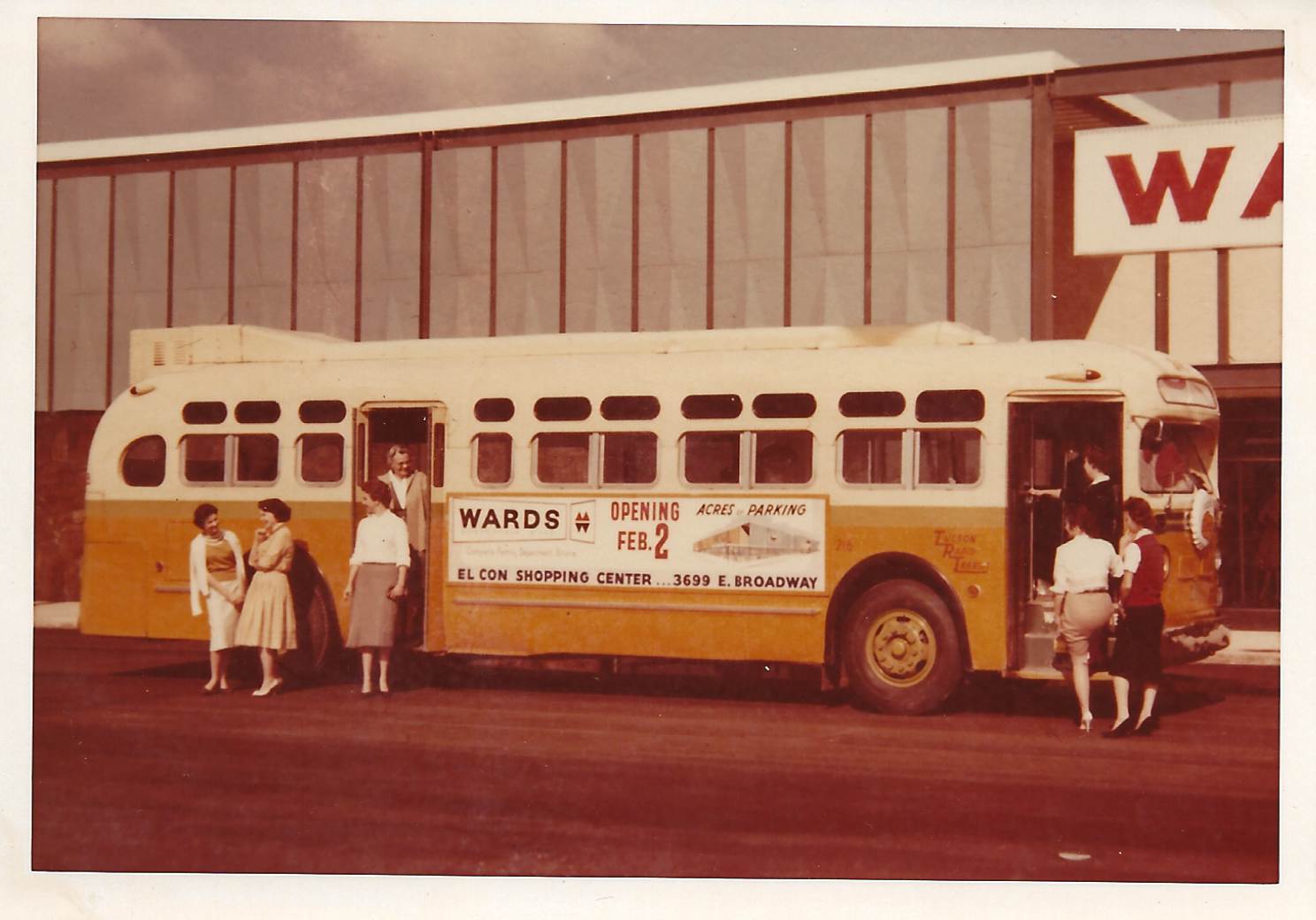
Tucson’s population grows rapidly. Ridership declines dramatically to about 1 million.
Sun Tran’s Beginning (1967 – 1980)
View below the beginning of Sun Tran after the City of Tucson took control of the Tucson Transit Corporation (TTC).
1967
Tucson Rapid Transit Company (TRT) was sold to American Transit Corporation. The first day of operation began February 3, 1967.
After 60 years TRT’s name was changed to Tucson Transit Corporation (TTC).
1969-1973
Ridership continued to decline causing private ownership to end and on January 1, 1969 the City of Tucson assumes control of Tucson Transit Corporation (TTC).
Tucson Transit Corporation was now named City of Tucson Transit System.
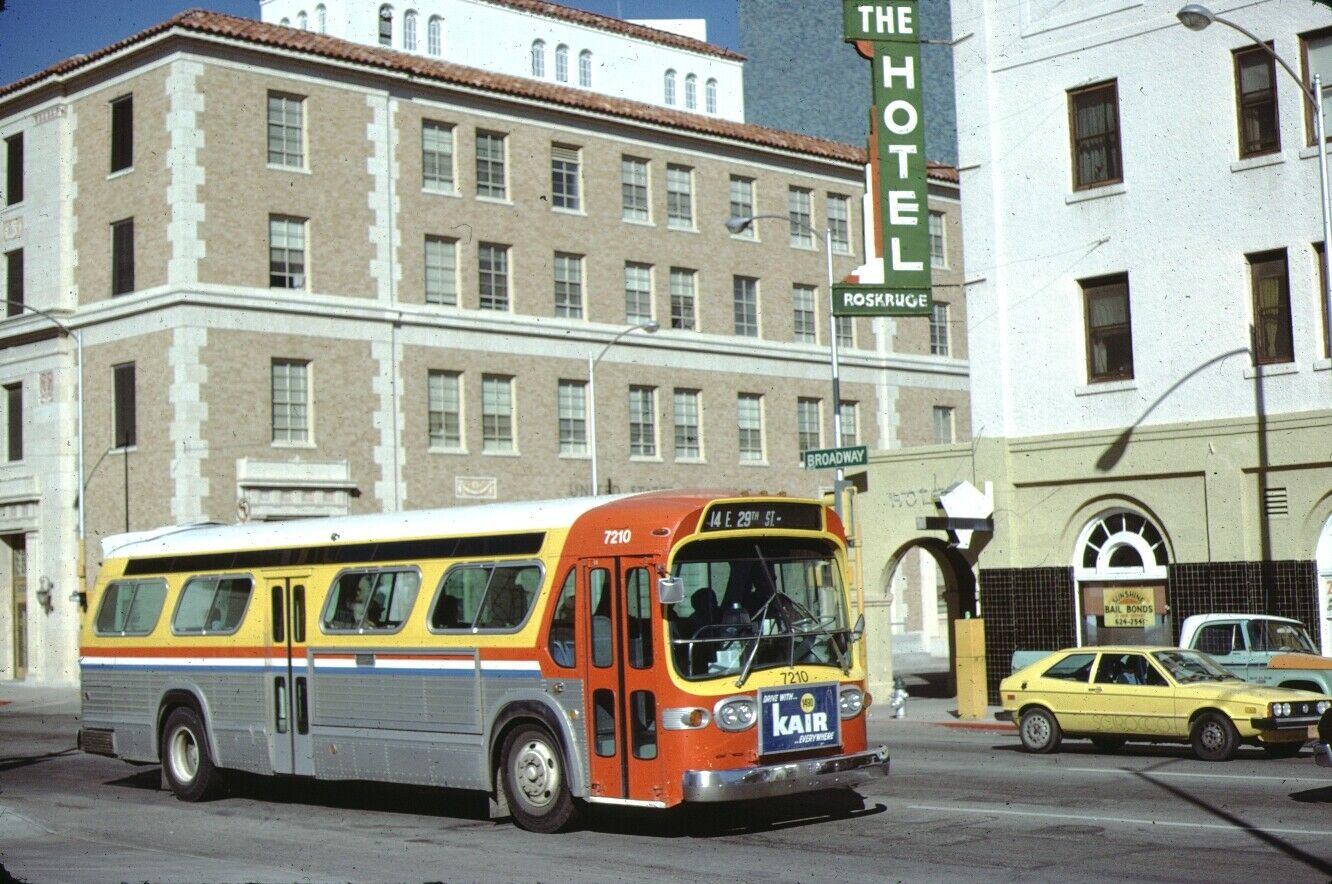
Starting in 1972, 31 new GMC “new look” style buses were added to the fleet and service was expanded throughout the city.
1974
City of Tucson attempts to purchase Old Pueblo Transit Co. (OPT) but fails. This resulted in the city contracting OPT to provide “supplemental service” on their routes.
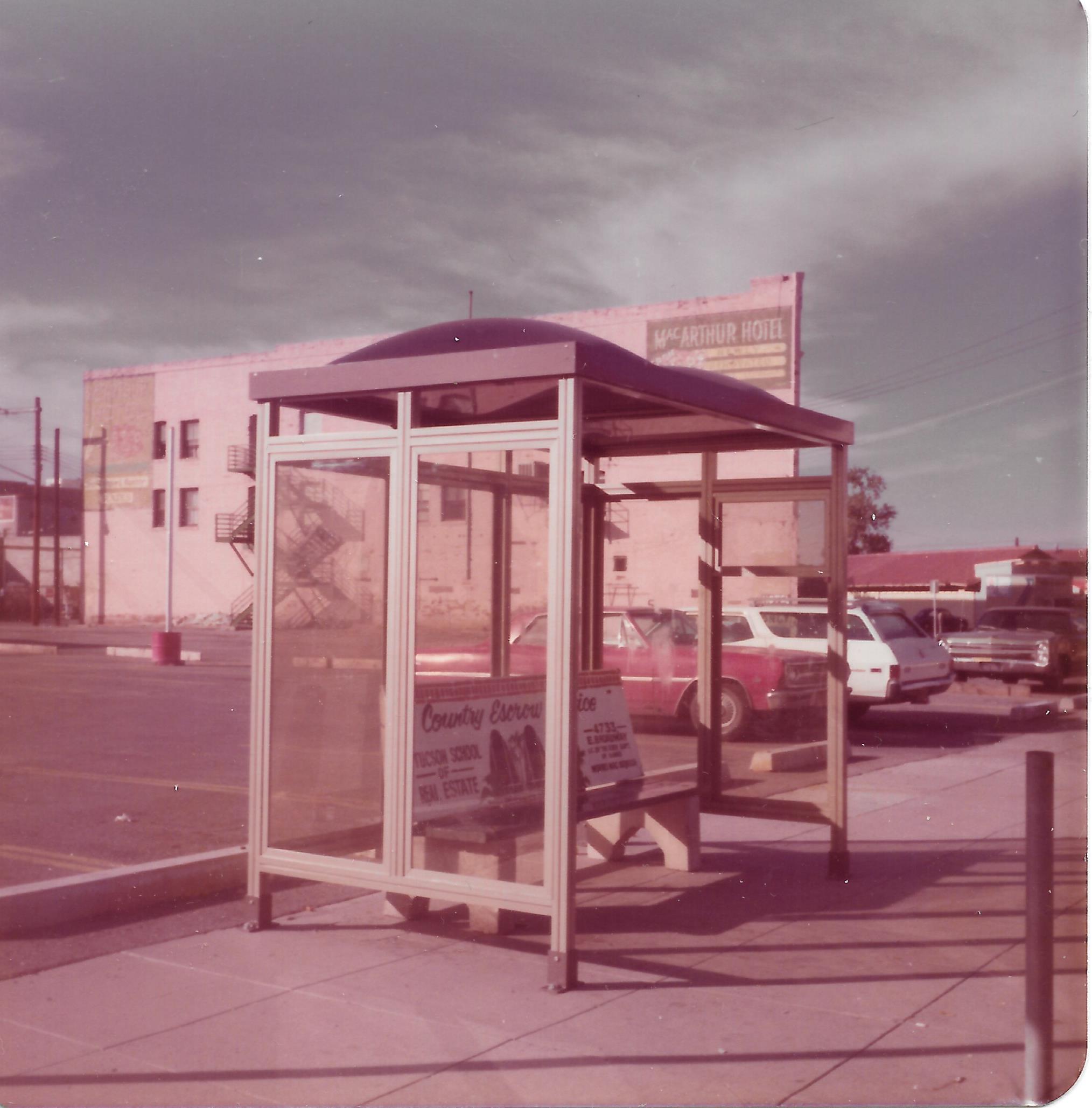
The first bus shelters were purchased but proved unsuccessful because their glass-enclosed design trapped heat, making passengers uncomfortable while waiting for the bus.
An Airport Express route began via Alvernon Way. Service was discontinued in 1976.
1975
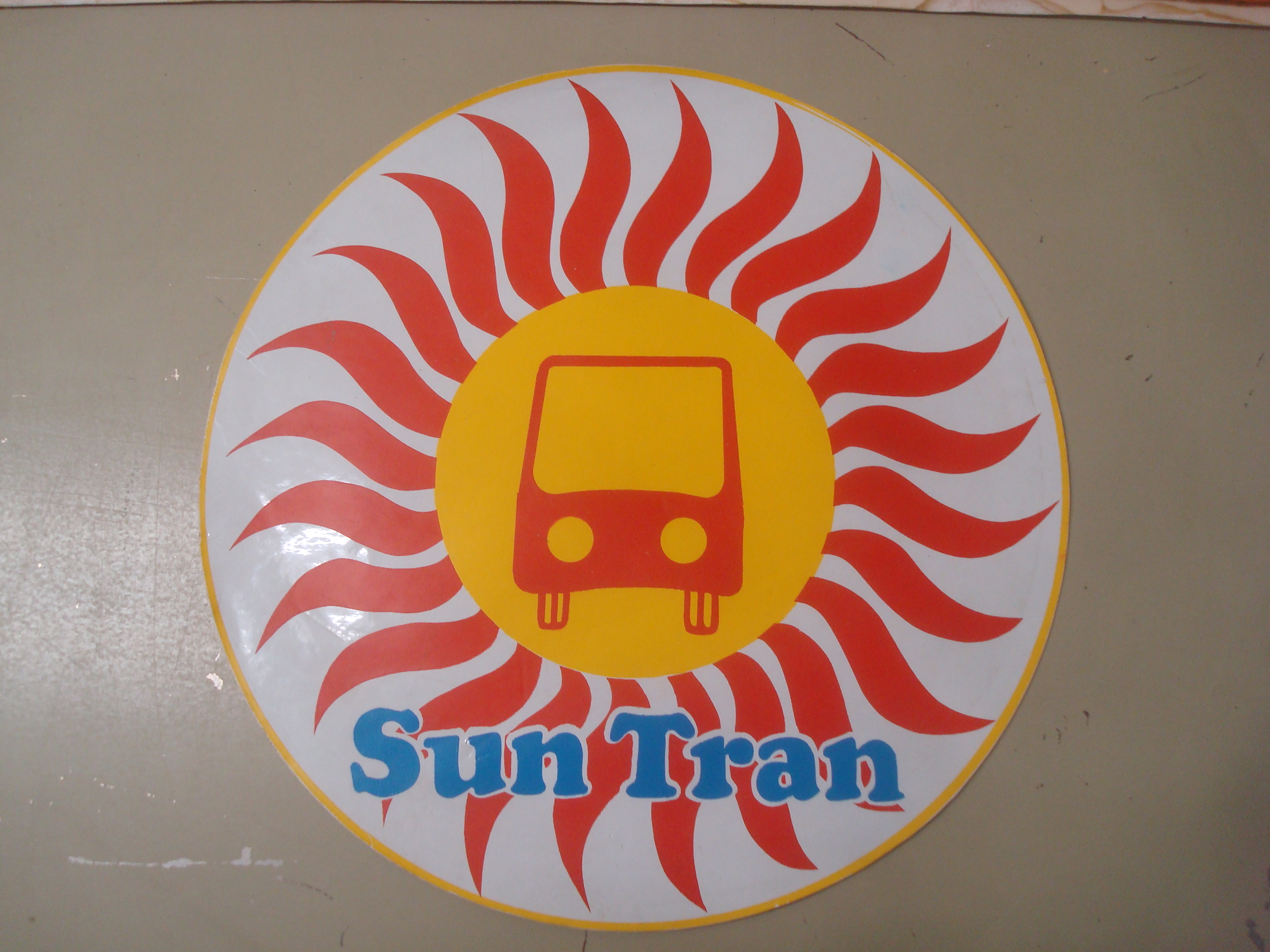
In January, a Color the Bus contest was held to select a new paint scheme and name for the City of Tucson Transit System. The wining name was Sun Tran, with a yellow and red sun with a bus in the middle.
A bill was passed allowing counties to contract with cities to provide transit services. This led to the launch of the first bus routes outside city limits (Route 16 on Oracle Rd. and Route 9 on Tanque Verde and Sabino Canyon Rd.)
44 new buses arrived with the new Sun Tran paint scheme, 32 Flixbles (35’ long) and 12 AM General s (the first 40 long buses owned by the City).
1976-1978
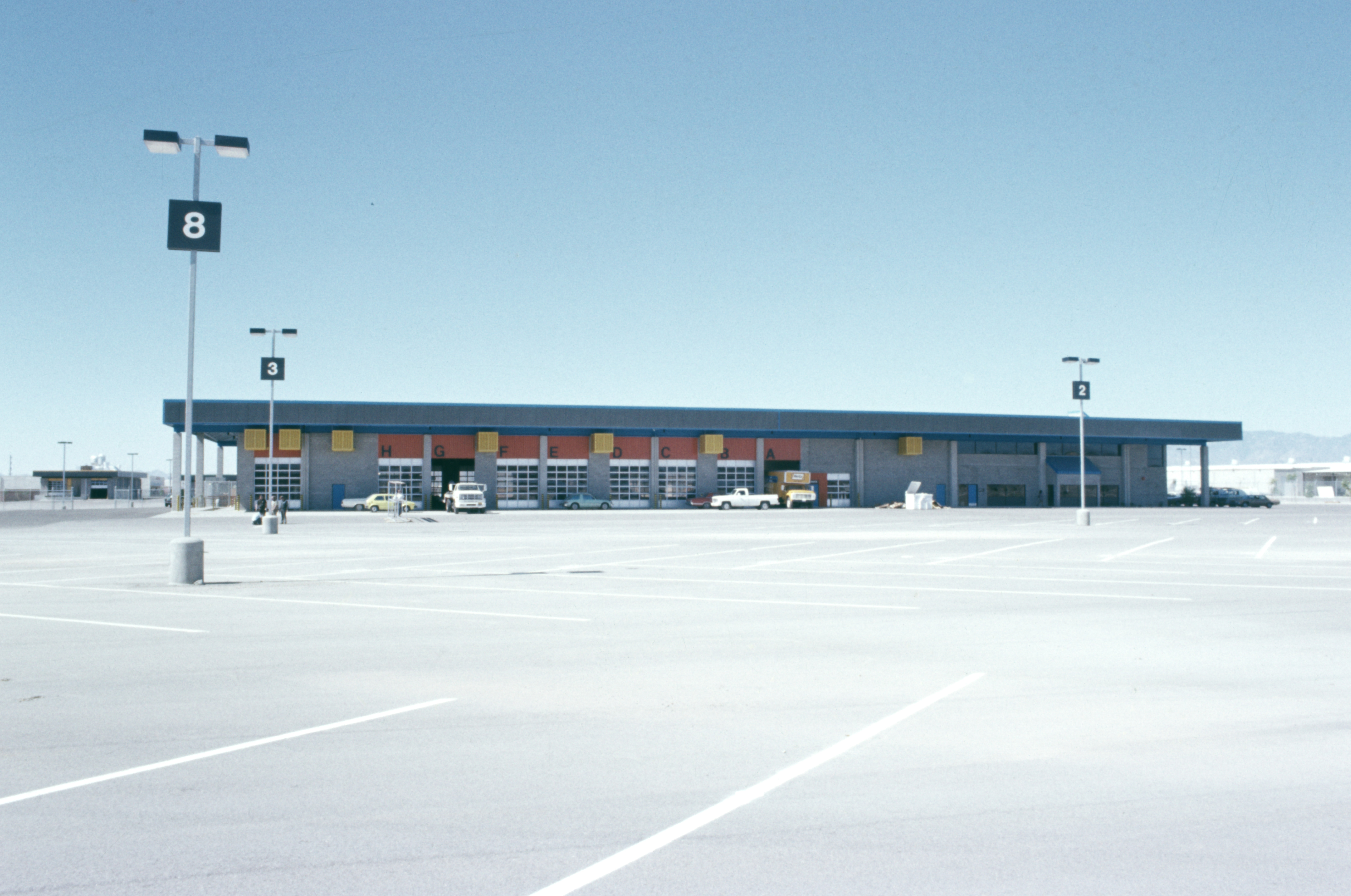
Summer of 1976, buses were moved to the new service facility at Park Avenue and Ajo Way. The offices were equipped with a paint shop, body shop, large wash rack and heavy mechanical repair equipment.
In 1977, Hughes Express was established. This service continues today with multiple Raytheon Express routes.
In 1978, Roy Laos’ Old Pueblo Transit Co. (OPT) gives up its franchise, giving Tucson a unified transit system. Sun Tran slowly integrated OPT’s routes with those of Sun Tran.
Expanding Service and Modernization (1980 – 2000s)
View below the expansion of Sun Tran services and modernization from 1980 – 2013.
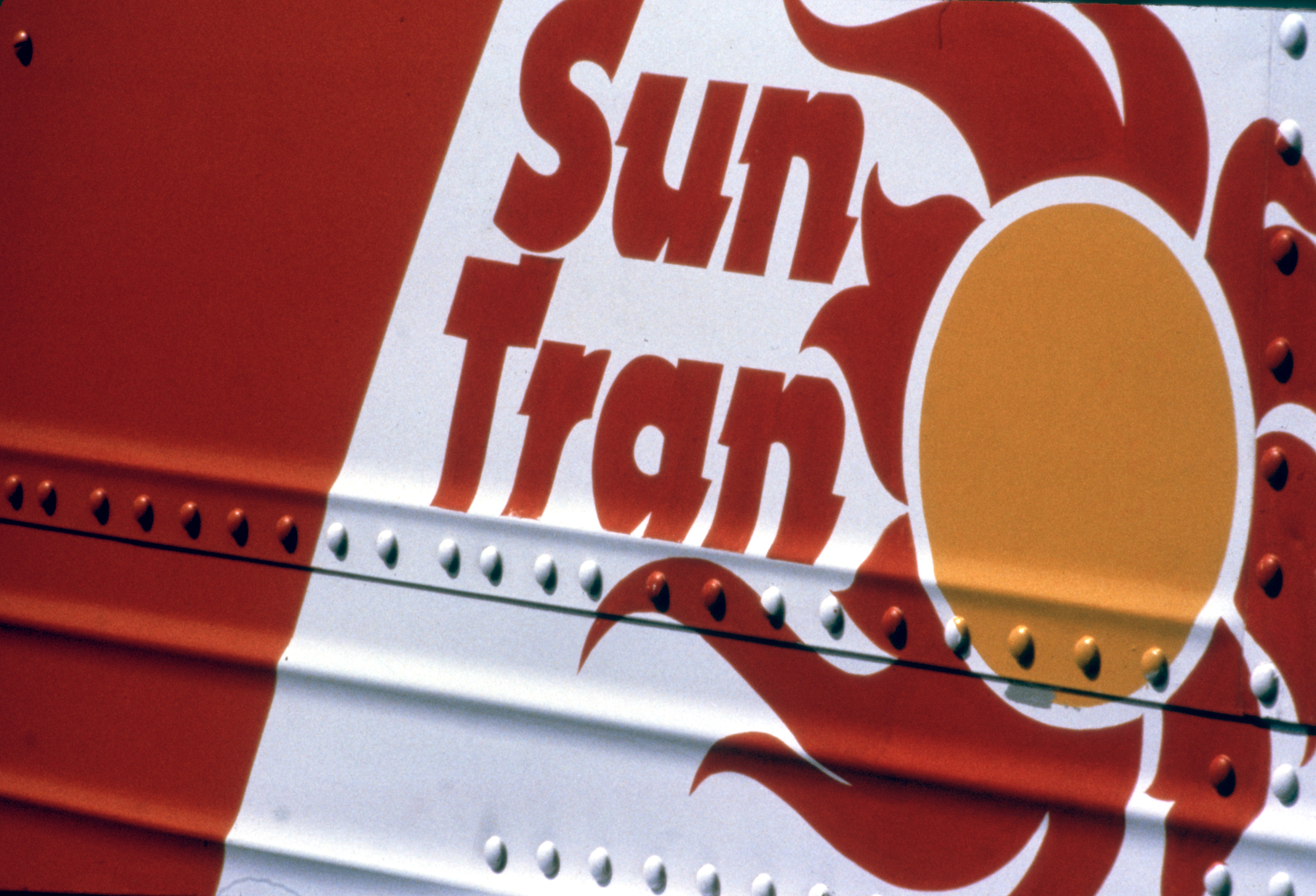
1980-1981
Sun Tran introduces new paint scheme and logo.
Express service started on routes 4X, 8X, 9X, and 14X.
1985
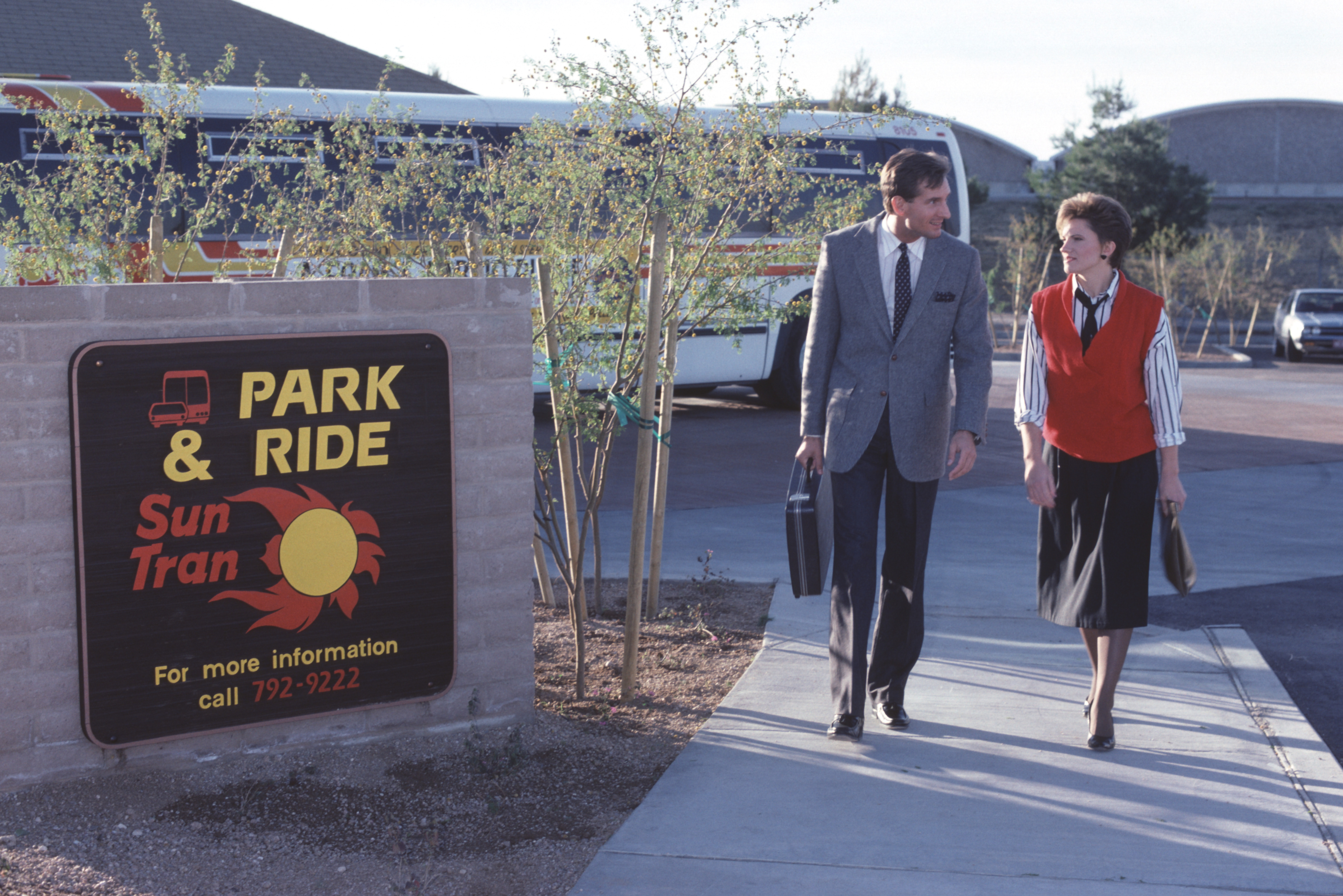
Sun Tran held a grand opening for the Golf Links & Kolb Park and Ride.
1987
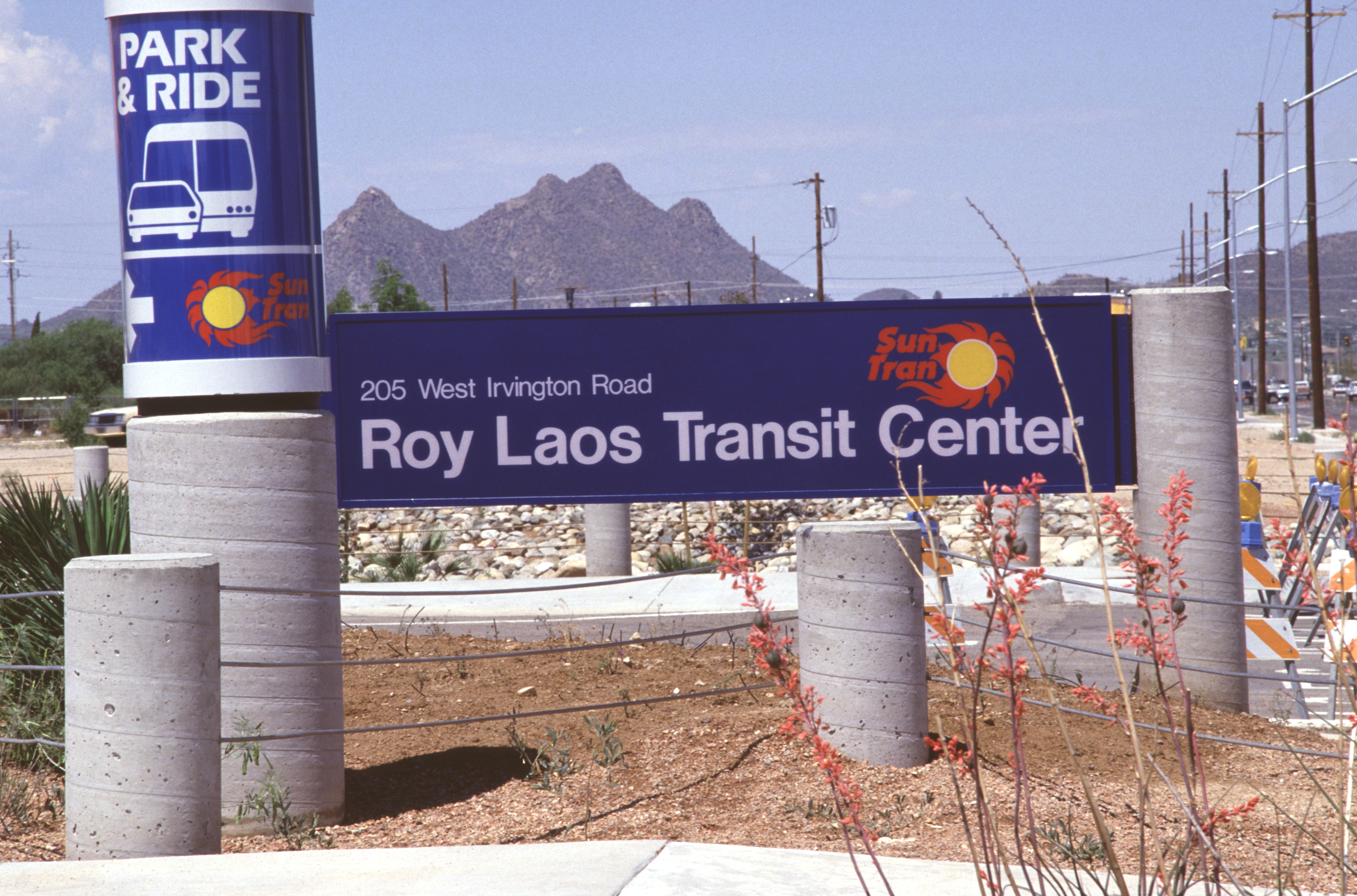
The Roy Laos transit center opened on Tucson’s south side and was Tucson’s first transit center. It was named after Roy Laos who started the Occidental Bus Lines.
On July 1, 1987 Van Tran was born and provided paratransit services to the community.
1988-1989
The American Public Transportation Association honored Sun Tran with its American Public Transportation Safety Award.
Sun Tran introduces first Compressed Natural Gas (CNG) bus. The General Motors bus 7315 was converted to run on CNG in addition to diesel.
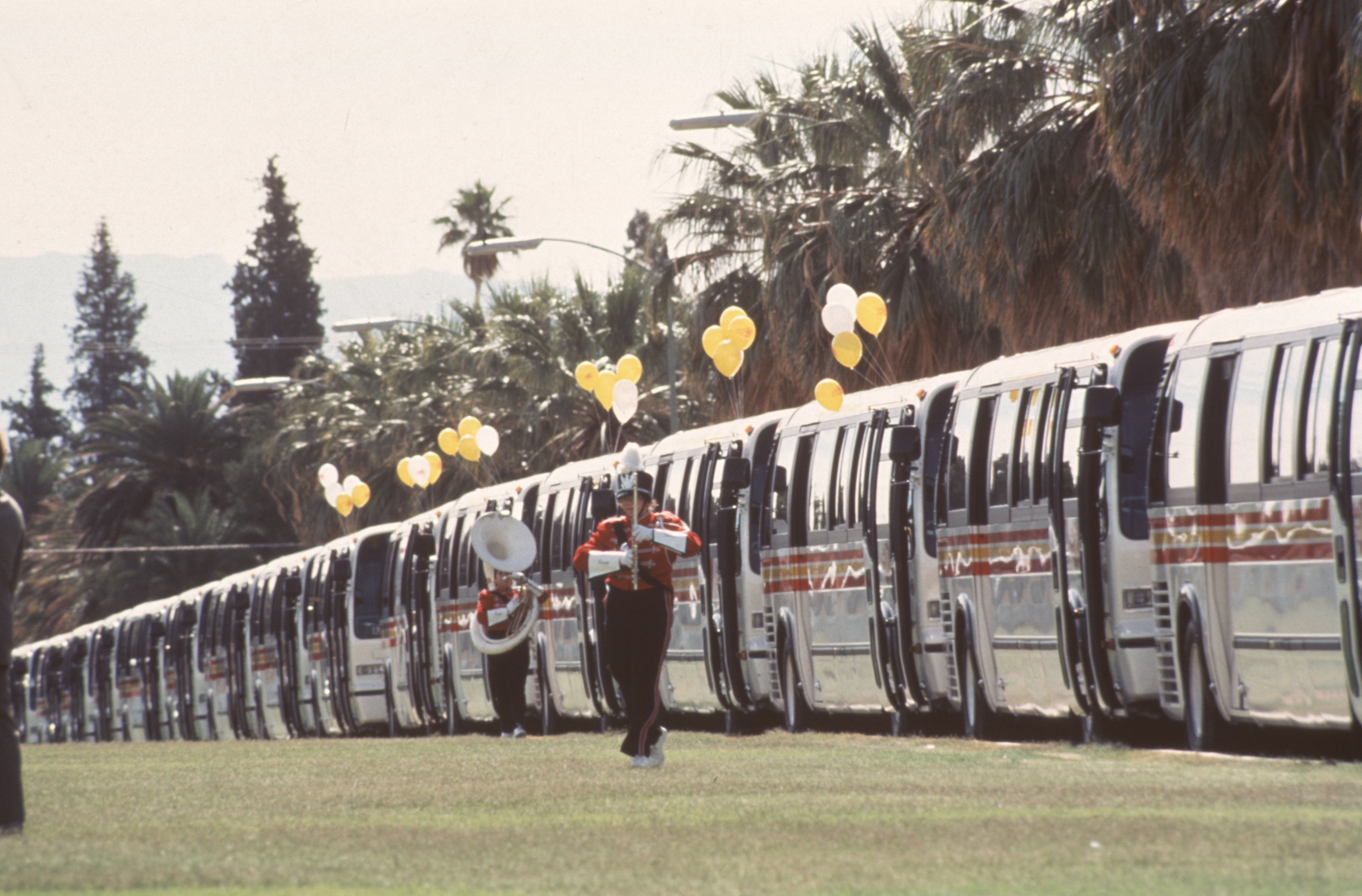
Sun Tran purchased 55 new buses all equipped with wheelchair accessibility. All 55 buses were lined up at the University of Arizona Mall for the public to view.
1990-1991
Sun Tran introduces first Ride Guide in June 1990!
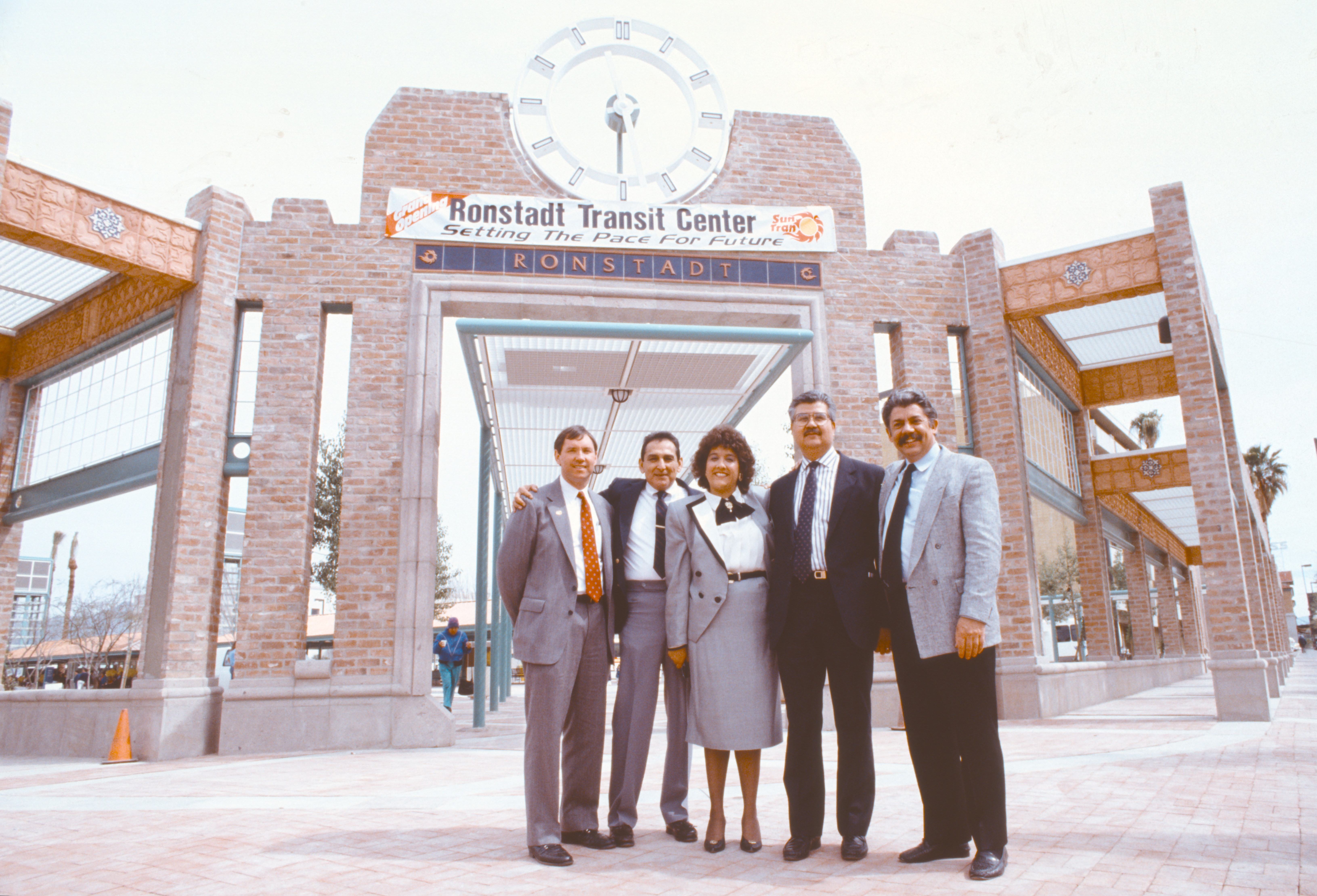
Ronstadt Transit Center opened in downtown Tucson. The transit center was named after Tucson’s pioneering Ronstadt family.
1994-1999
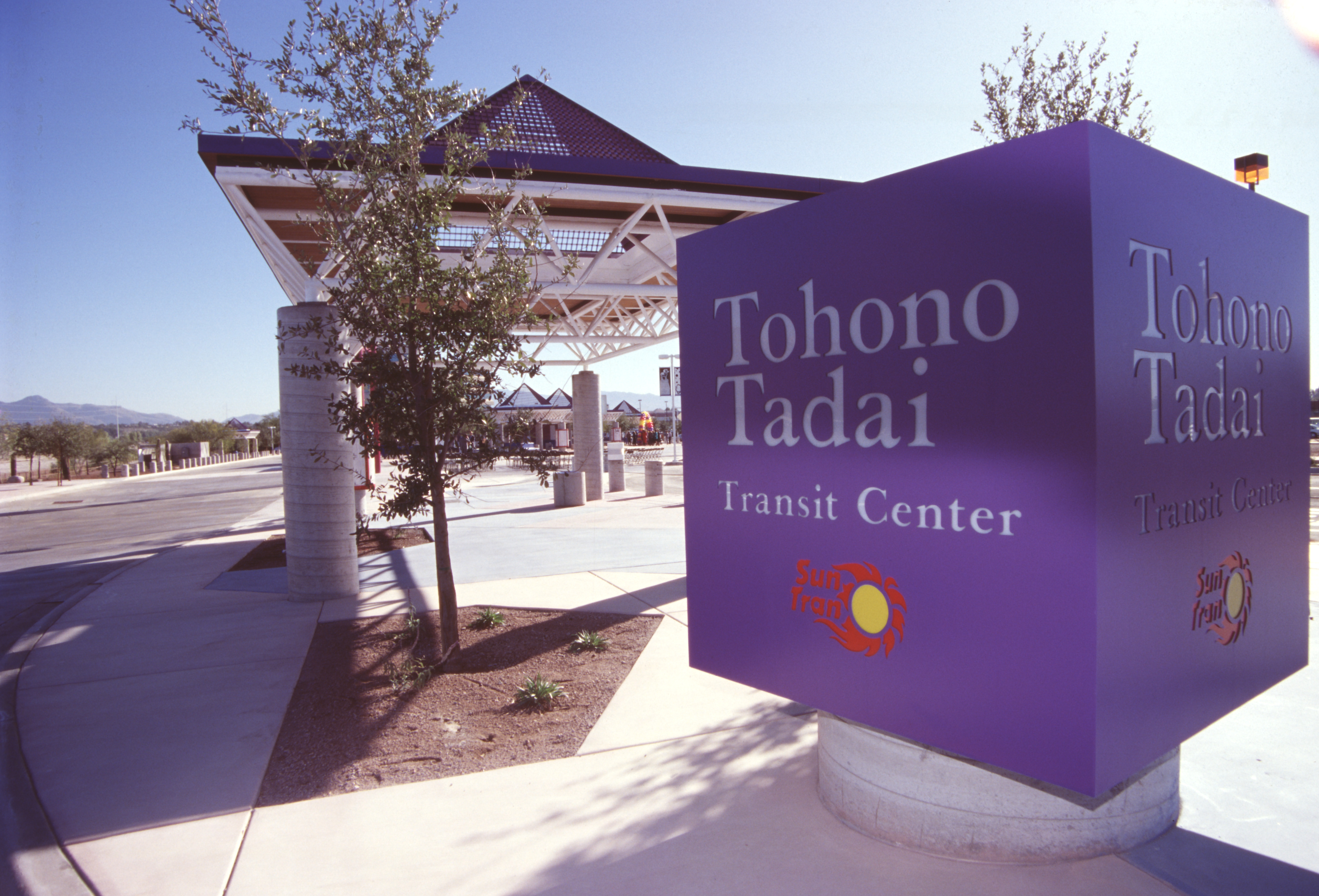
Tohono Tadai Transit Center opened on the northwest side of the city. This was the first transit center designed under the Americans with Disability Act (ADA) guidelines.
In 1996, electronic fareboxes were installed on all Sun Tran buses.
Sun Tran completed installation of its Automated Vehicle Location (AVL) system which allows Sun Tran to track every bus while in service. This system was integrated with the new automated annunciator system.
2001
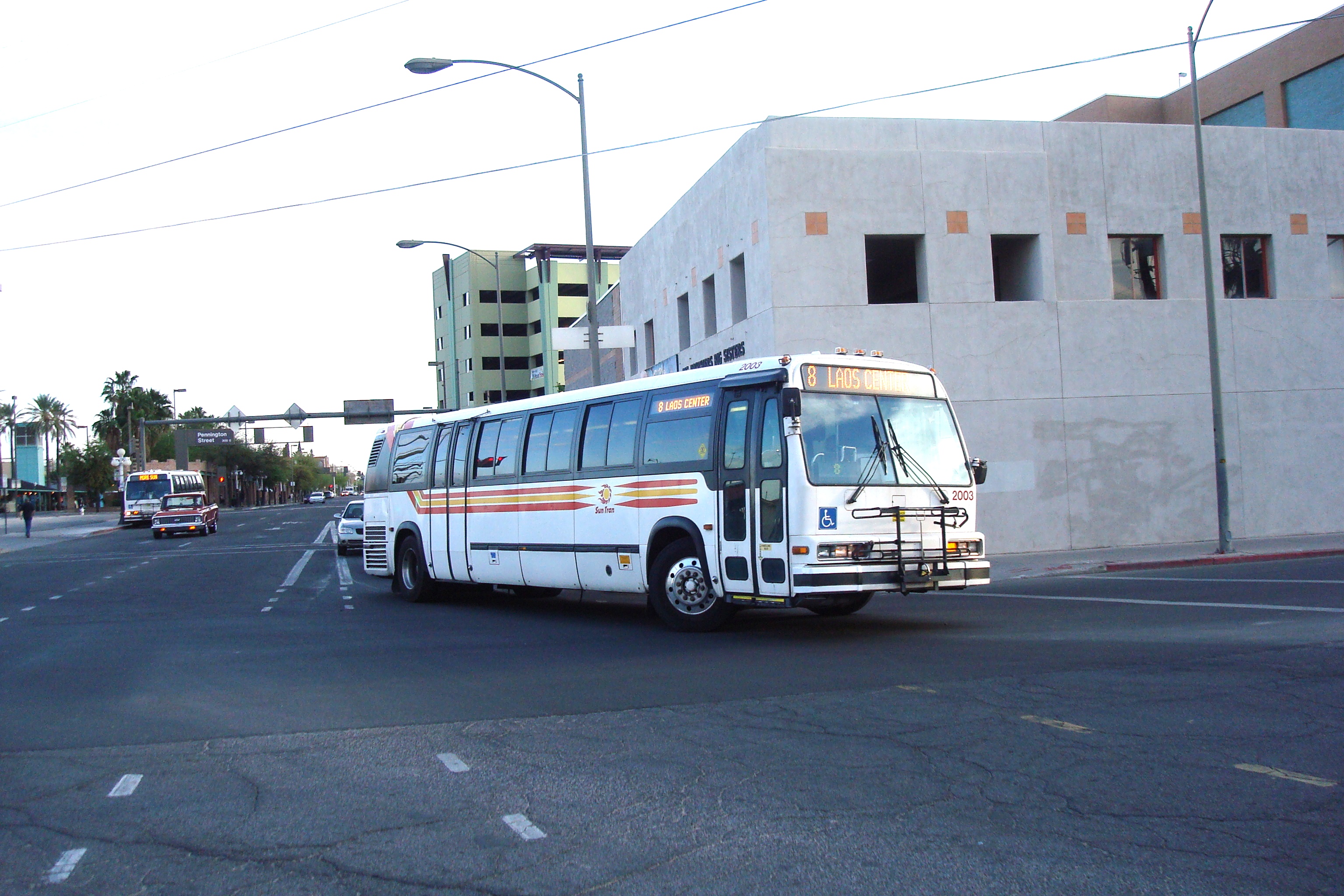
Sun Tran acquired 45 CNG-fueled Nova buses, making 100% of the fleet wheelchair accessible
Digital video recorders were installed on most buses to enhance operator and passenger security.
2005
Sun Tran was named America’s Best Transit System by the American Public Transportation Association.
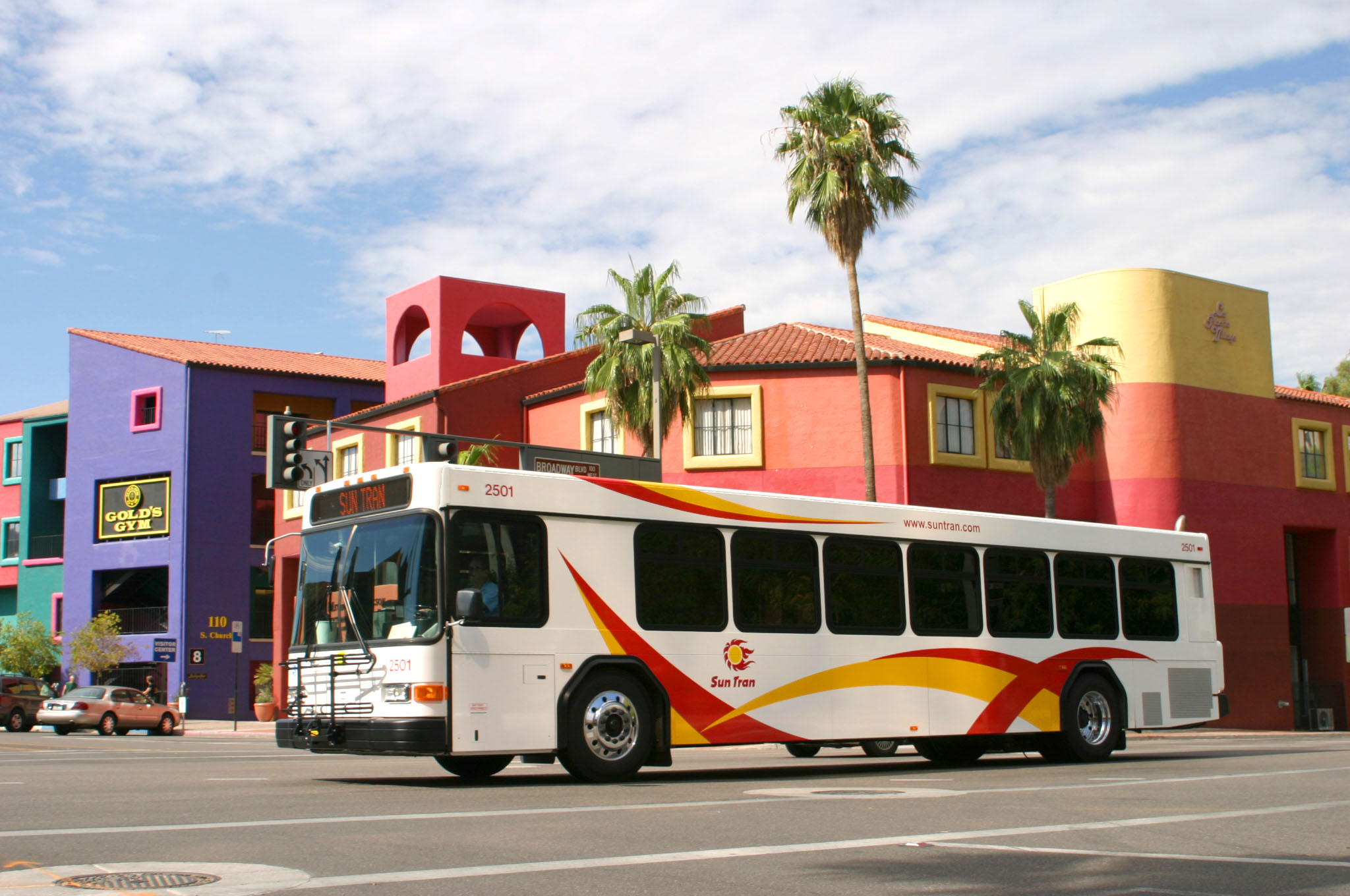
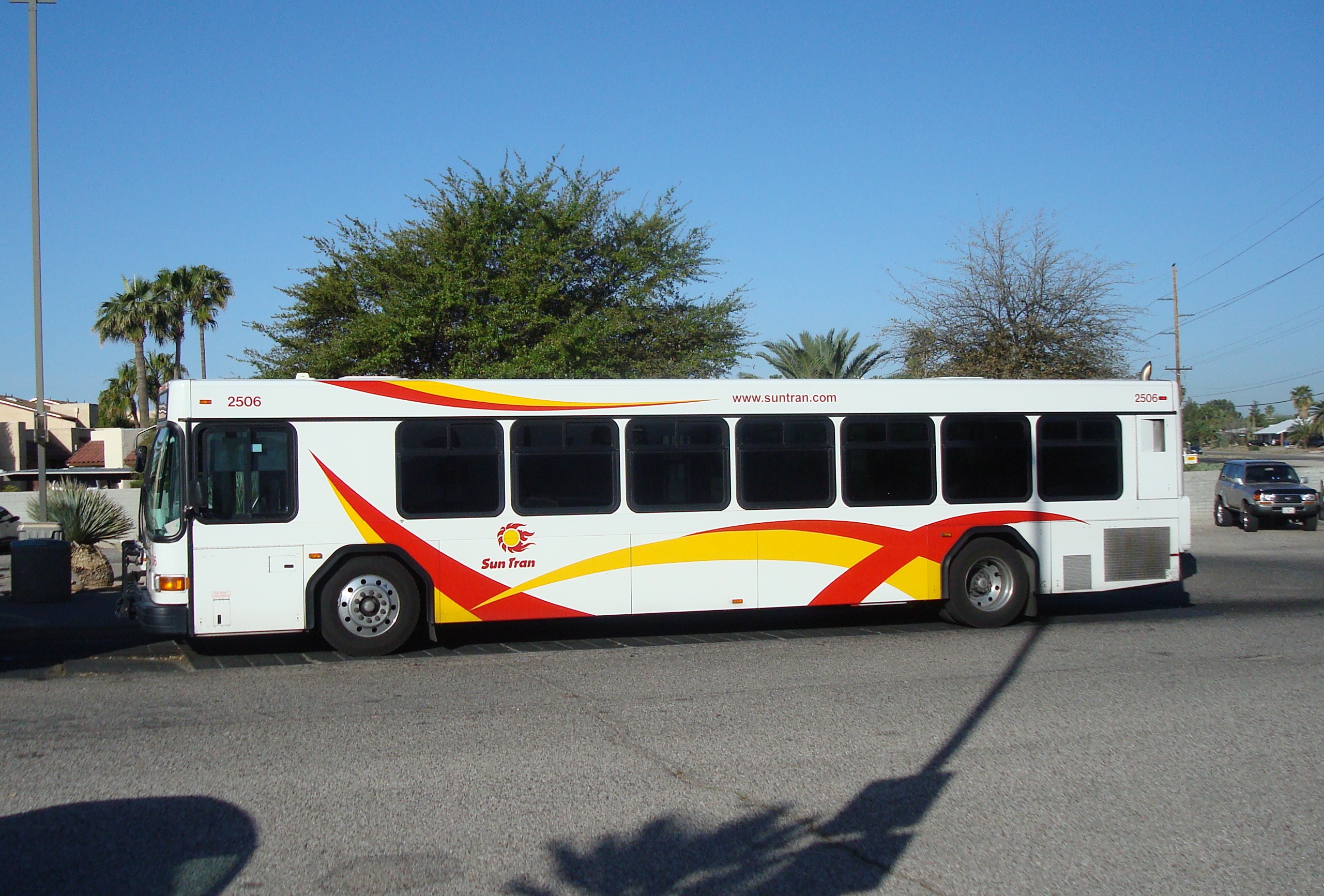
Sun Tran transitioned the bus fleet to 100 percent Gillig buses, creating a more efficient maintenance process by using only one manufacturer.
2006
Sun Tran received 50 new low-floor bio-diesel buses, to make 100 percent of the fleet utilizing cleaner-burning fuel and ADA accessible.
Sun Tran’s maintenance facility was one of the first U.S. transit maintenance facilities to receive the Environmental Management System ISO 14001 certification recognizing Sun Tran’s capacity to maintain and improve upon its environmental performance.
2009
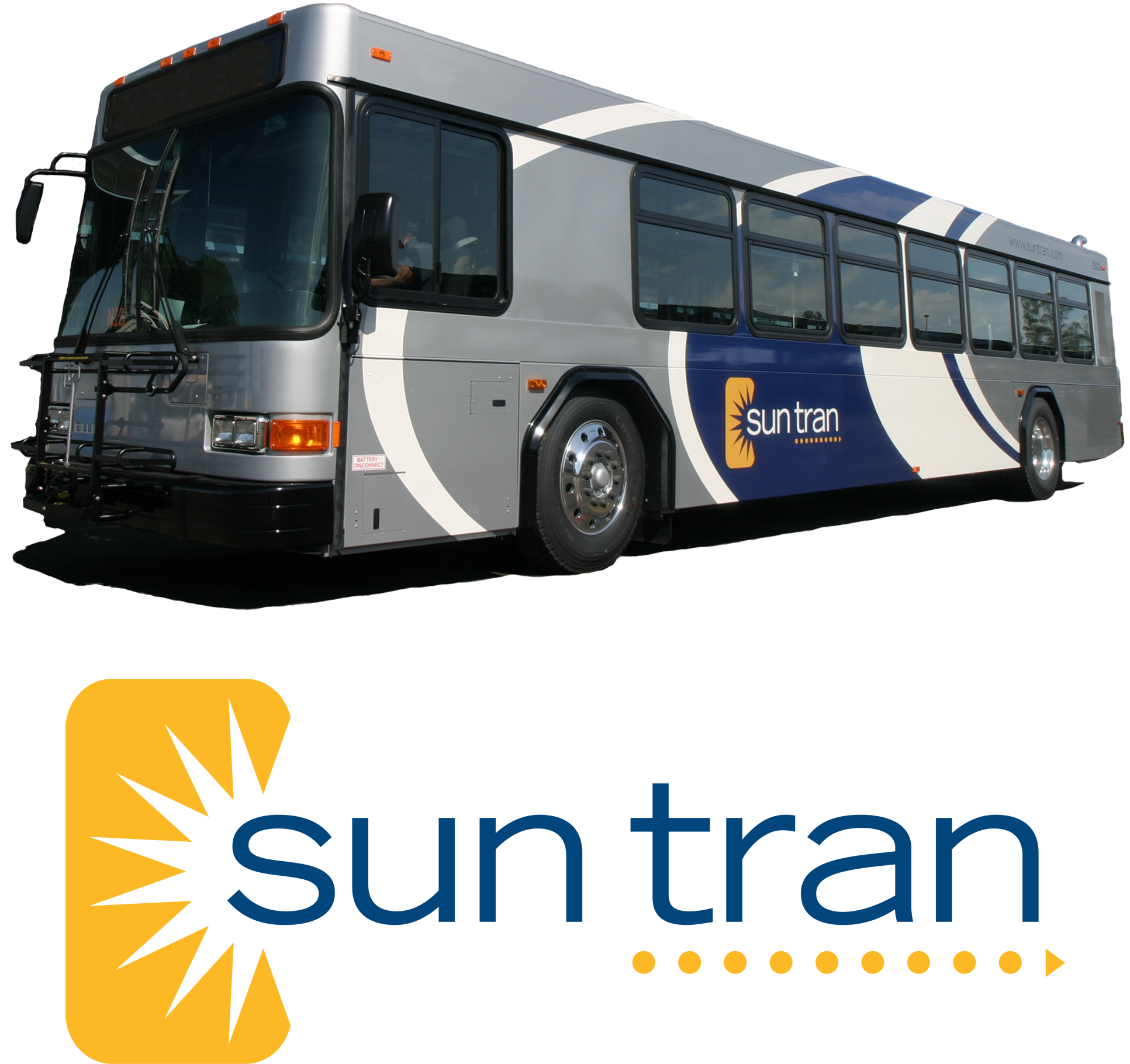
Sun Tran introduced new look for the company and other services. The new color scheme went from red and yellow to blue, gray and white.
Express routes were now called Sun Express and Van Tran changed to Sun Van.
Sun Van’s fleet transitioned from diesel to gasoline, increasing efficiency for Sun Van vehicles.
2010
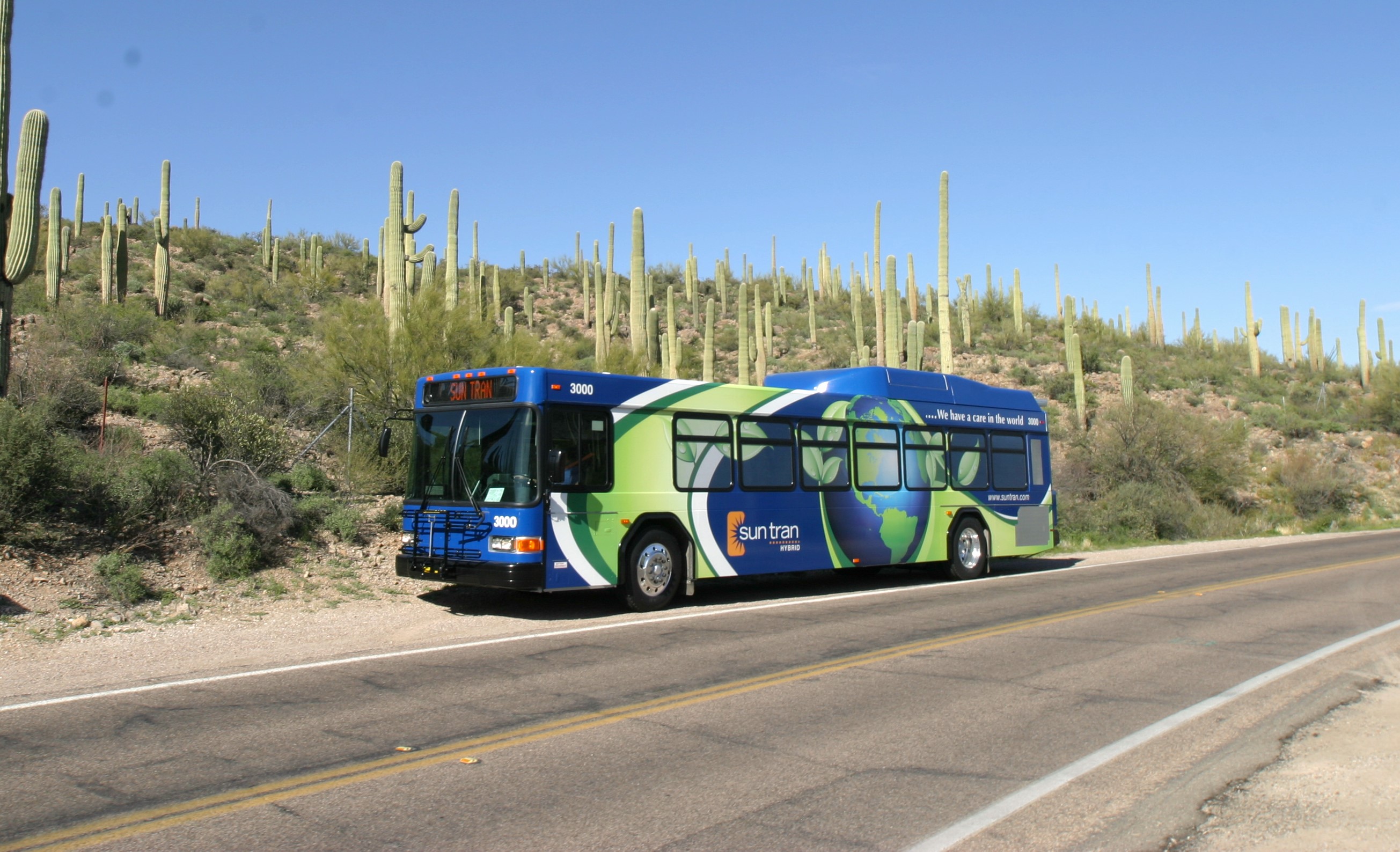
Sun Tran introduces new hybrid bus! This bus offers low emissions,
with the power, range and convenient fueling of conventional fuel powered vehicles.
2012
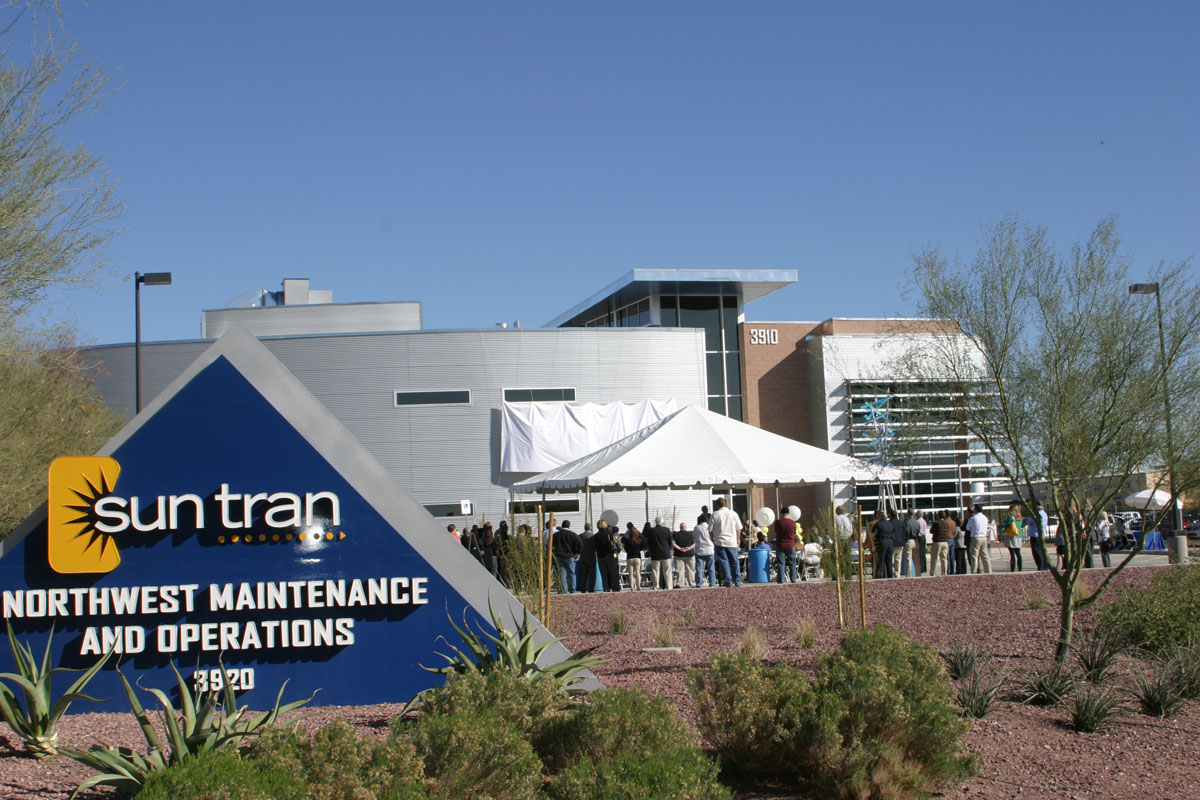
Sun Tran’s Northwest Bus Facility was completed. The 25-acre facility includes City of Tucson fleet fueling facility, Operations building, Maintenance building with 30 bus bays and additional bus wash bays, parking for 150 buses and fueling station, and administration building.
Hybrid buses were put into service and utilized on Sun Tran bus routes.
2013
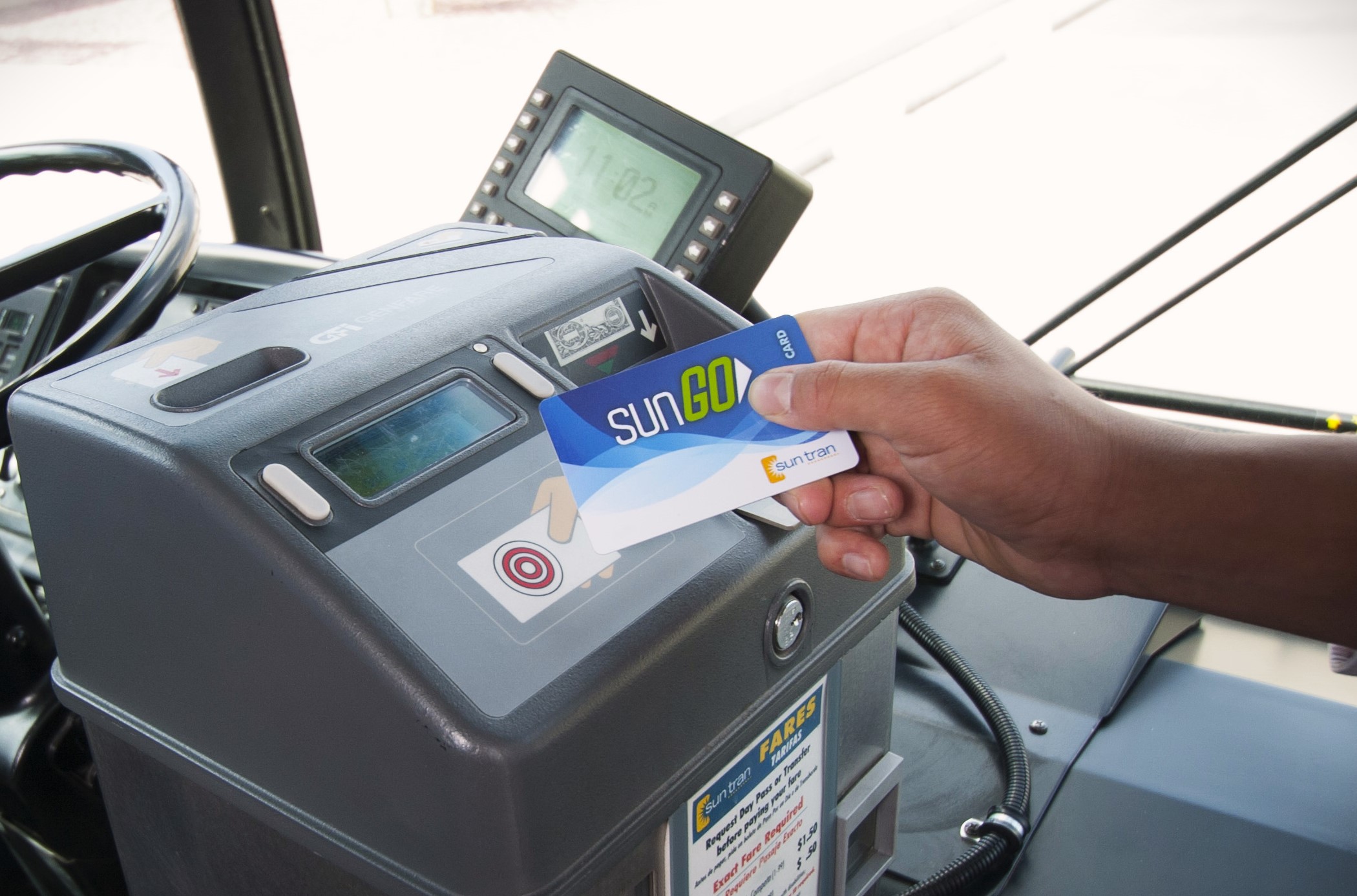
Sun Tran introduced SunGO, a smart card fare payment system designed to simplify transfers across the region. Usable on Sun Tran, Sun Express, Sun Shuttle, and eventually the Sun Link Streetcar.
Sun Link & Tucson’s Transit Today (2014 – Present)
View below the return of the streetcar and Tucson’s transit from 2014 until present time.
2014
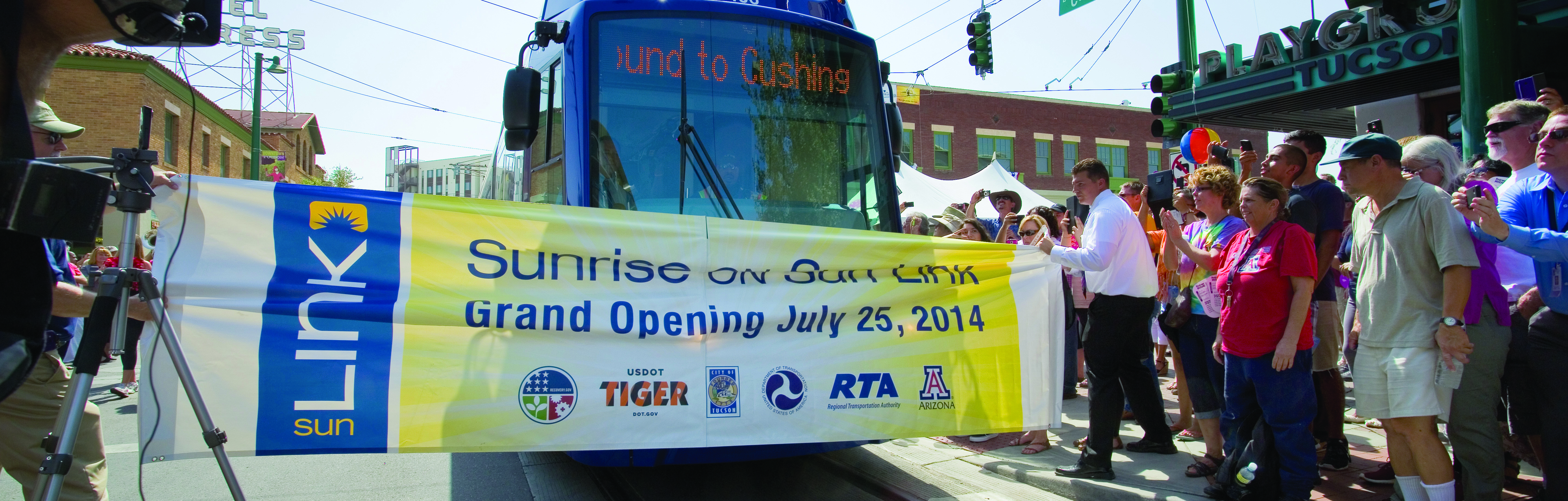
Tucson introduced the Sun Link streetcar, one of the city’s largest transportation projects. Construction began in March 2012 and was completed in just over 19 months. Spanning 3.9 miles, the route links popular destinations such as Main Gate Square, 4th Avenue, Downtown, and Mercado San Agustin, as well as key educational and medical facilities at the University of Arizona.
2015
Sun Tran established the Frequent Transit Network – a system of 11 routes that run every 20 minutes or less.
2017
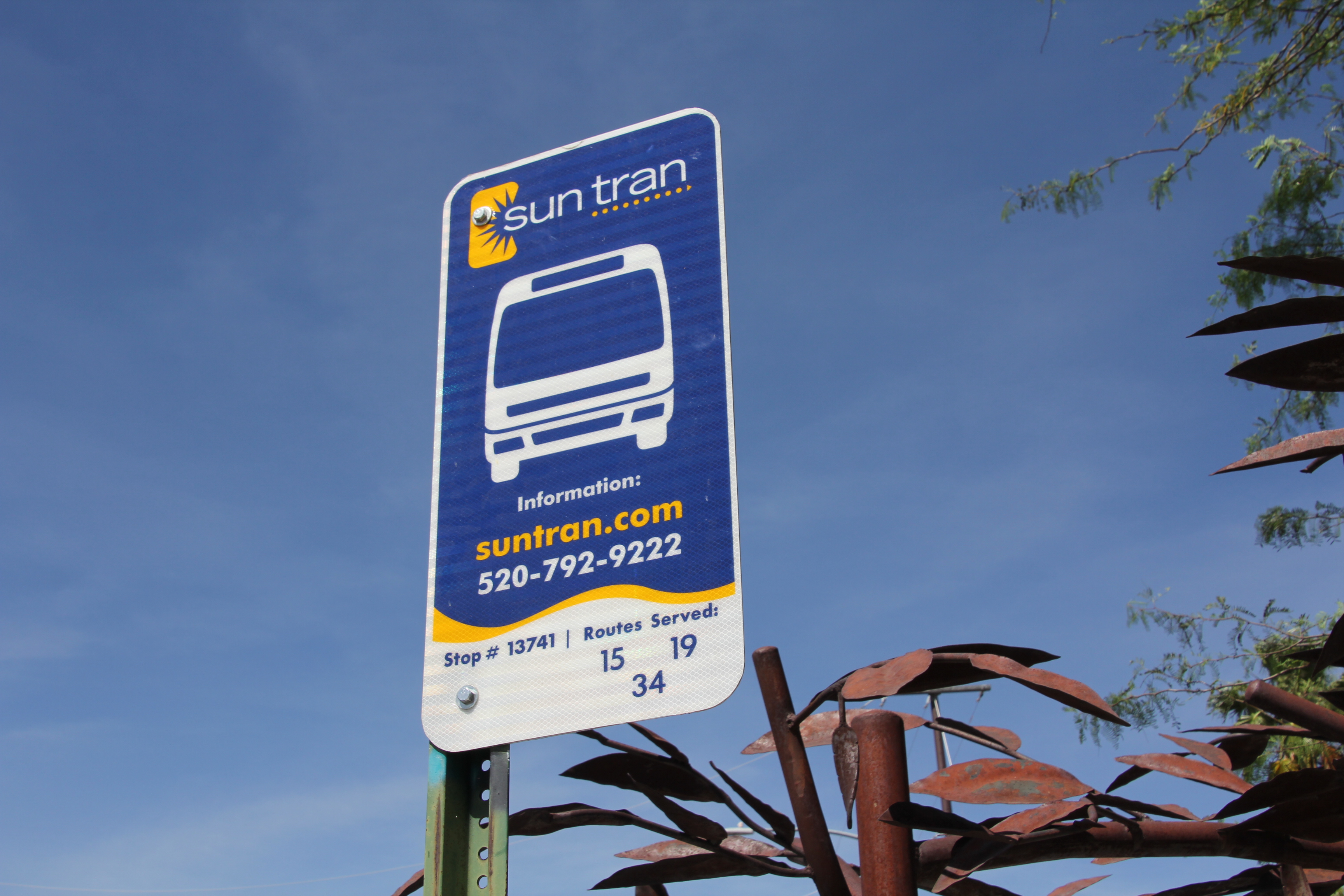
All existing Sun Tran bus stop signs were replaced with new signs that include the updated Sun Tran logo, route numbers of routes, and a bus stop number allowing passengers to effectively use online trip planning and next bus arrival times.
Sun Tran release the GoTucson Transit mobile app to give passengers the options to purchase transit fares from their smartphones.
The City of Tucson Mayor & Council approved the Annual Pass and SummerGO Youth Pass program.
2018
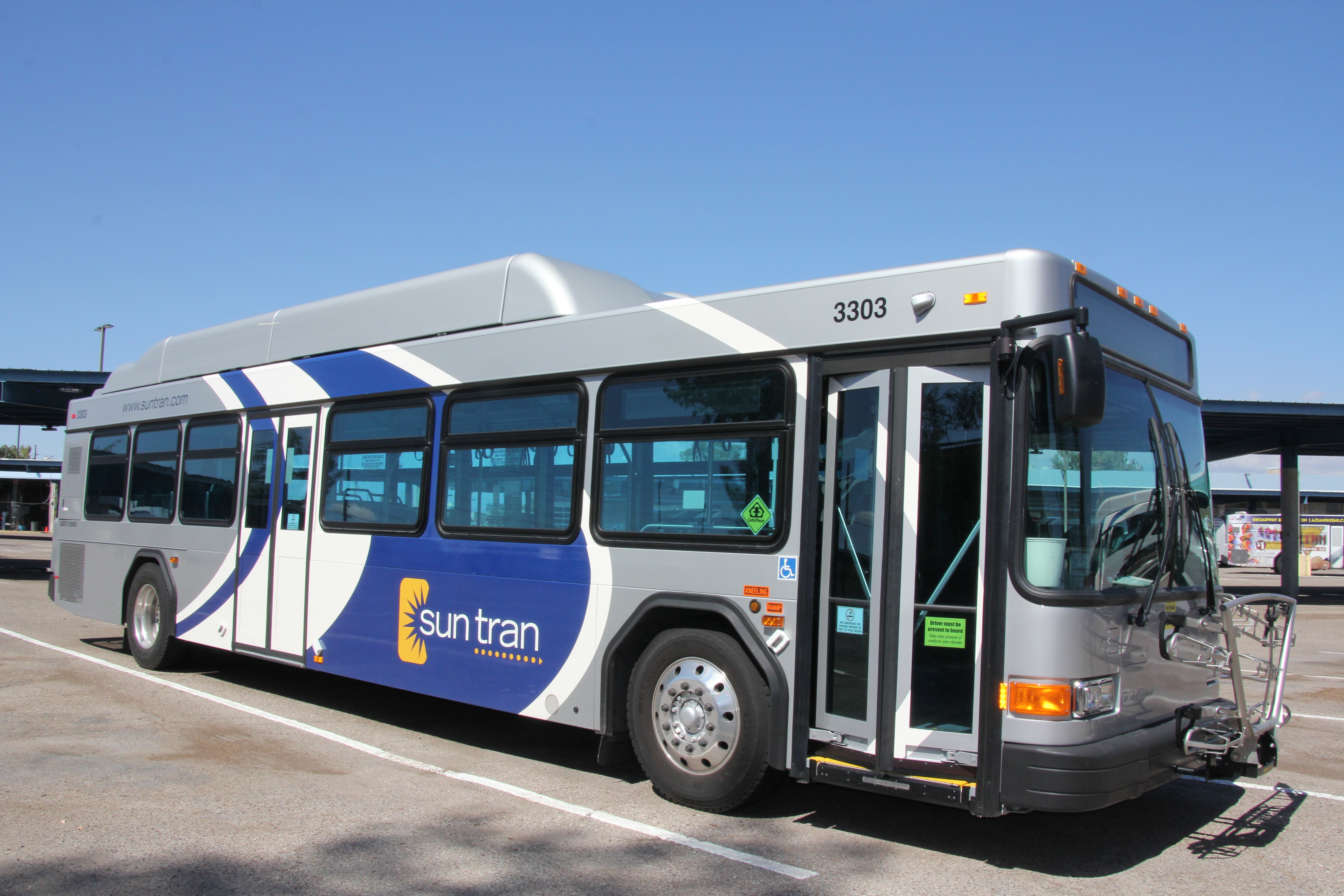
Sun Tran purchased 23 new Compressed Natural Gas (CNG) buses to reduce harmful emissions, improve air quality, and lower the overall age of the fleet. The 40-foot Gillig CNG buses were introduced to service in August and replaced 23 older buses.
2019
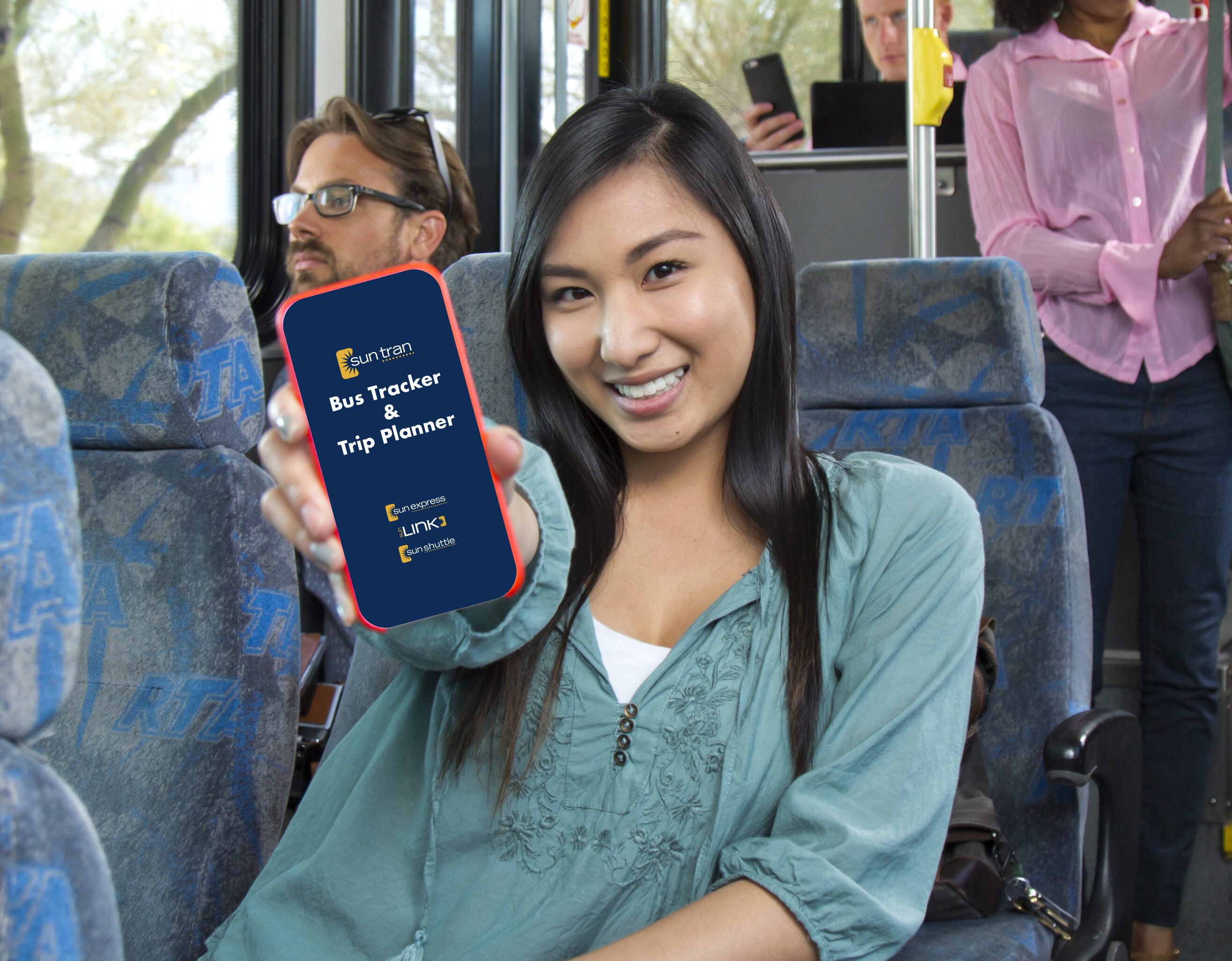
In June 2019, the Sun Tran mobile app was launched. The app allows passengers to remotely check the status of their bus. Important information like next arrival times, bus stop reminders and real-time bus locations is all available from the safety and comfort of a rider’s smartphone.
The first electric bus in the Sun Tran fleet was introduced in May 2019. The electric bus is part of a one-year pilot program and is leased by Gillig.
2020
In response to COVID19 Mayor and City Council implemented a fare free system. Fares continue to remain free.
Transit services especially Sun Tran experienced a decrease in ridership as a result of the COVID-19 pandemic.
New rigorous cleaning protocols were introduced as well as a Federal Mask Mandate to keep operator and passengers safe while remaining in service with minimal disruptions.
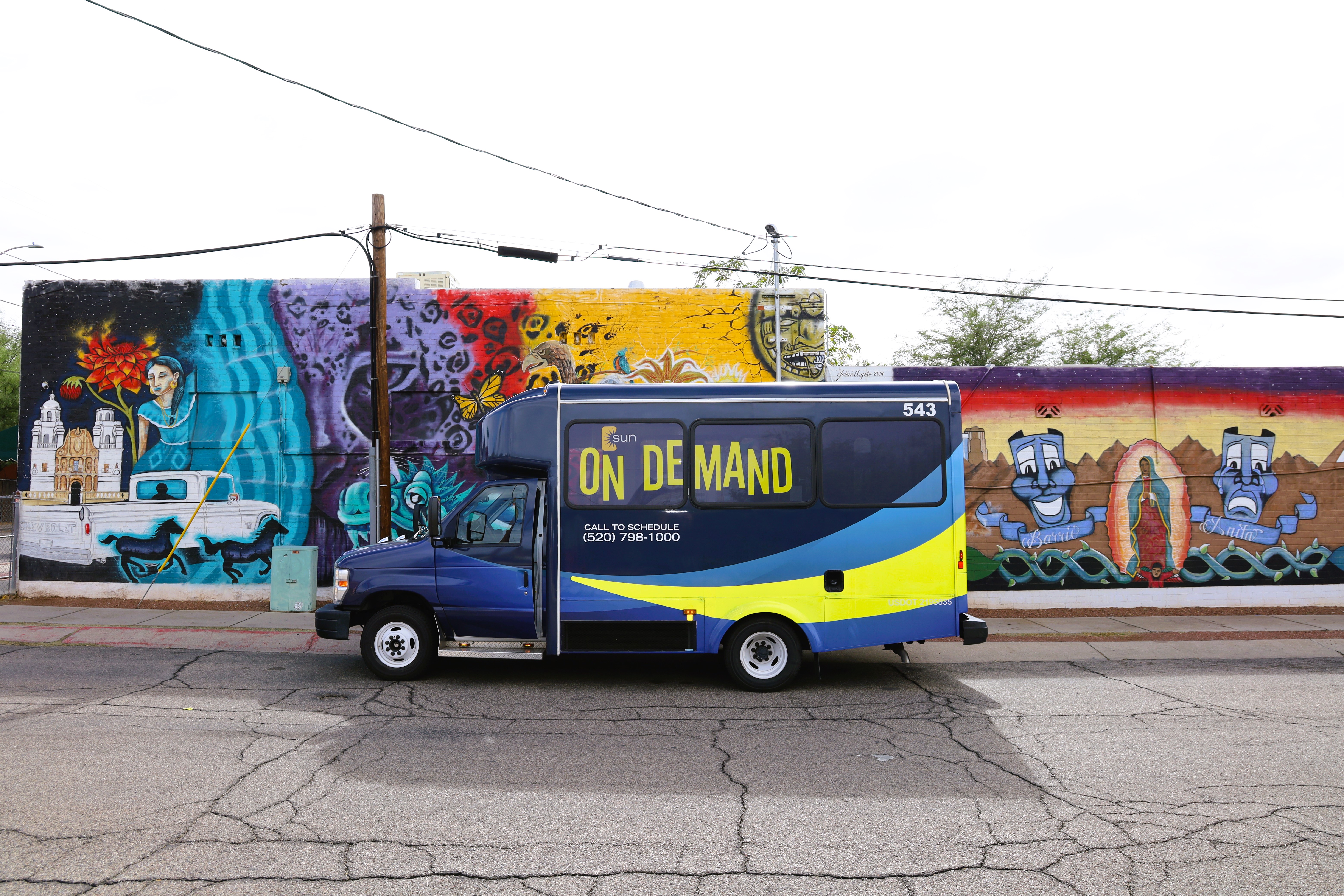
Sun On Demand launched in November 2020, offering curb-to-curb microtransit in two zones. This flexible service allows passengers to book rides via mobile technology, providing convenience, efficiency, and freedom to travel on their schedule. (Book your ride or for more information, click HERE!)
2021
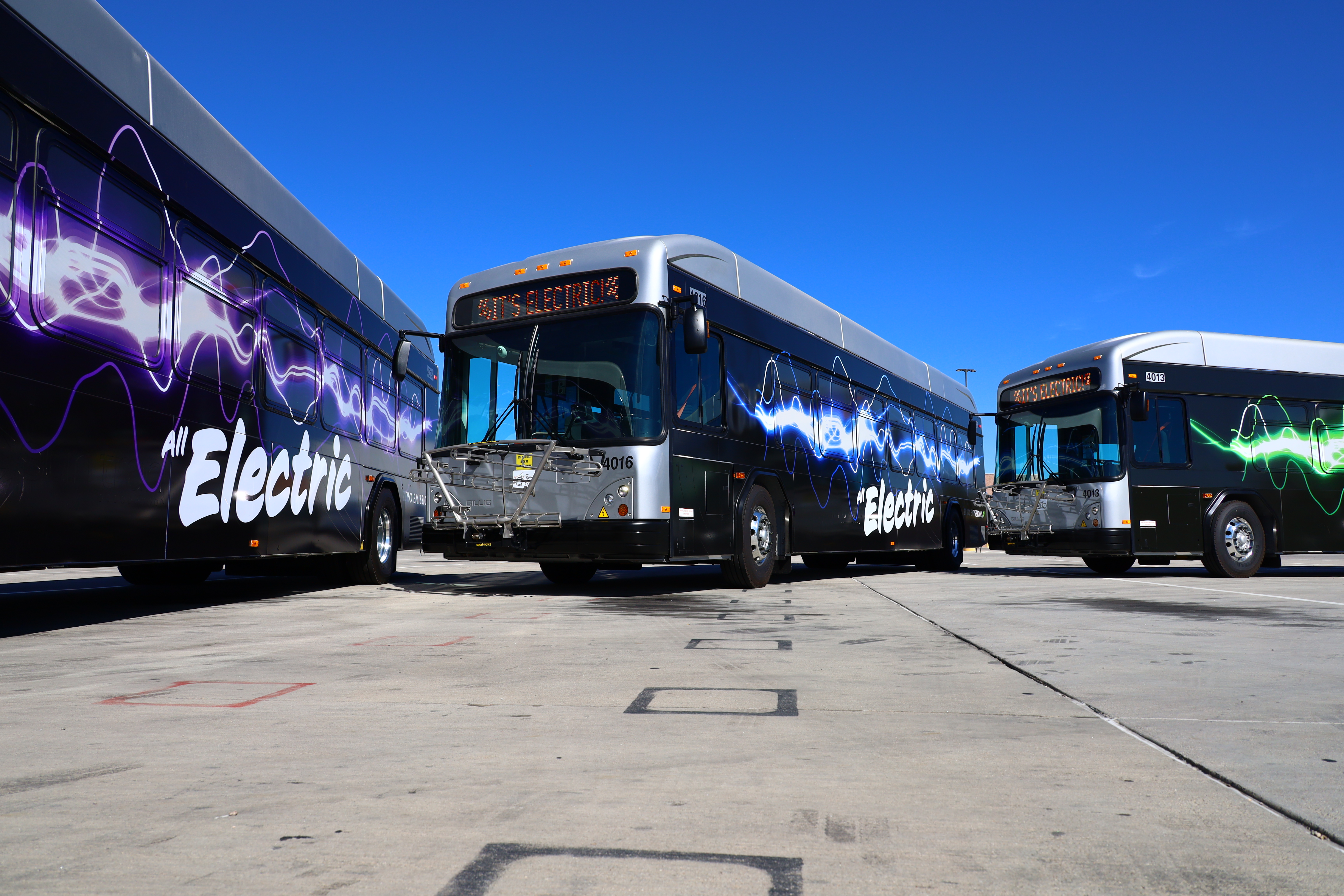
Sun Tran received five electric buses in May and June FY21, with five more arriving in 2022. These zero-emission, quiet buses feature Quantum wheelchair securement and chargers at the Northwest yard, funded by the FTA and TEP. Benefits include lower fuel and maintenance costs, saving 500 barrels of diesel per 1,000 buses daily. For more information on the Grants & Grant funding that Sun Tran and The City of Tucson have received click HERE.
Sun Tran added 20 new CNG buses to its fleet in FY21. These additions from Gillig replaced bio-diesel powered models. Out of 221 active buses, Sun Tran’s fleet now contains 88 CNG buses. These models offer emissions benefits, lower maintenance costs and are expected to cut fuel costs by 58%.
Solar Panels Solar panels were installed at Sun Link and Sun Tran facilities. Panel installations was completed on March 30, 2021.
2022
Sun Tran serves over 13 million riders annually, with 72% riding at least five days a week and 61% riding for over two years (On Board Survey 2022). In FY24, 10 battery-electric and 20 CNG buses will replace diesel, advancing the goal of a carbon-neutral fleet by 2026.
Sun On Demand launched a new app for easy ride booking and tracking, using Spare technology for seamless passenger and driver experiences. A demo event introduced riders to the app, now available on Apple and Android devices.
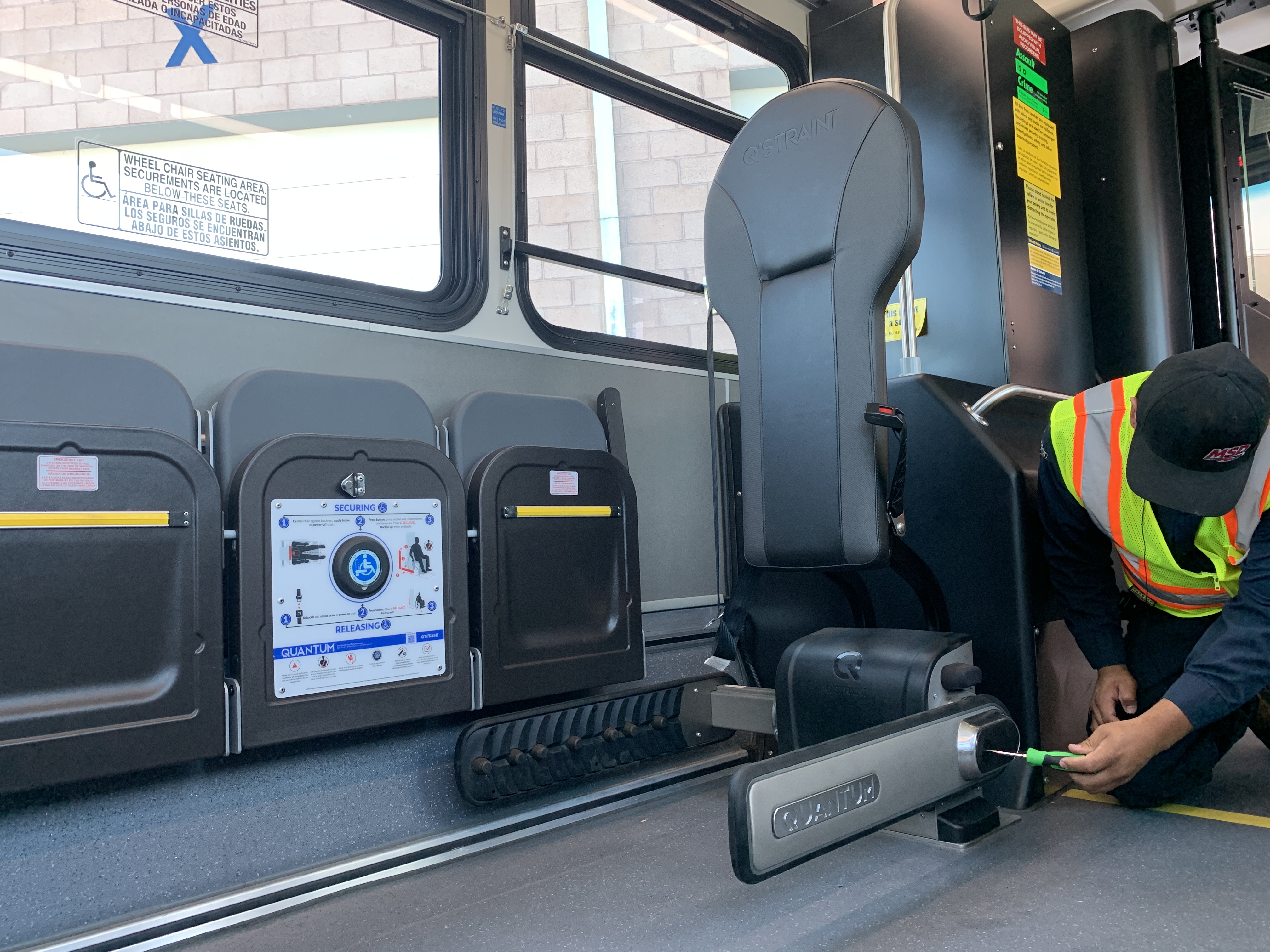
In November, Sun Tran maintenance installed 20 Quantum Automatic Securement Systems, enhancing accessibility for passengers with mobility devices. These systems are now in 79 buses, covering 40% of the fleet.
Sun Van launched a mobile app, allowing paratransit riders to book and track trips in real-time, check accounts, and get notifications. The app is free on Apple, Android, and at trips.sunvan.com.
2023
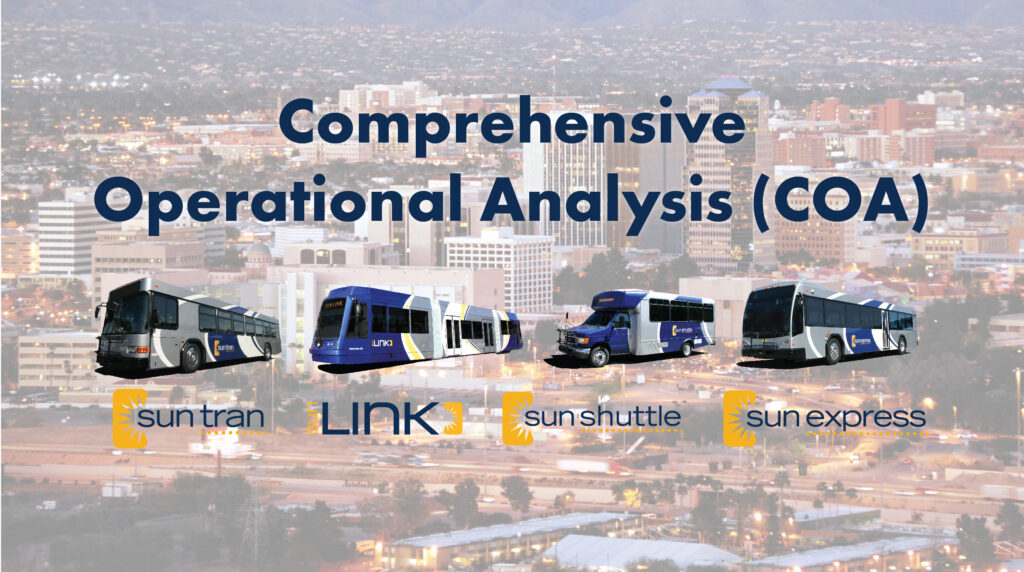
The city of Tucson, Pima Association of Governments (PAG) and Sun Tran are completing a draft plan of proposed system changes to Sun Tran, Sun Express, Sun Link and Sun Shuttle based on the results of the Comprehensive Operational Analysis study. Learn more about the COA here!
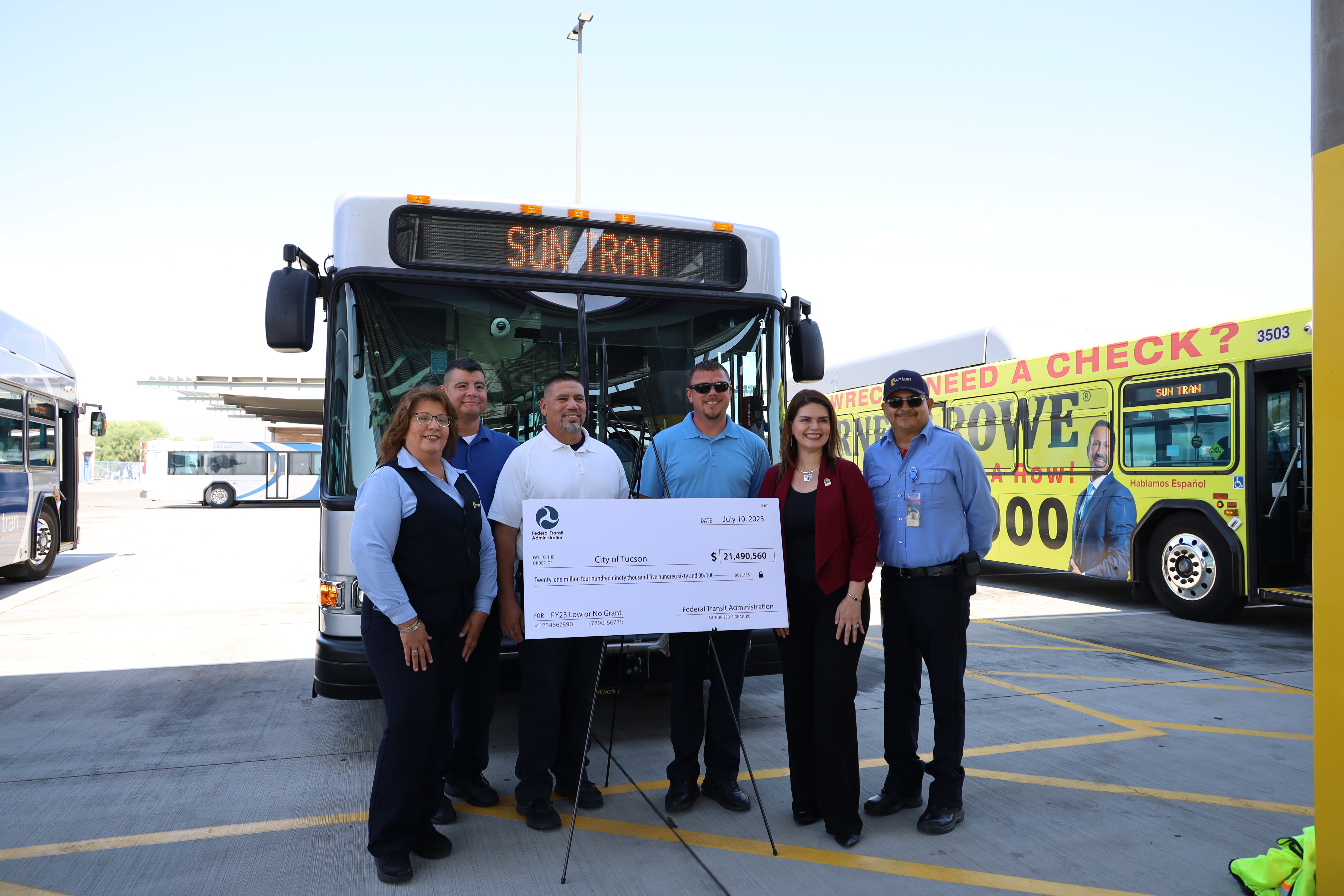
Sun Tran and the City of Tucson was awarded a $21.4 million grant from the Federal Transportation Administration (FTA) to purchase 39, 40-ft CNG buses to replace the remaining diesel fuel buses.
The Ride with Respect Code of Conduct was created for passengers to have the best riding experience while discouraging disruptive, unsafe or inappropriate behavior. Decals were installed at transit centers and vehicles. To learn more about Ride with Respect click HERE!
Sun Tran added a new decal to inform passengers they can now board at the front door. During the pandemic, Sun Tran’s efforts to mitigate the spread of the COVID-19 virus was to have passengers board at the rear door. In March 2022 the Federal Mandate lifted.
Sun On Demand displays new design and colors (white, yellow and blue) on two of its vehicles.
2024
Post-pandemic Sun Tran’s ridership recovered to exceed pre-pandemic ridership.
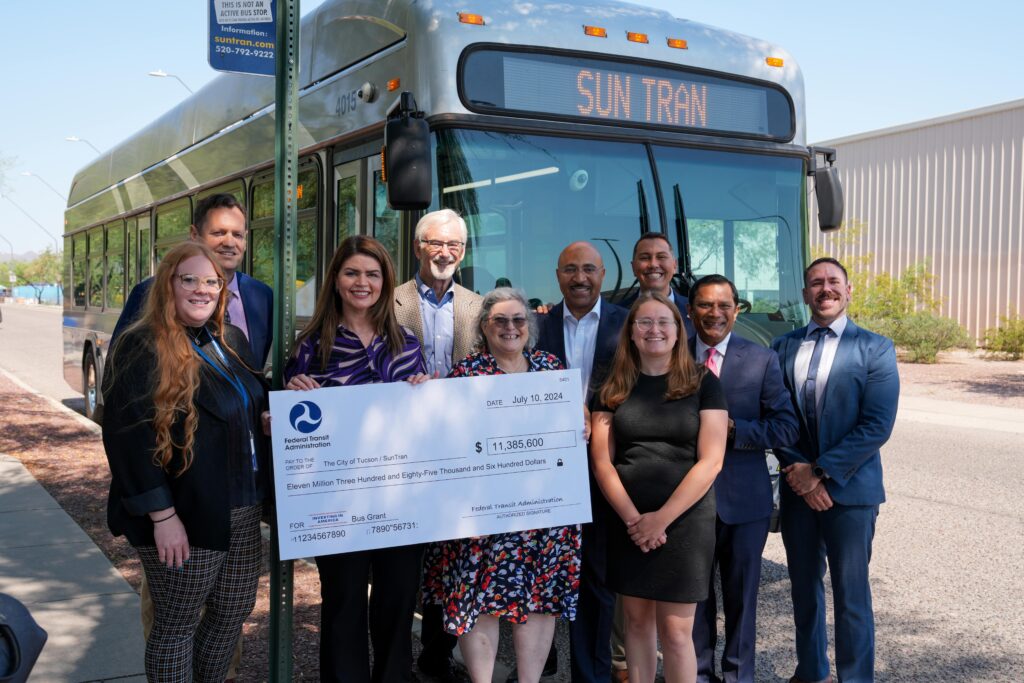
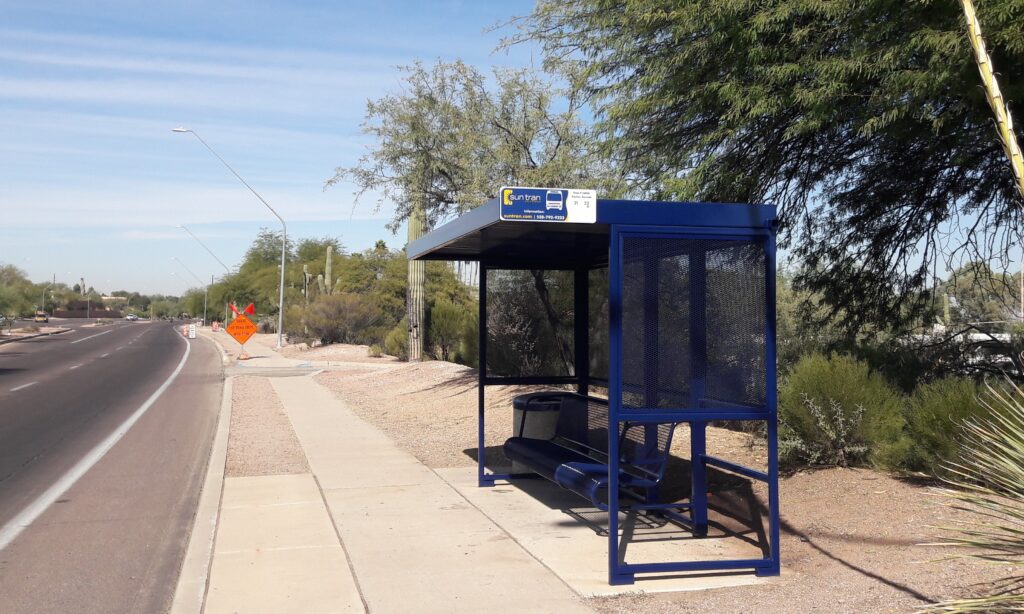
In July the City of Tucson and Sun Tran celebrated an $11.38M FTA grant to upgrade aging equipment and improve bus stops. Enhancements include braille signage at 2,200 stops, 80 new shelters with green infrastructure, solar trash receptacles, and emergency call buttons. The Northwest Bus Maintenance Facility will also receive two new bus lifts. For more information about this grant, click HERE.
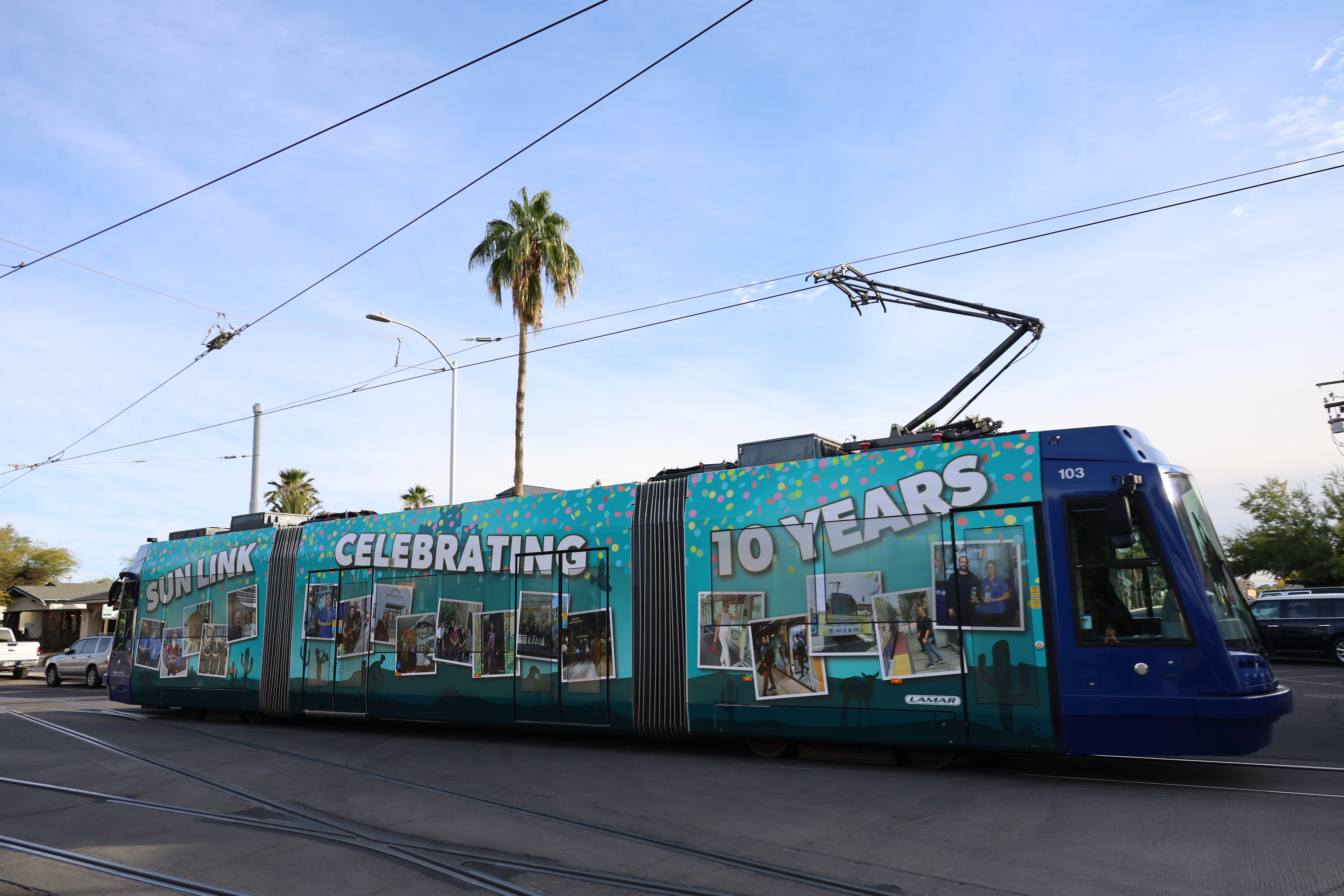
Sun Link celebrated 10 years of service with a day of community festivities. The morning began with a press conference featuring local leaders, followed by a community fair. There were many events along the streetcar route from activities at Geronimo Plaza to Moana story time at the U of A to ending the night at Mercado Annex for the Flow for the Soul Train: Streetcar Jubilee. Hop on the Sun Link Streetcar HERE.
The Comprehensive Operational Analysis (COA) of Sun Van was set in motion. This study aimed to identify opportunities to improve access to transit, mobility and customer experience. Six public meetings and two virtual took place in May. For more information click HERE.
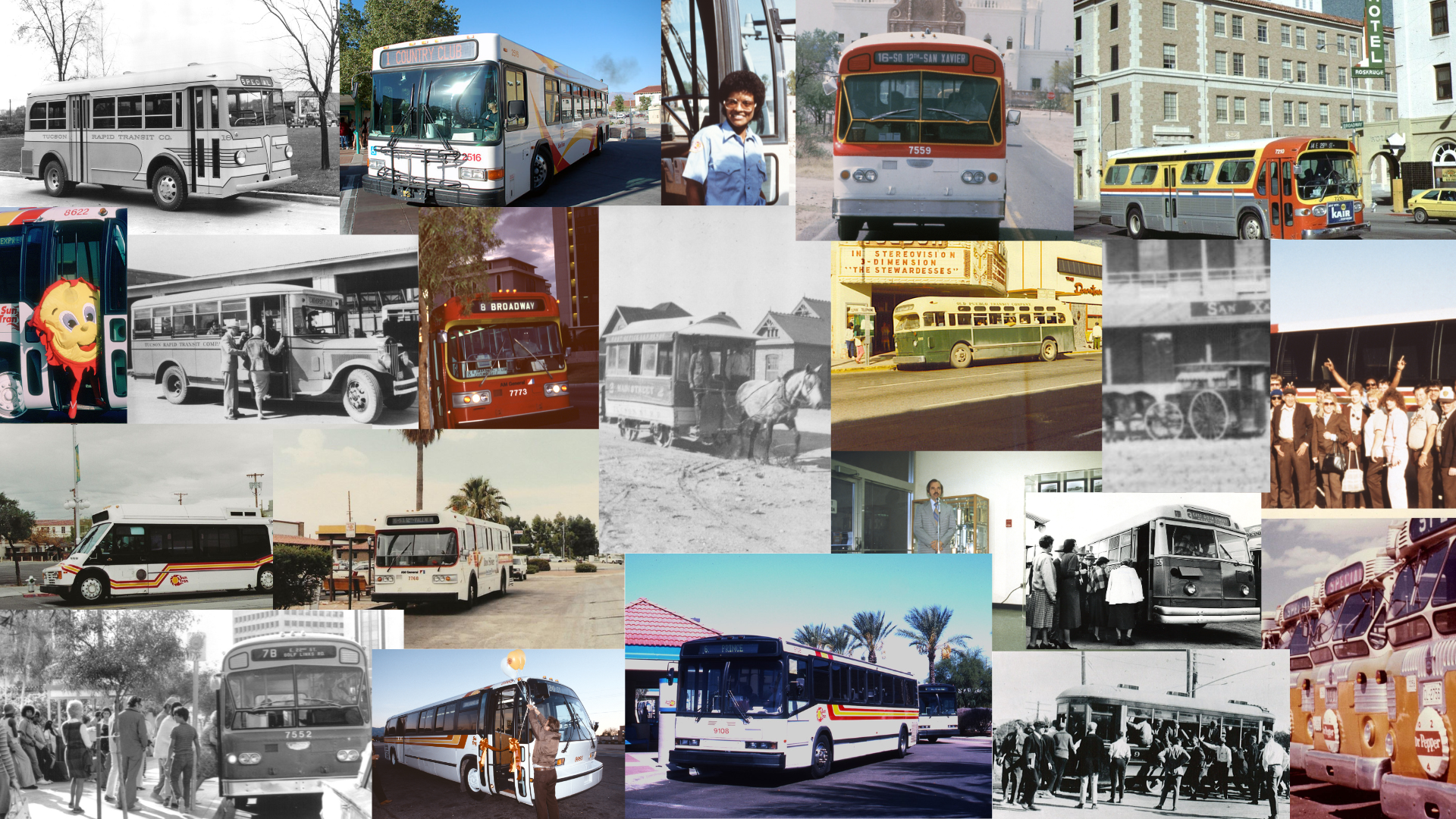
Snapshots Through Time ????
Take a stroll through Tucson’s transit history with our photo gallery! From vintage buses to snapshots of riders, and special events, these pictures tell the story of how we’ve grown alongside the Tucson community.
1879: Herdic Line
Herdic at San Xavier Hotel zoomed in.
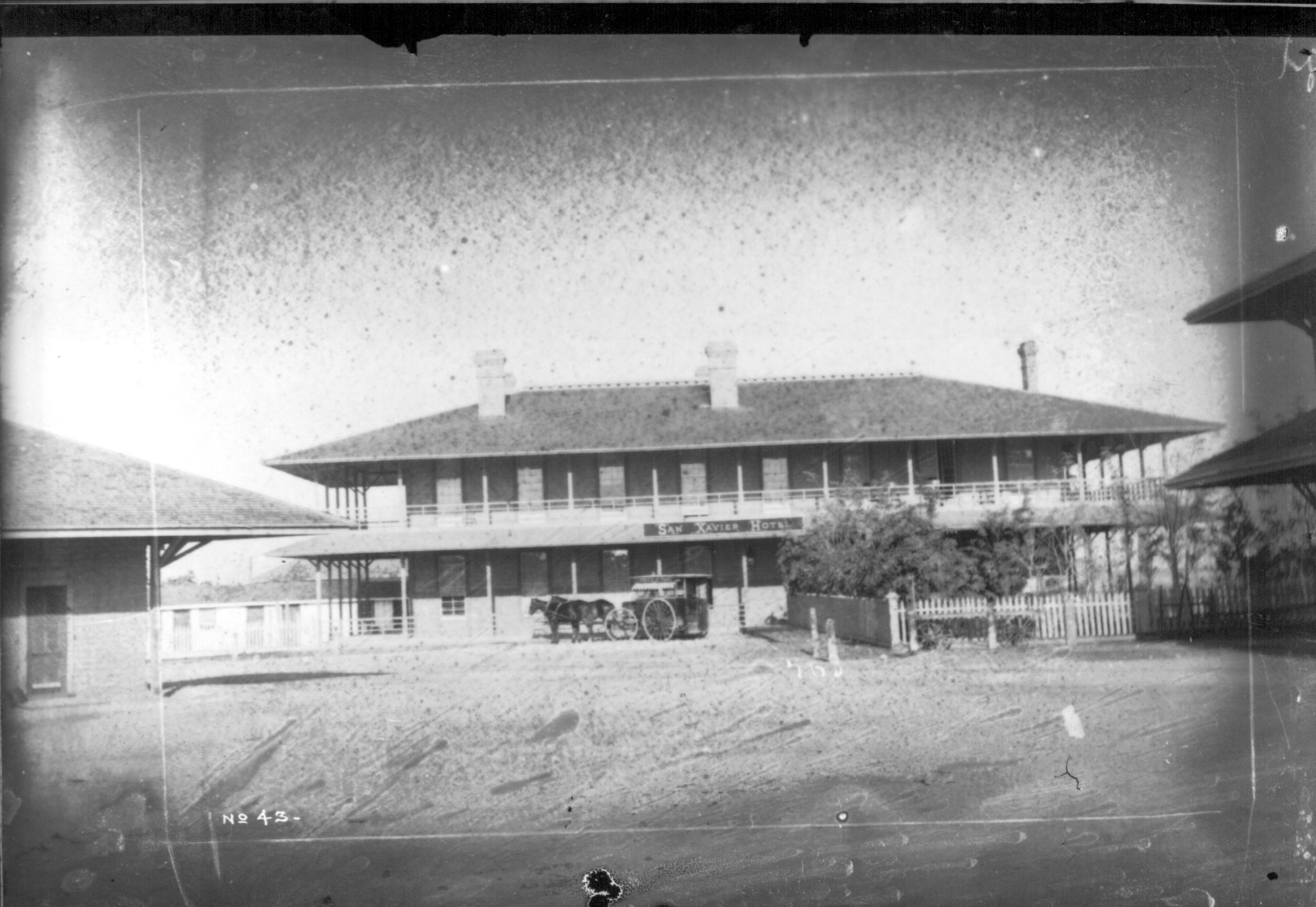
Herdic at San Xavier Hotel (Orginal).
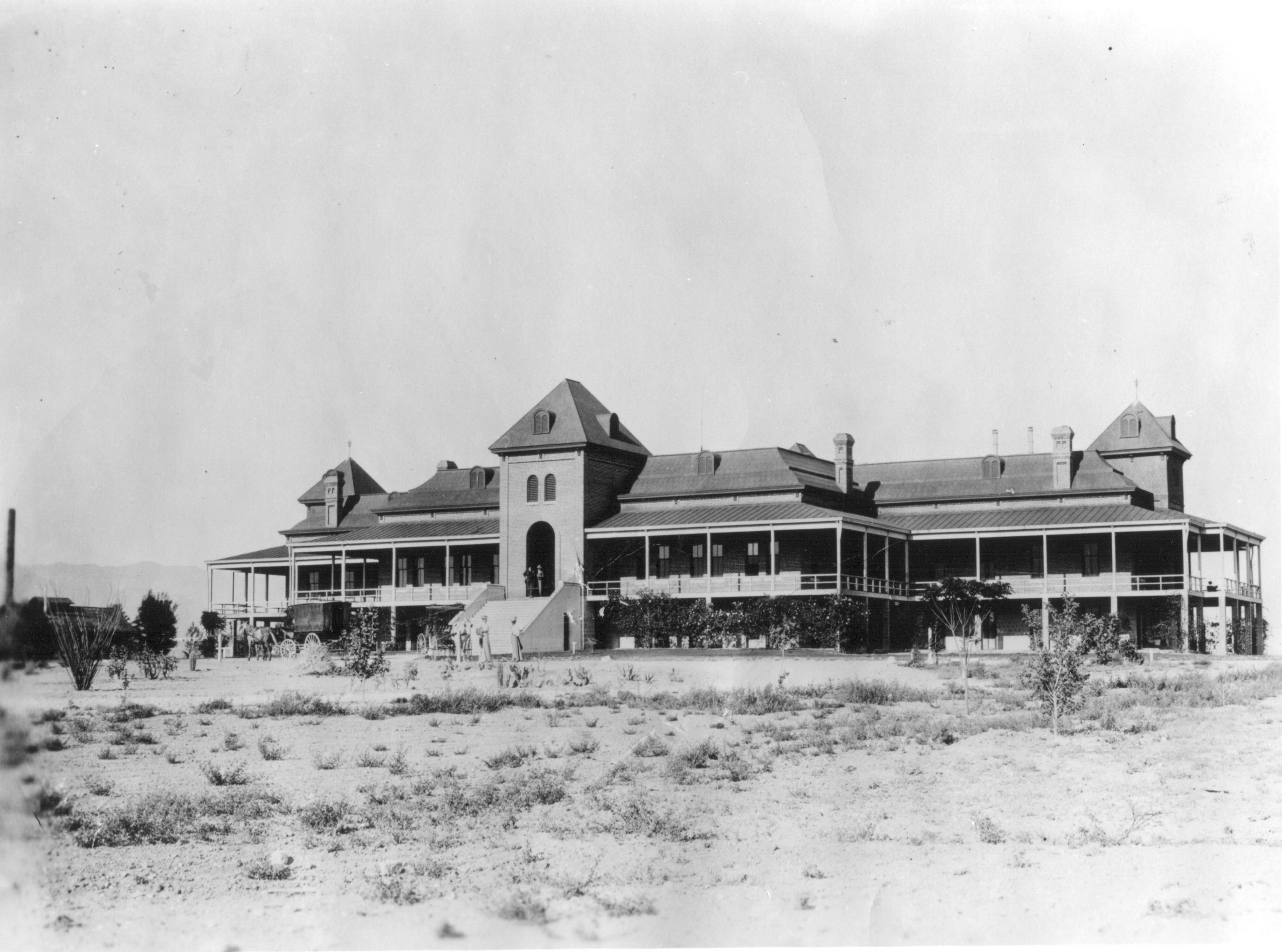
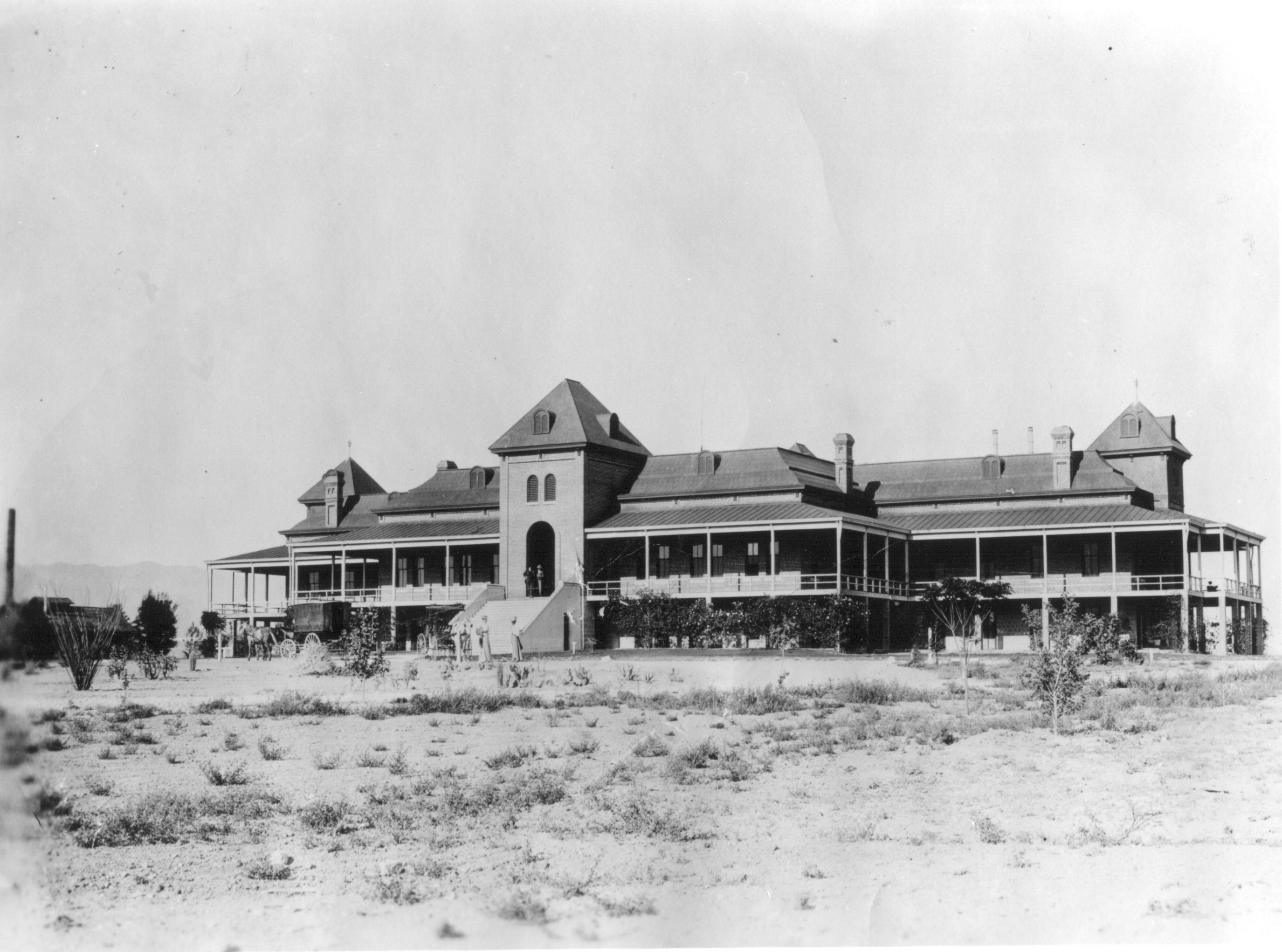
Herdic at the University of Arizona’s Old Main building.
1900 – 1925: Horse & Electric Streetcars
Horse streetcar at Third & Park 1901.
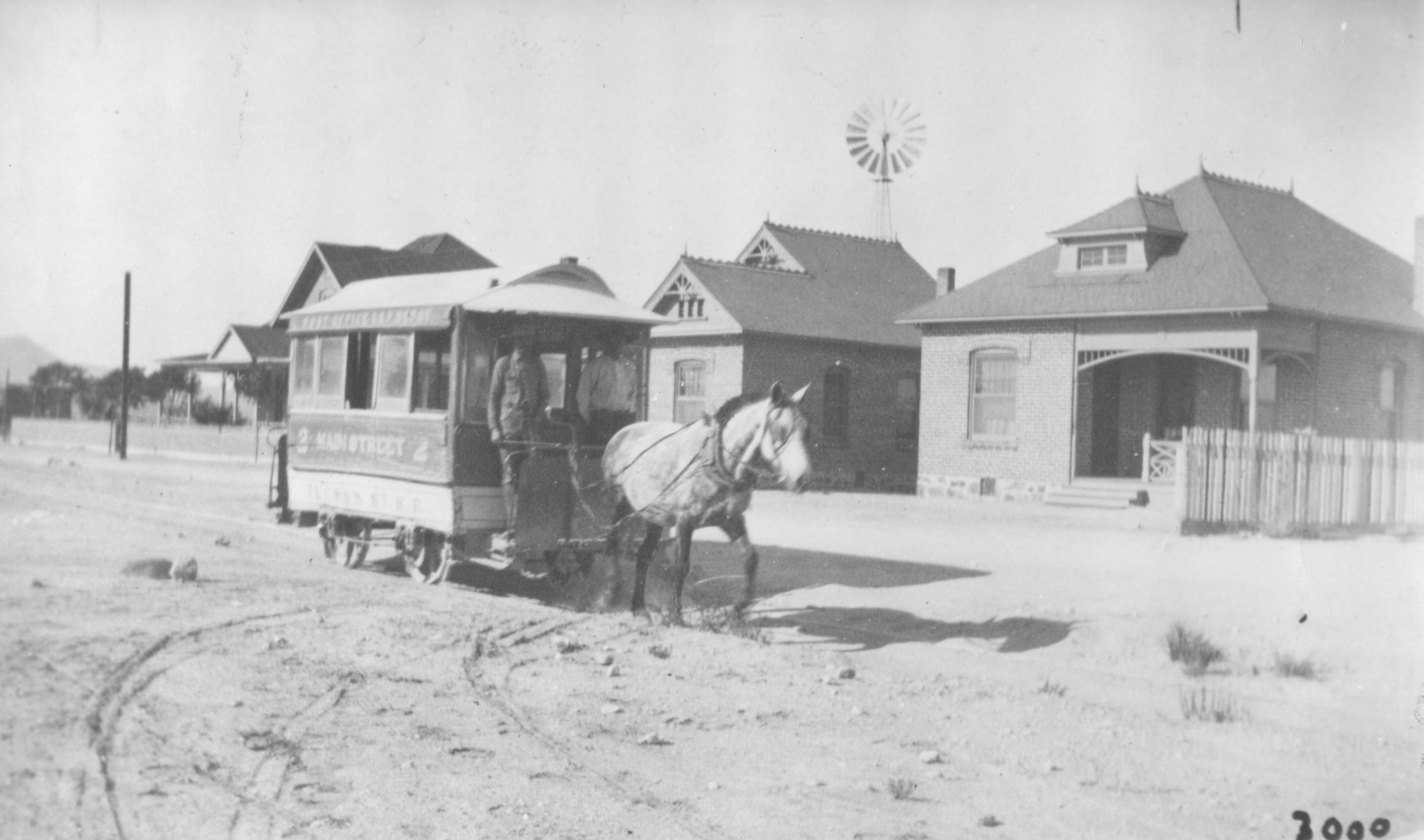
Horse streetcar on Third Street passing by homes.
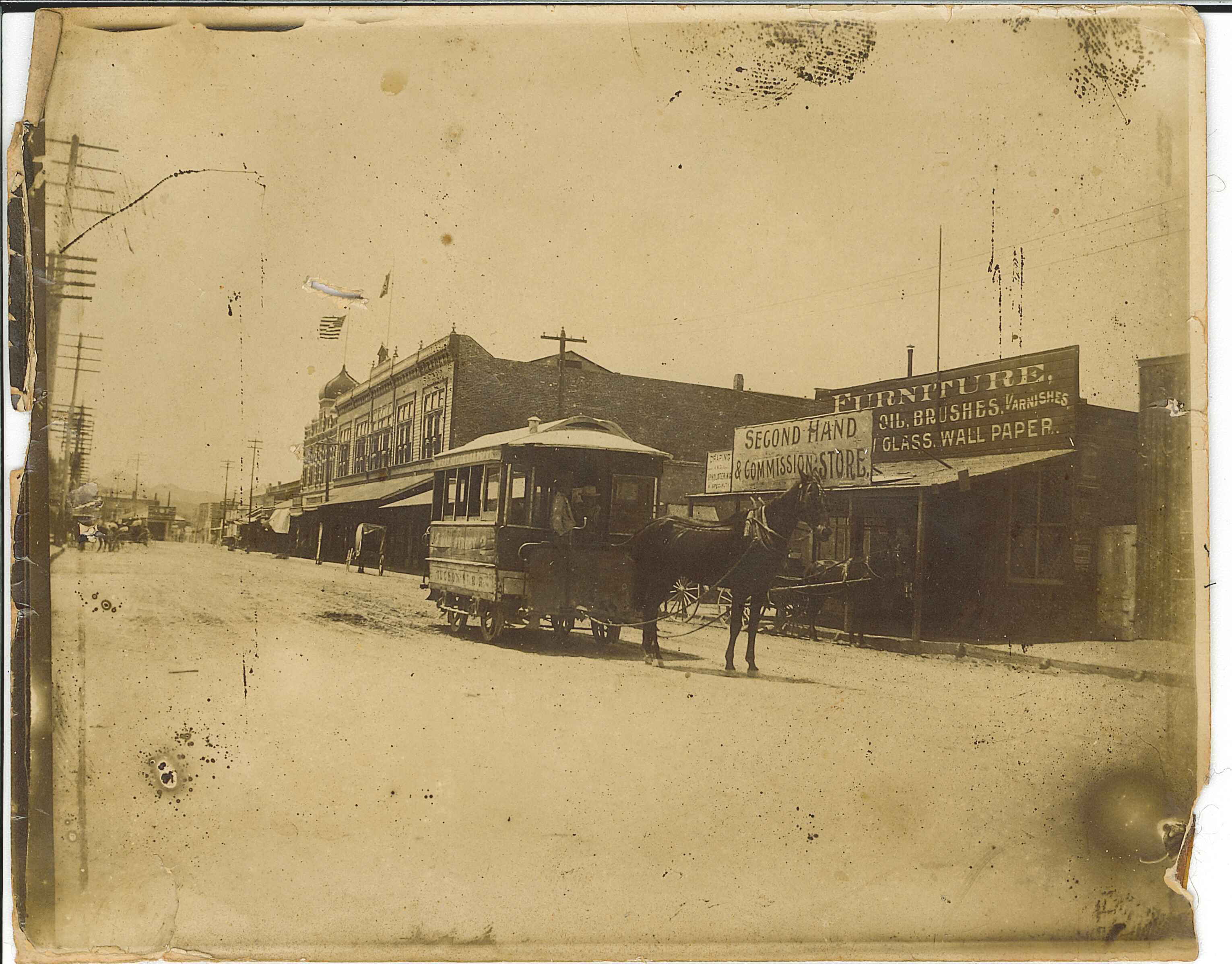
Horse streetcar Eastbound on Congress St, West of Scott.
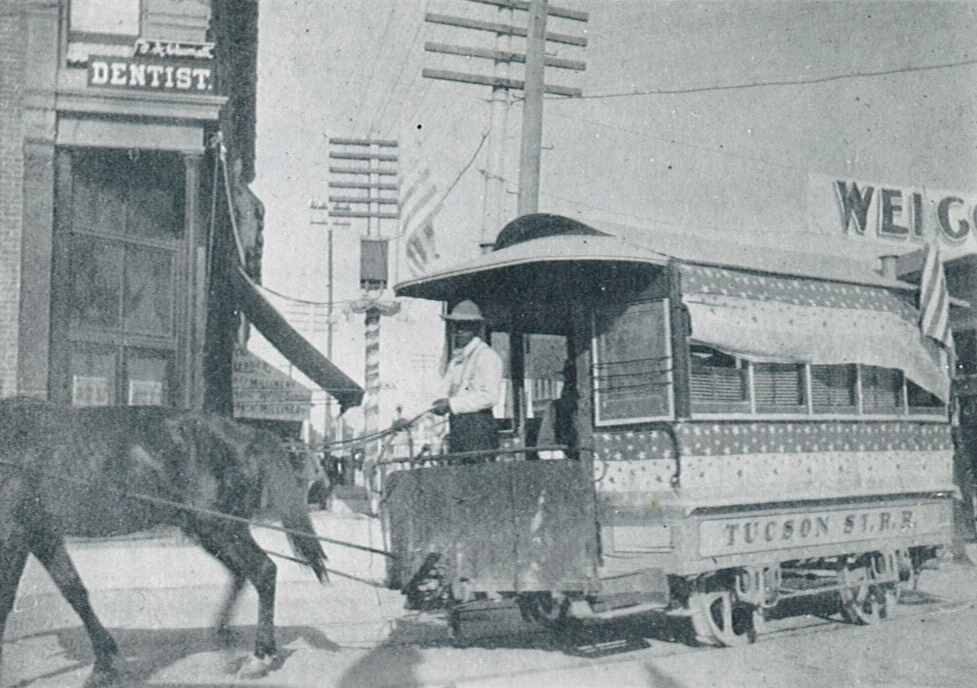
Horse streetcar with operator turning onto Stone Ave.
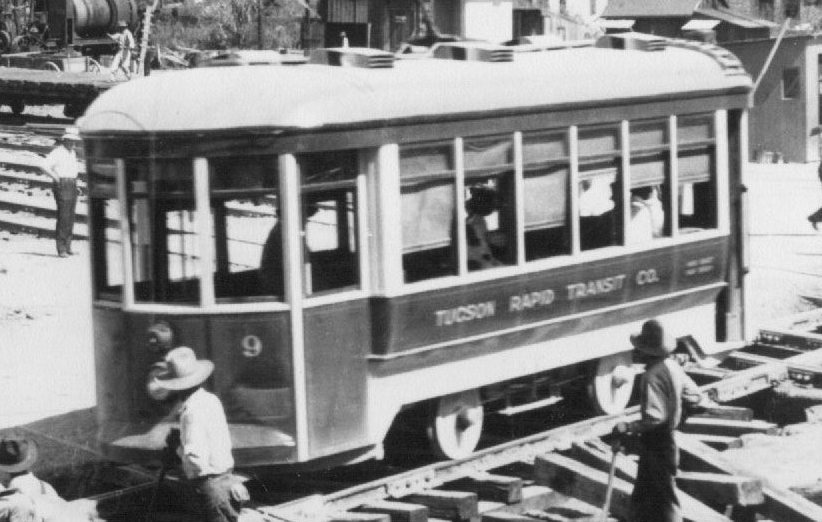
Tucson Rapid Transit streetcar nine 1923
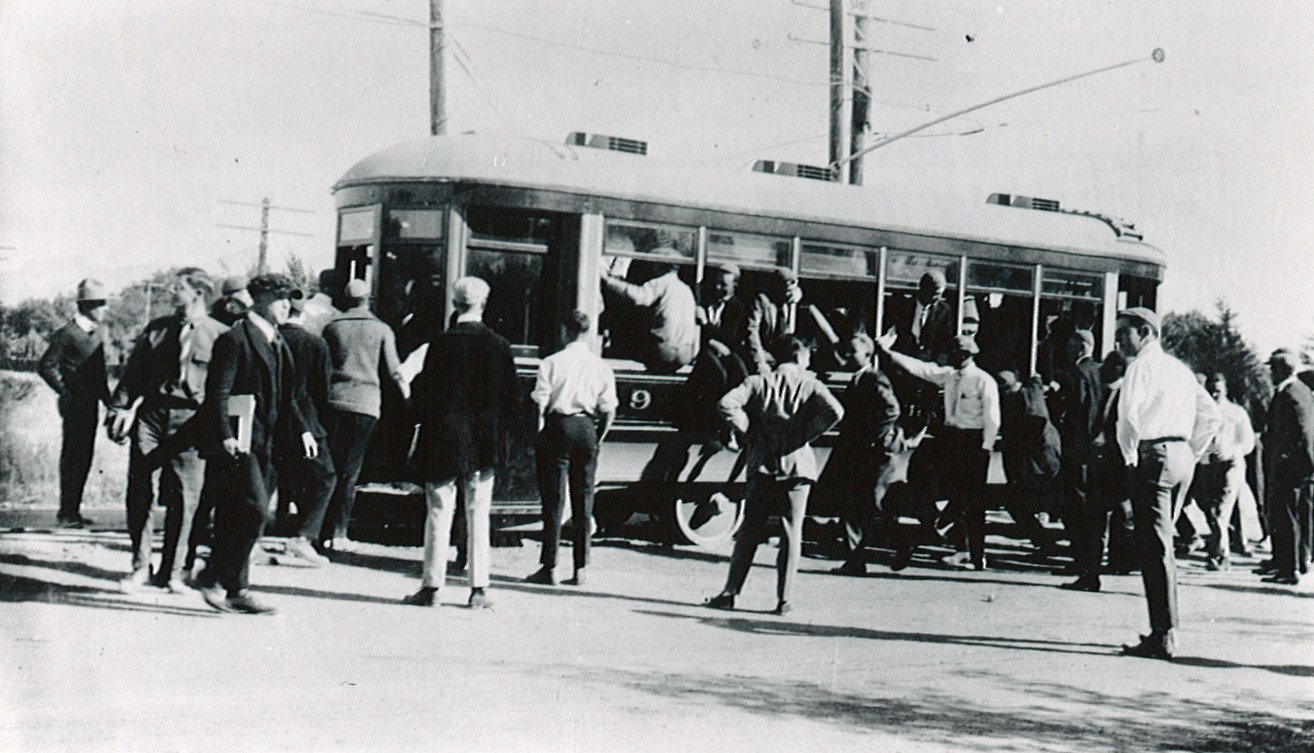
Tucson Rapid Transit streetcar nine at University of Arizona campus 1917.
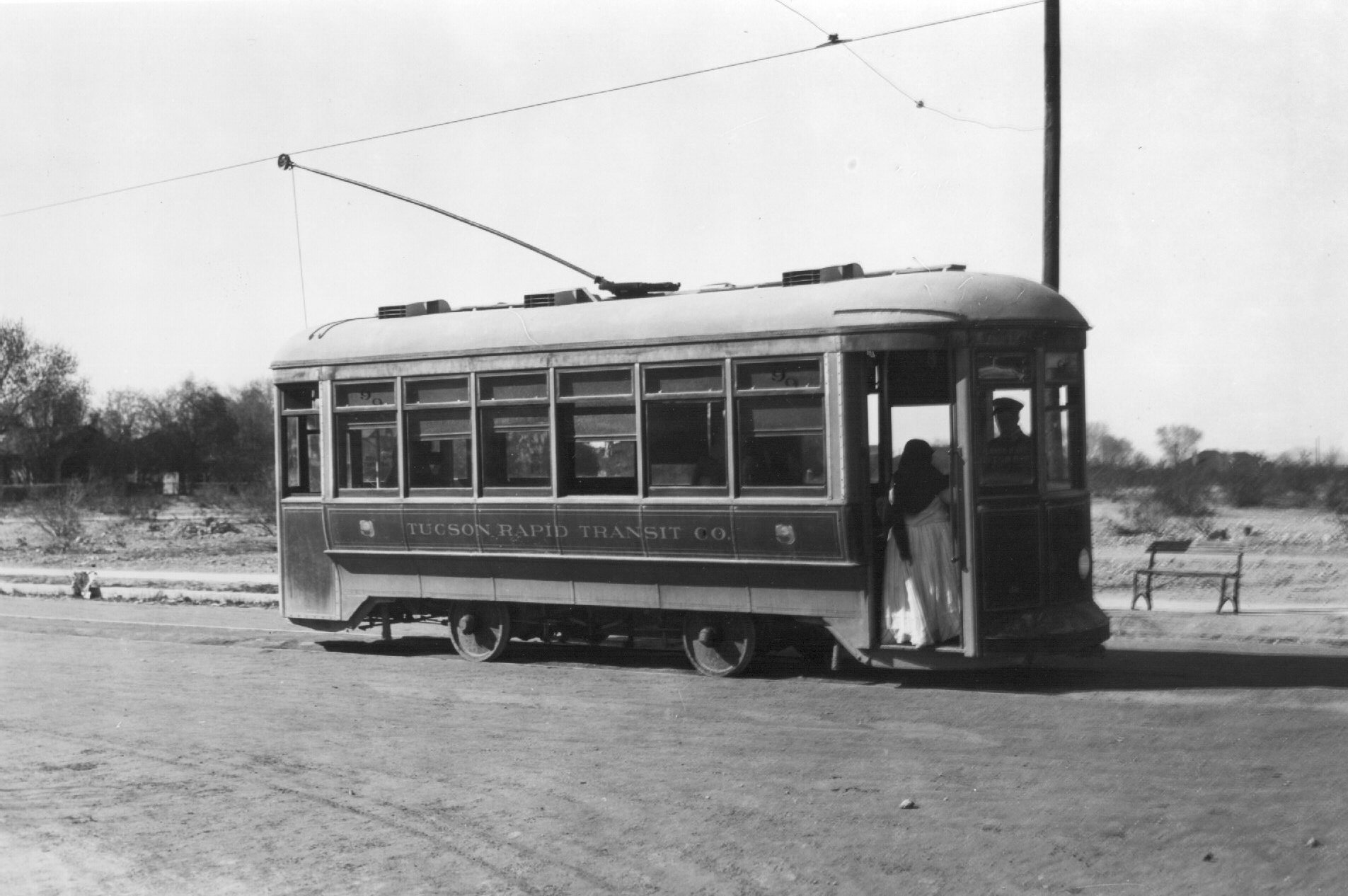
Woman deboarding Tucson Rapid Transit streetcar.
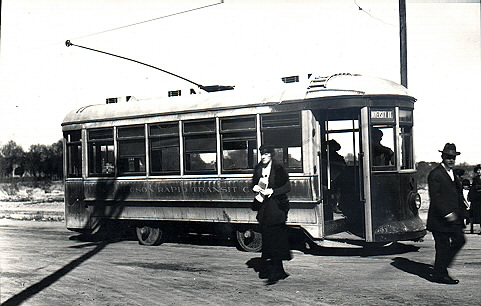
People deboarding Tucson Rapid Transit streetcar eight.
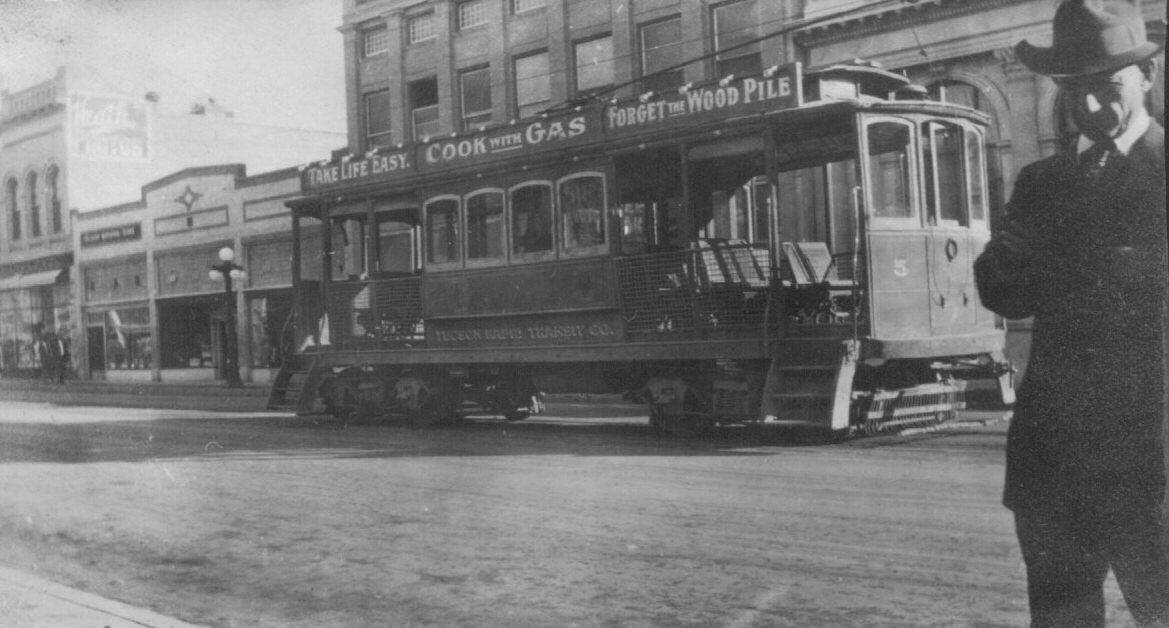
Tucson Rapid Transit streetcar five on west Congress Street 1920.
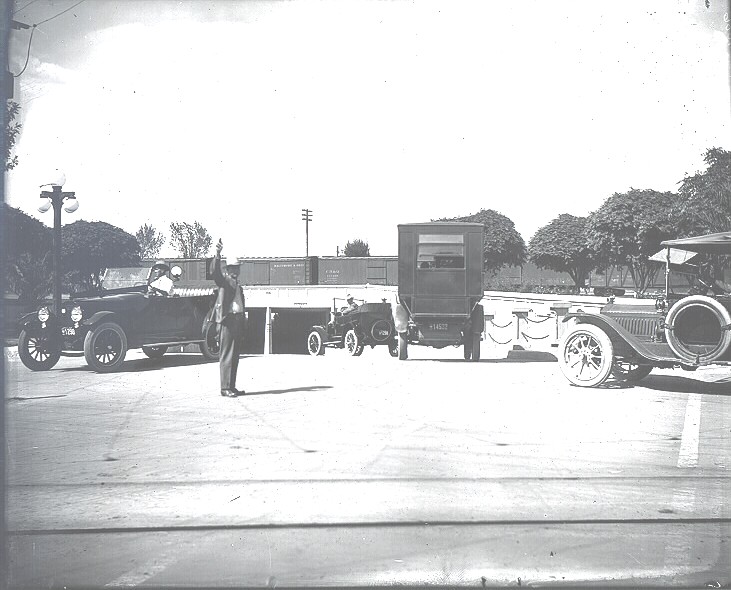
Blue Bar Auto & Taxi was a bus company created in 1916.
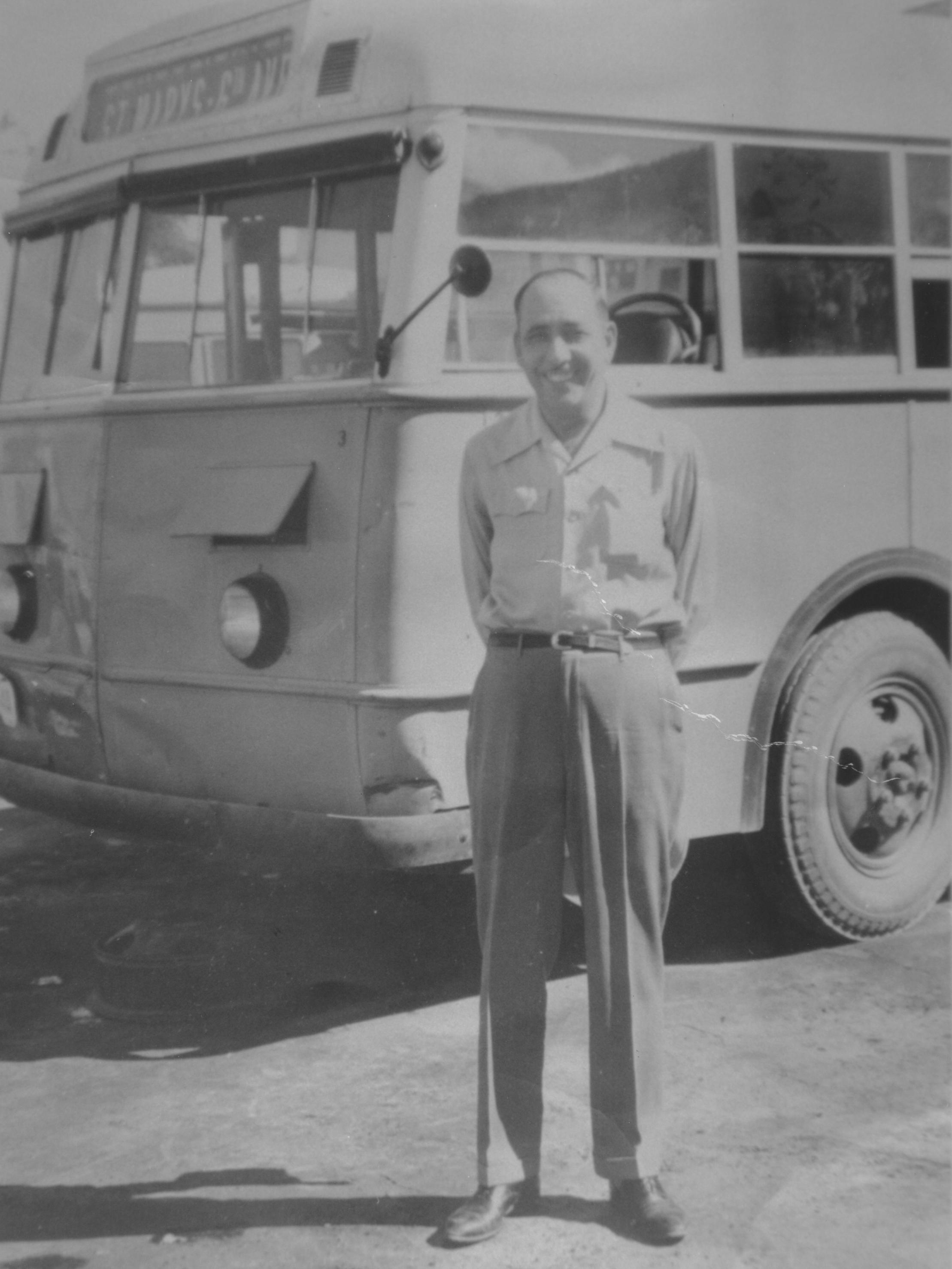
Roy Laos with Occidental Bus Line bus. Service began 1925.
Passengers boarding Occidental Bus Line bus.
1930 – 1960s: Early Buses
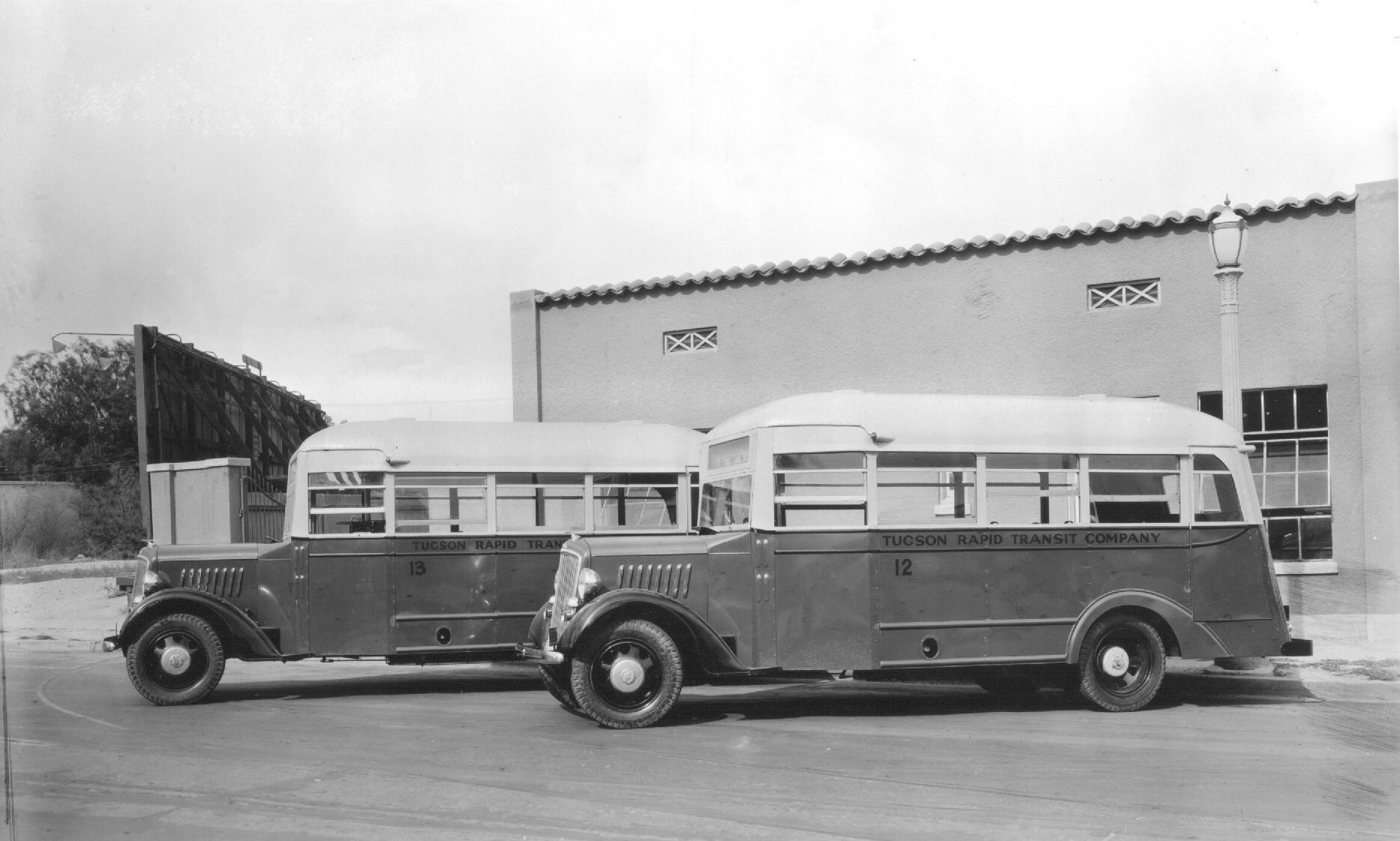
Tucson Rapid Transit 1935 buses on Stone Avenue.
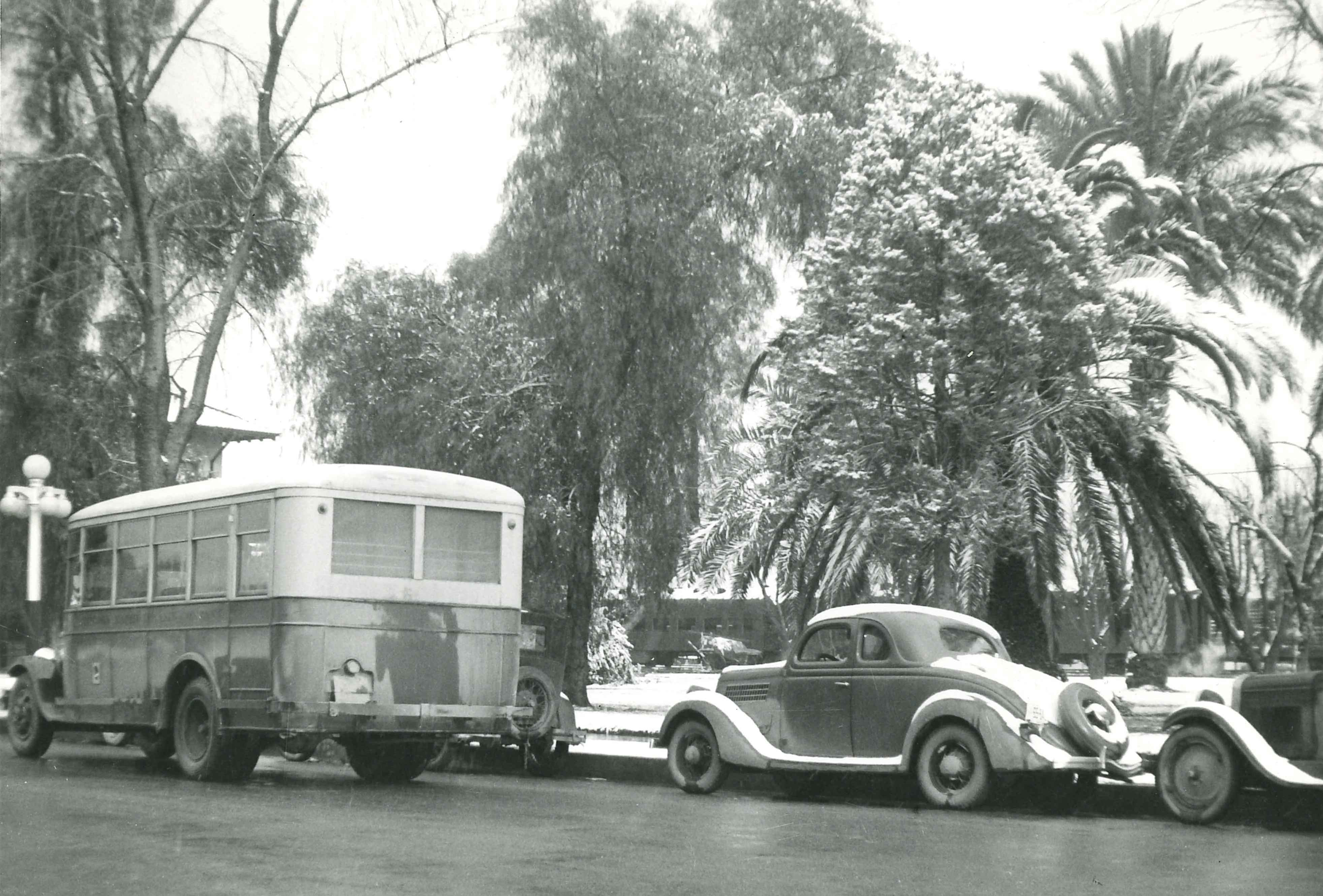
Tucson Rapid Transit bus in a snowy day in 1937.
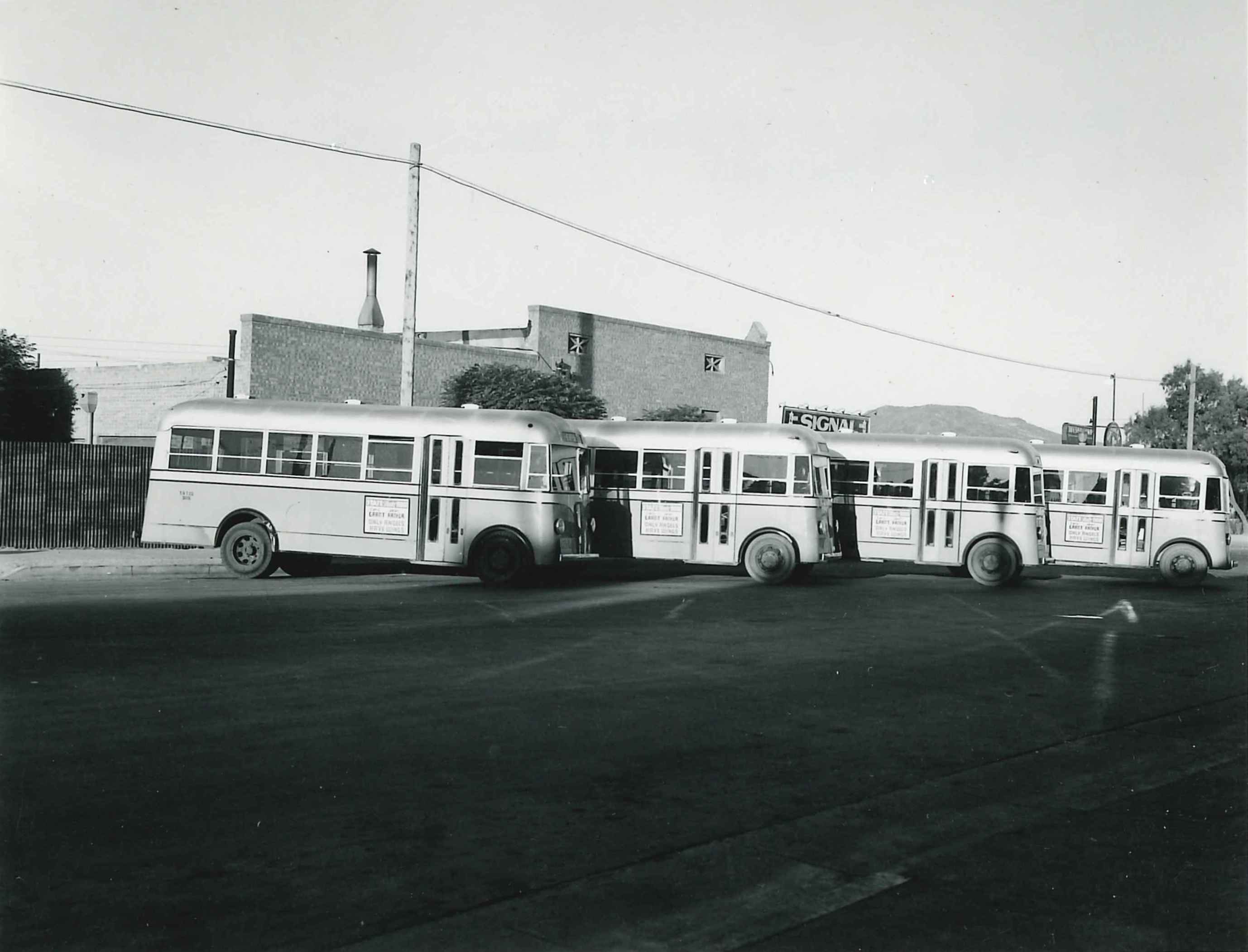
Buses in 1939 on 5th Street.
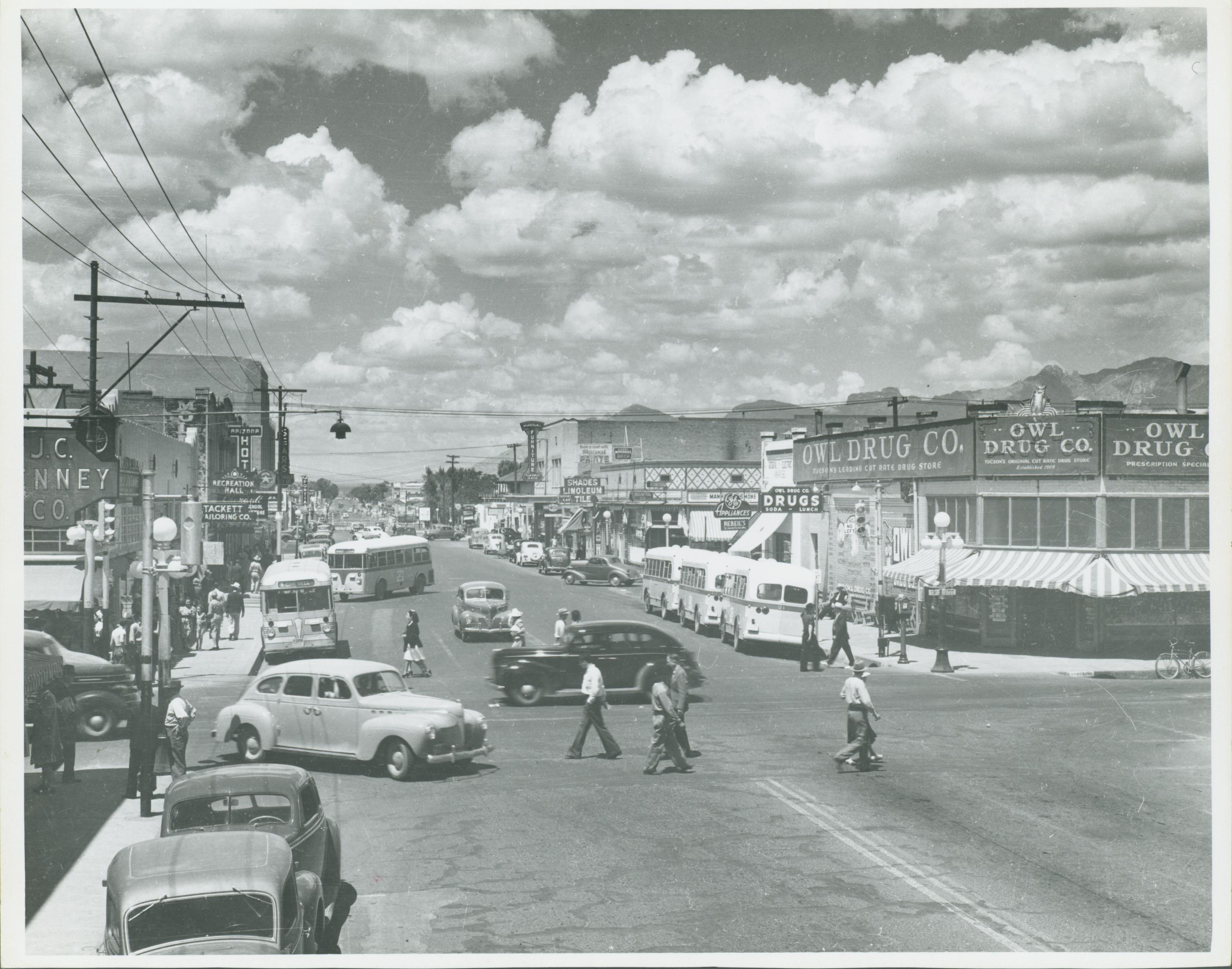
Buses loading on 6th Avenue next to Owl Drug Company, 1941.
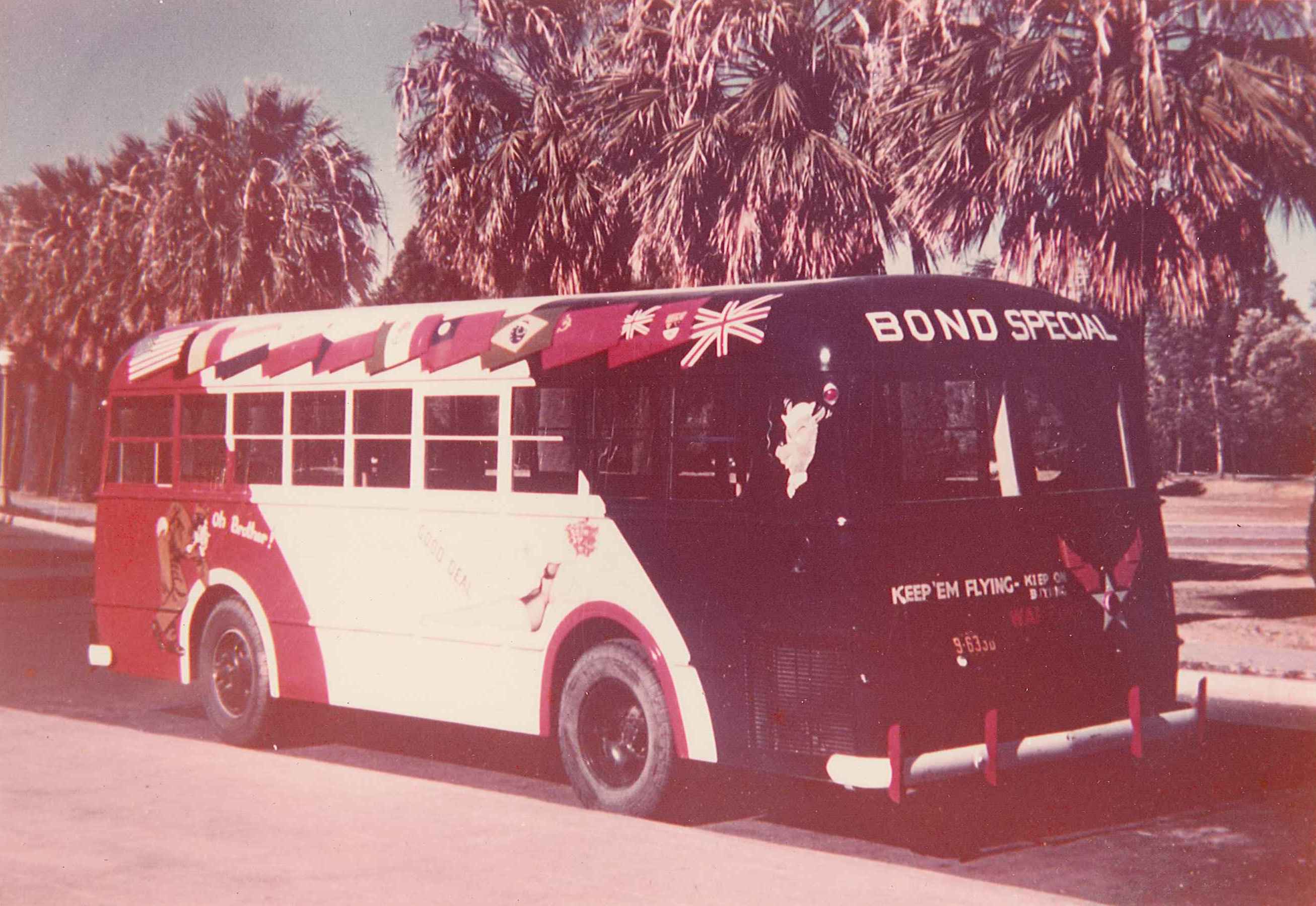
Bus at the University of Arizona Campus 1944.
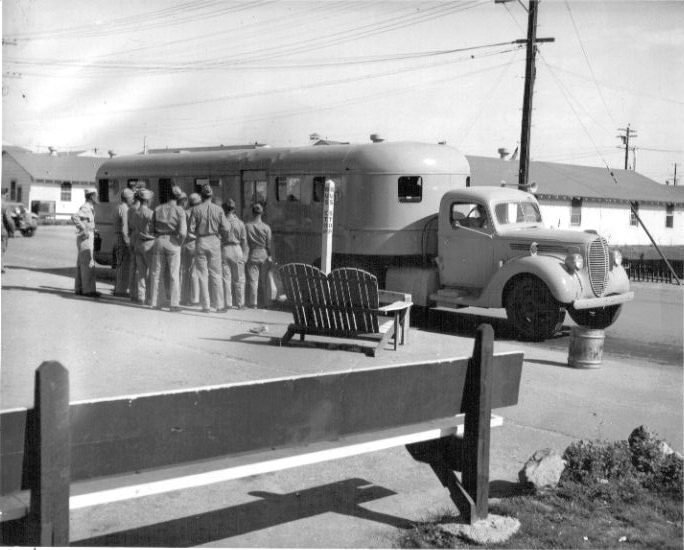
Soldiers boarding bus at Davis Monthan, 1943.

New 201 bus, 1951.
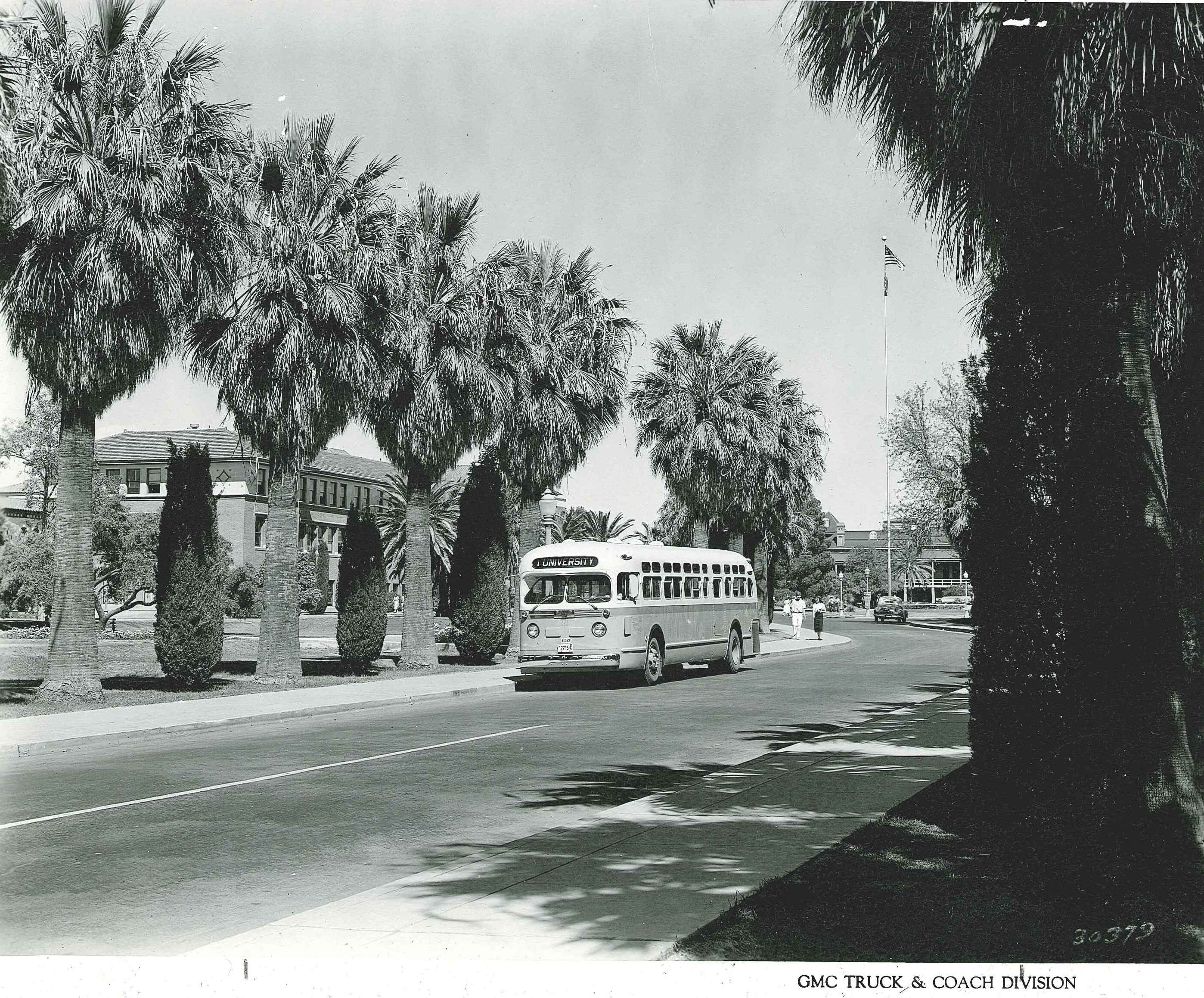
Bus 221 at University of Arizona Mall, 1957.
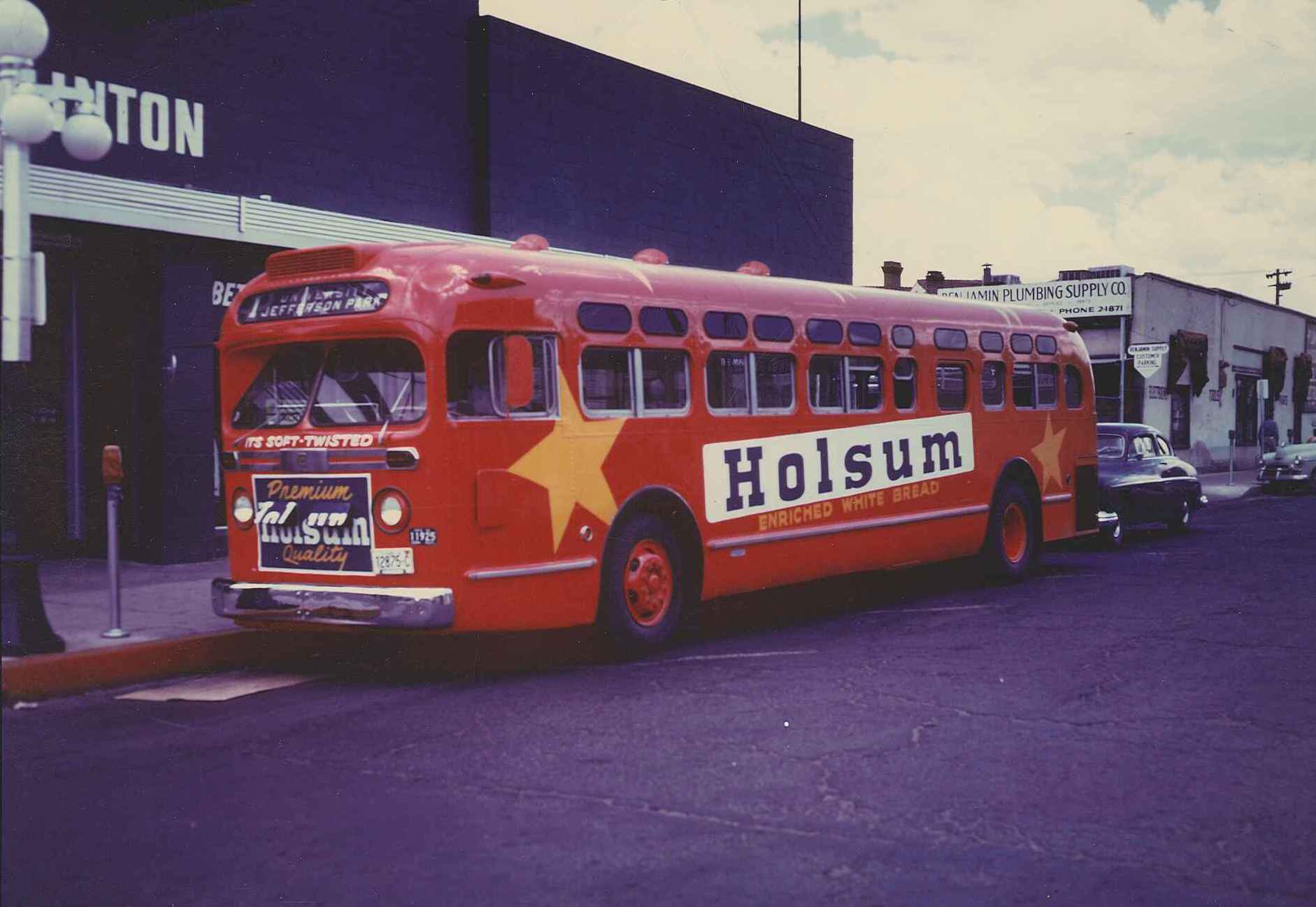
Bus 209 on 10th Street painted as the Holsum Bread Loaf, 1958.
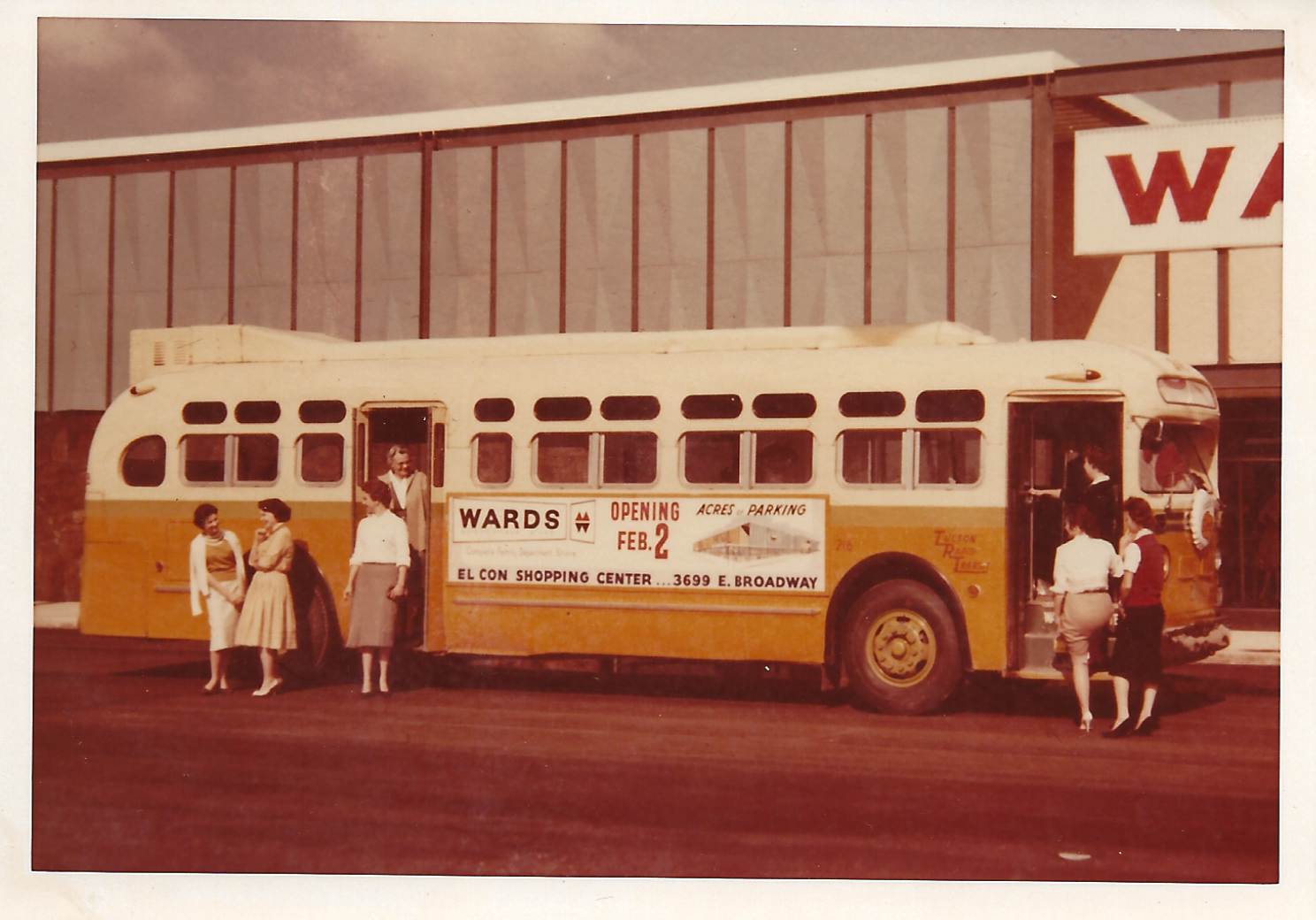
Bus 218 at El Con Shopping Center, 1962.
1960s – 1970s: Sun Tran’s Beginning
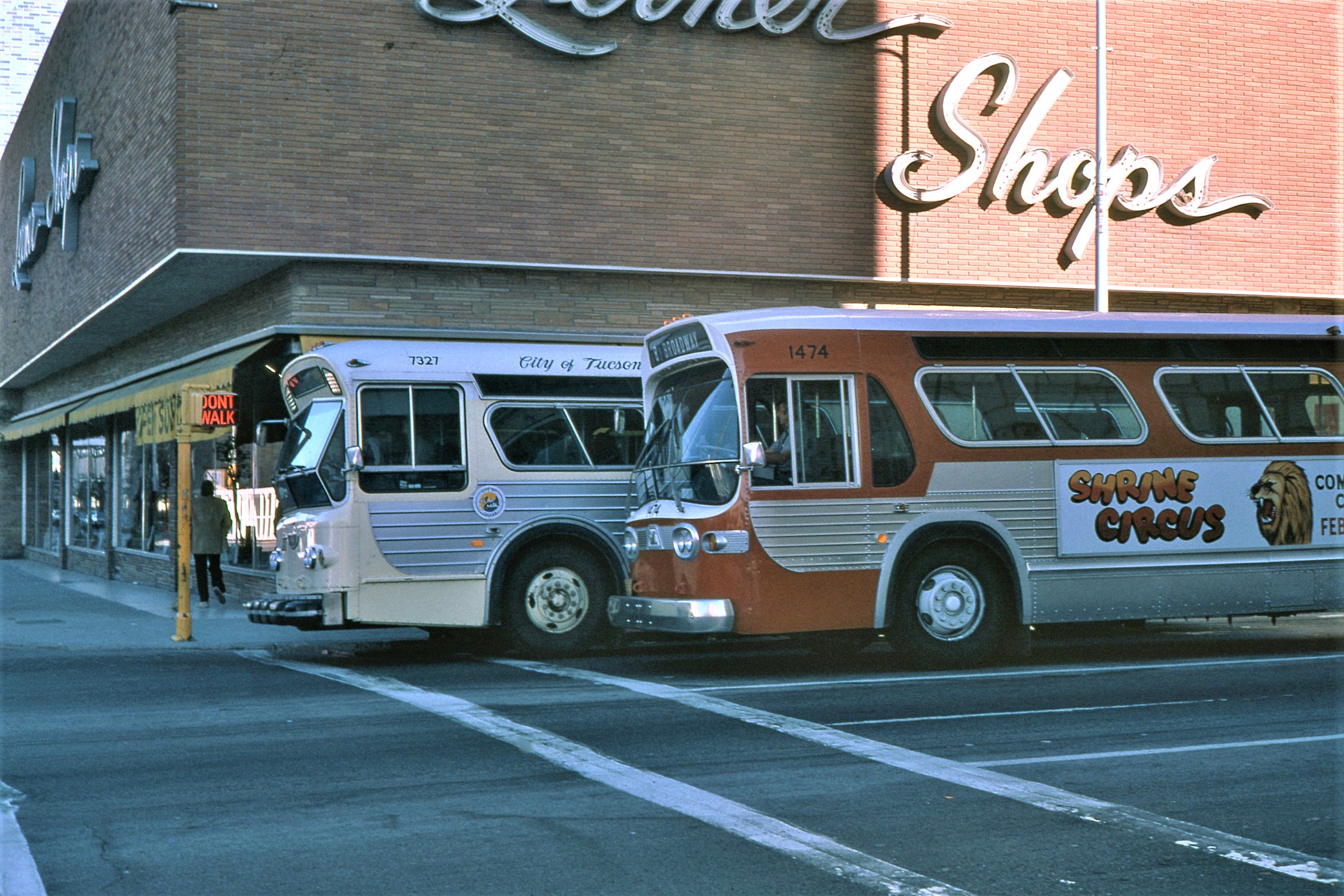
City bought the private transportation, but began to lease buses due to shortage, 1974.
Sun Tran “New Look” bus on East Broadway.
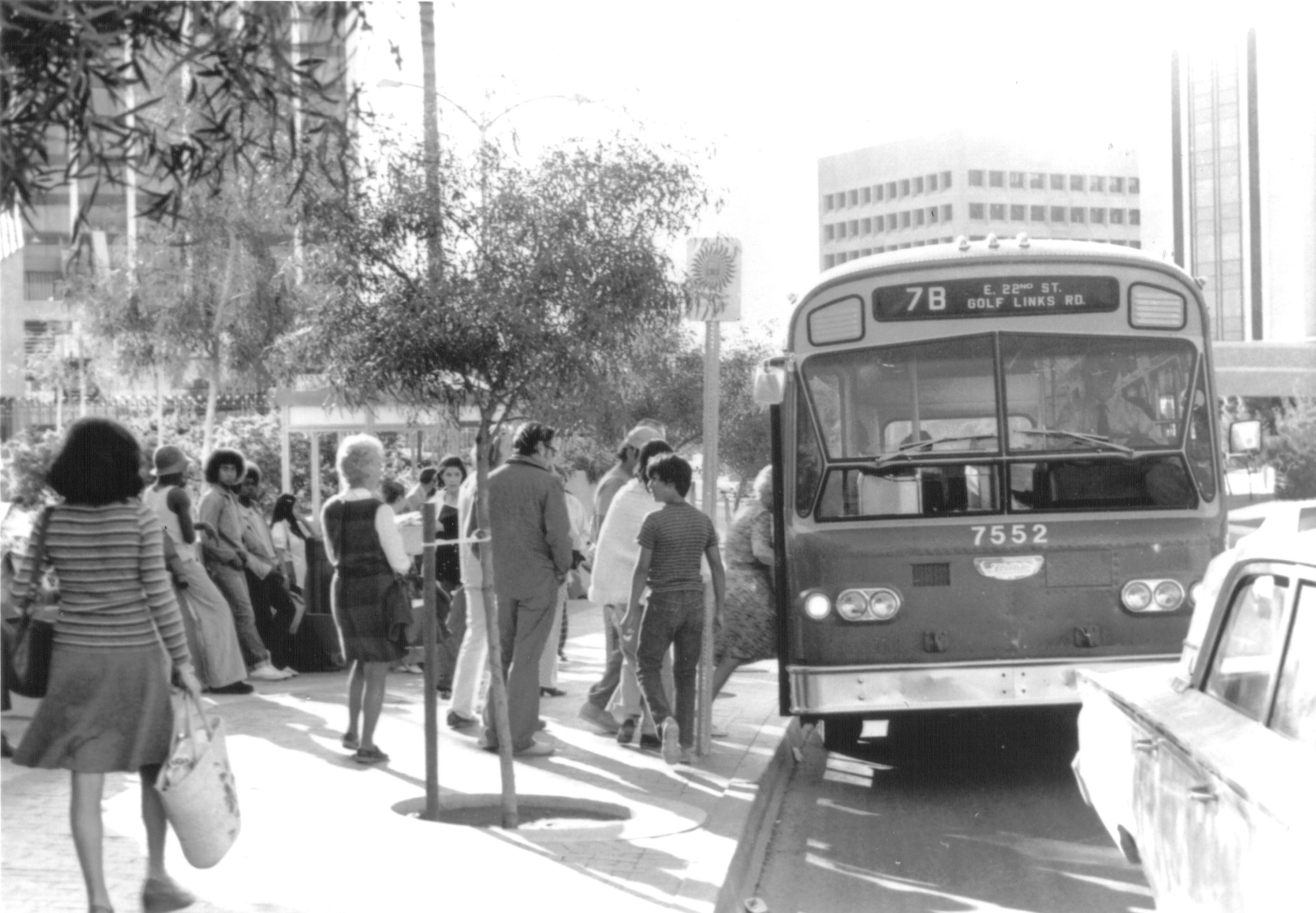
Sun Tran passengers loading at La Placita.
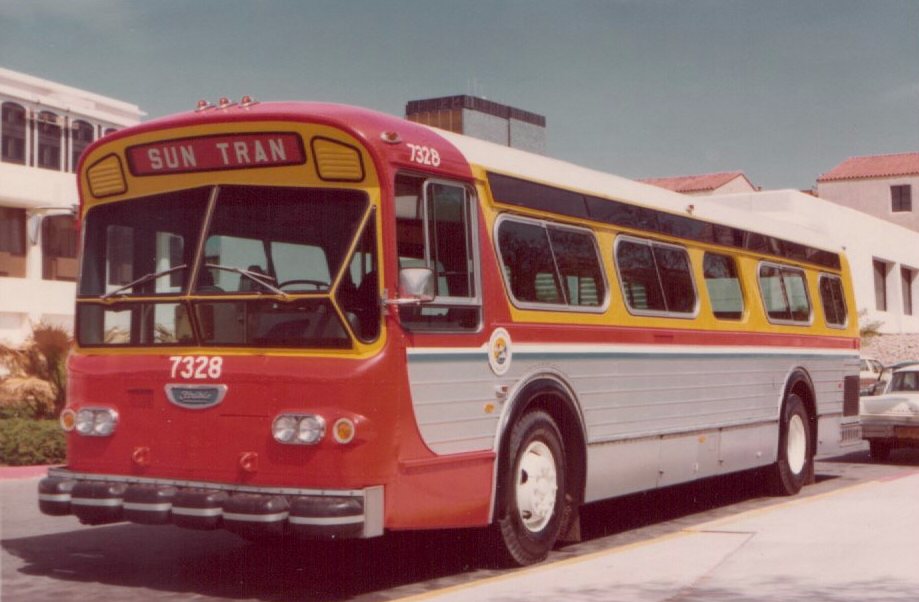
Sun Tran featuring new paint, 1975.
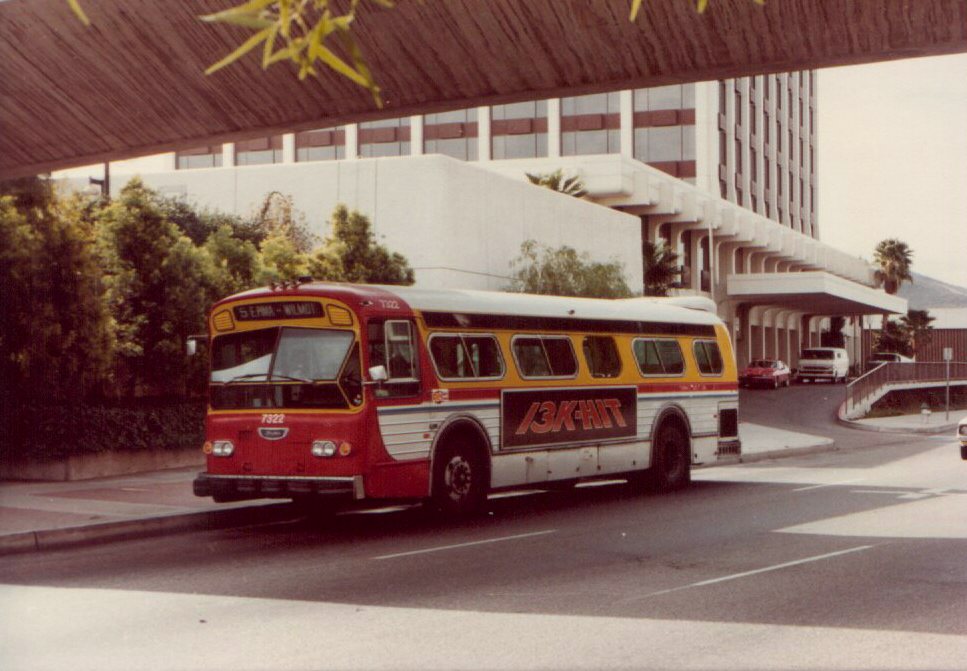
Sun Tran bus 7322 on Broadway, 1980.
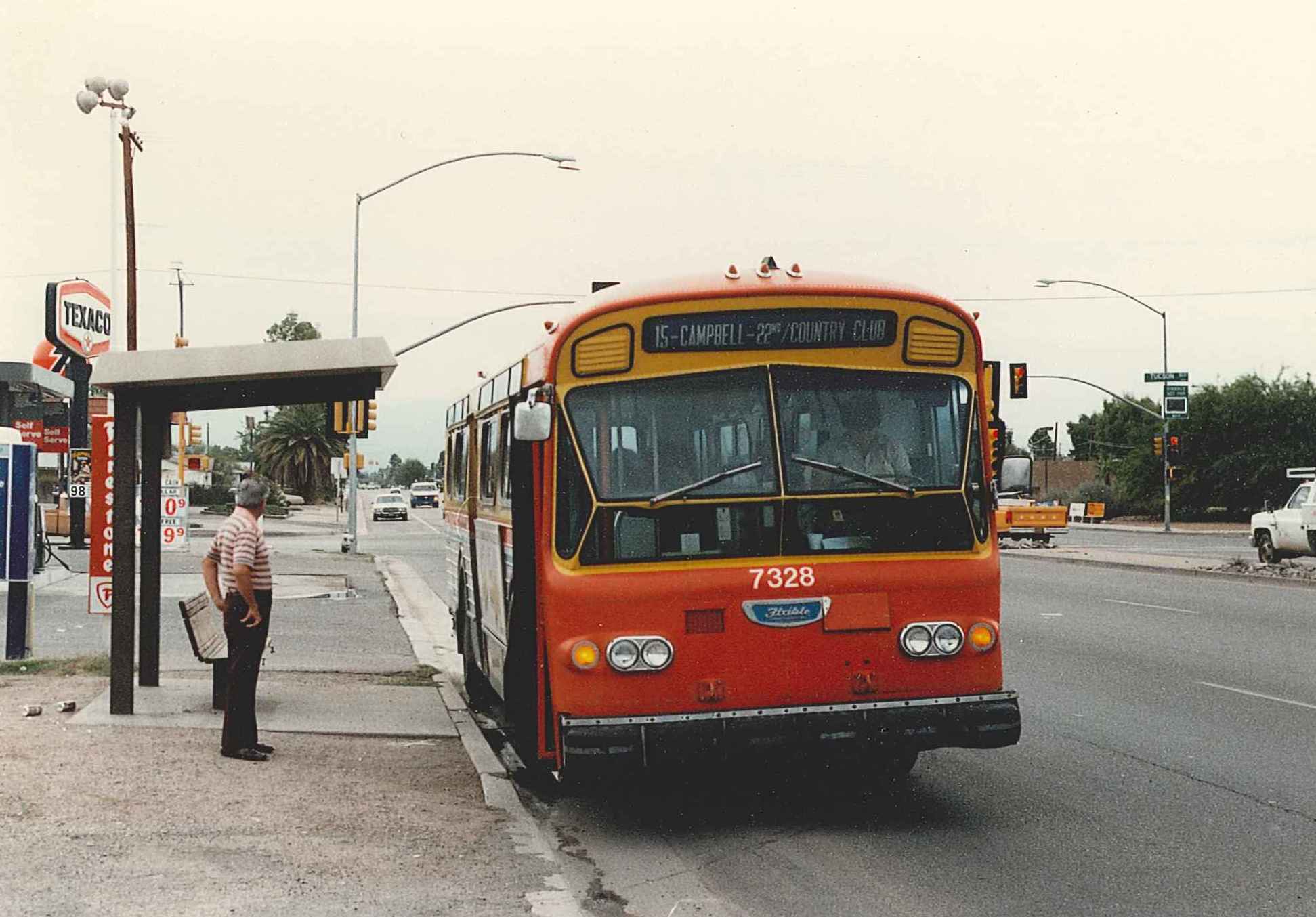
Bus 7328 on 22nd Street, 1985.
1980s – 2000: Expanding Service & Modernization
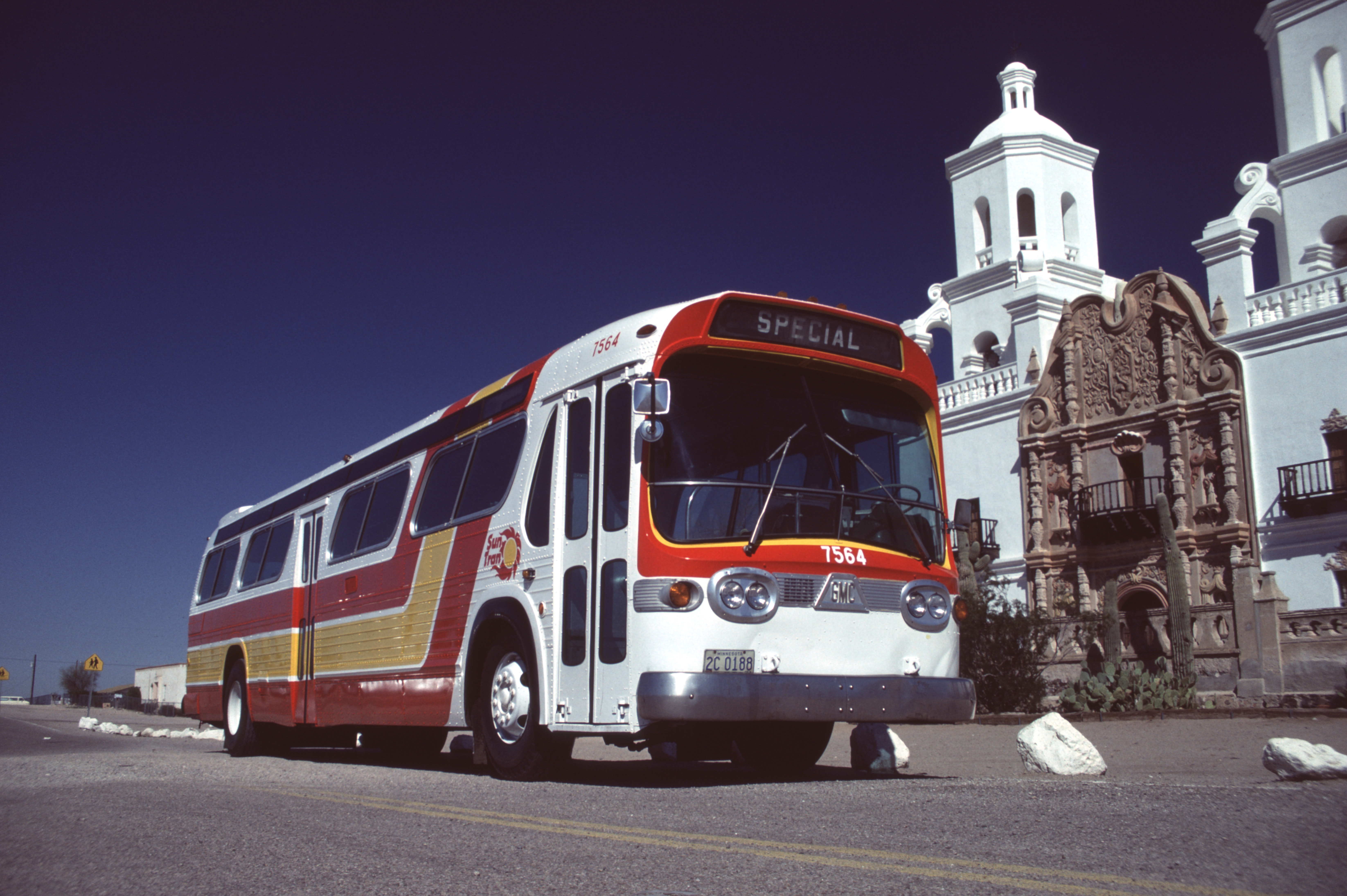
Bus at San Xavier Mission, 1980.
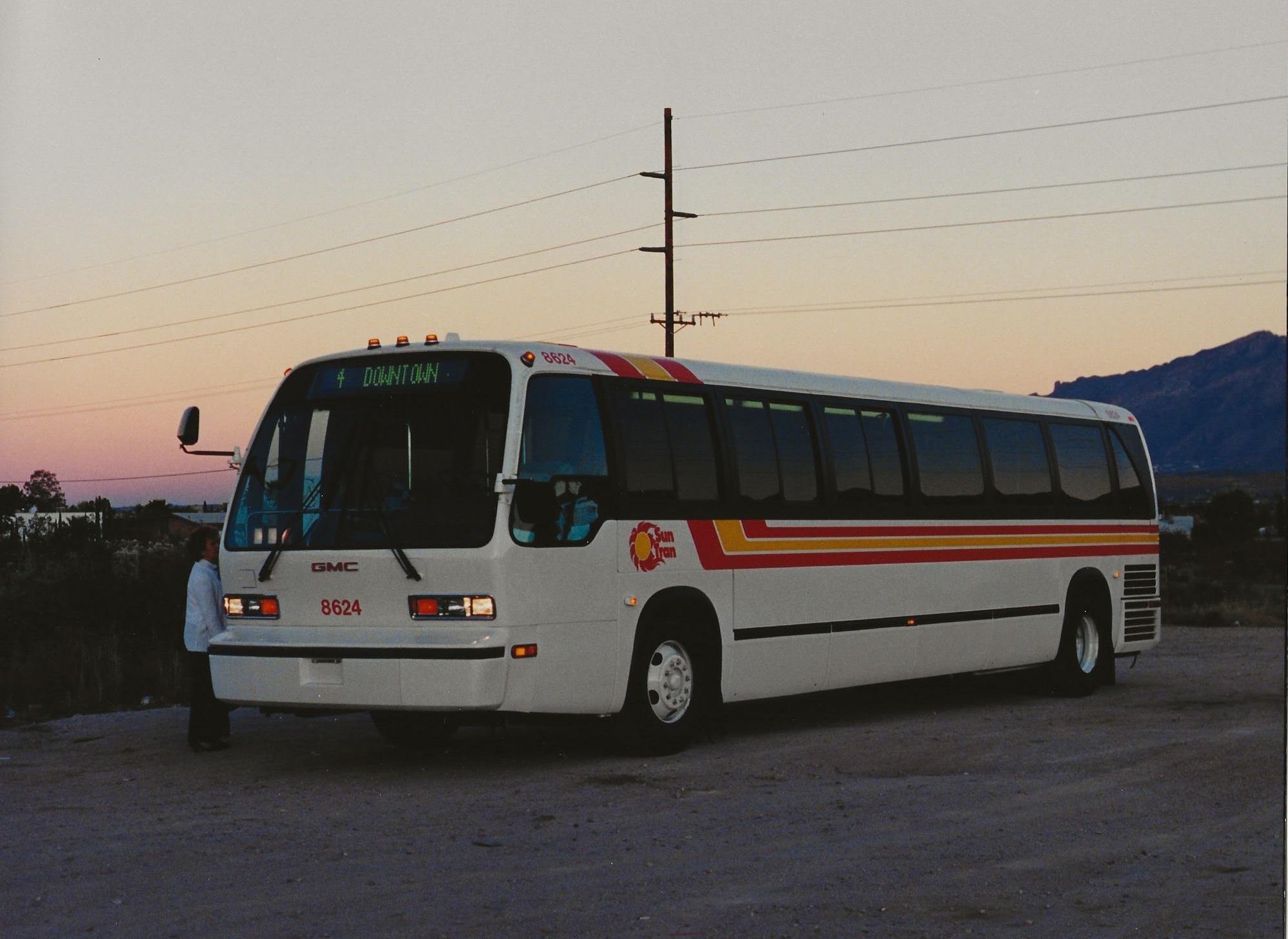
Sun Tran Bus 8624 on Speedway & Harrison, 1986.
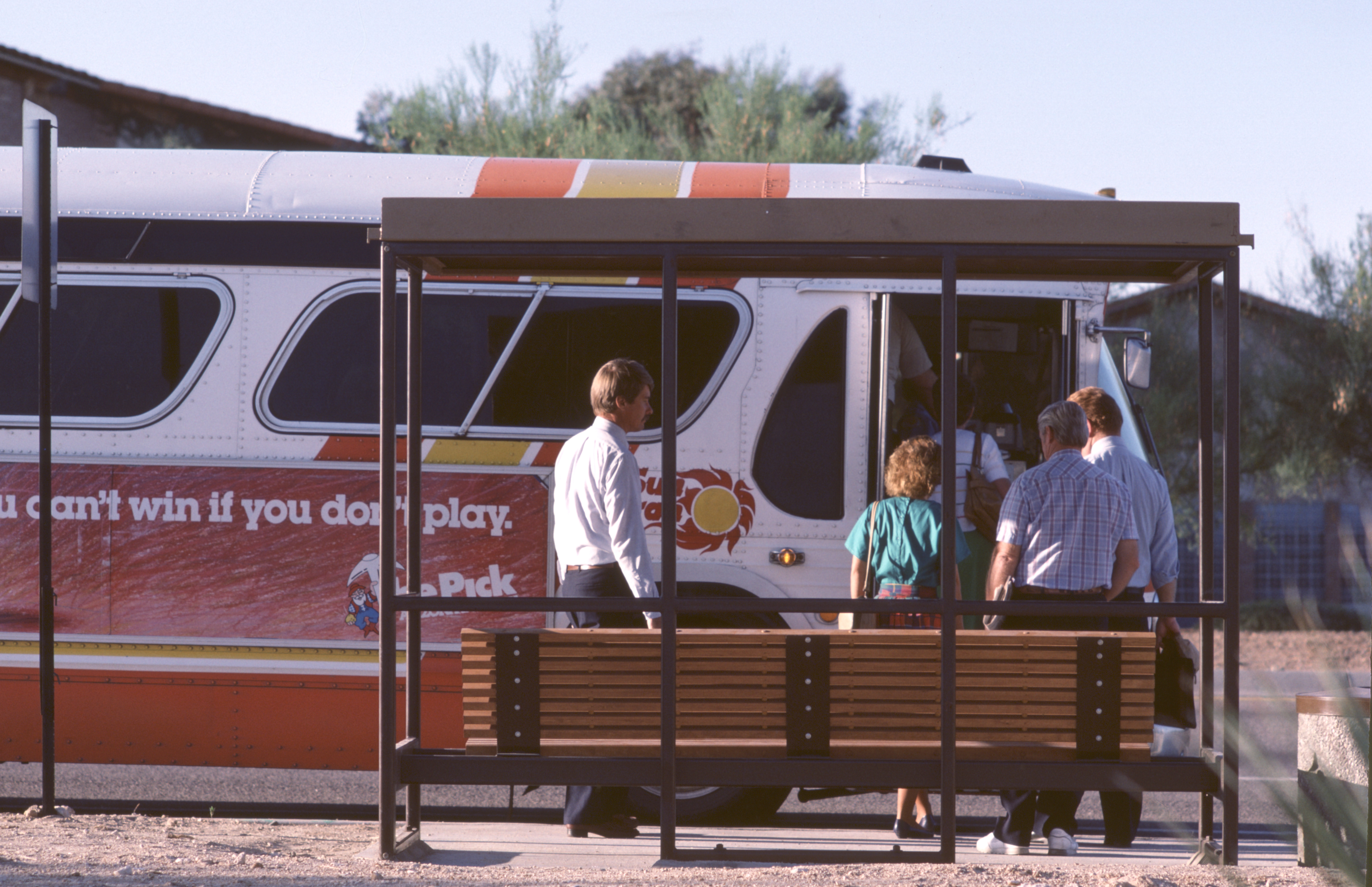
Passengers waiting at the bus shelter, 1986.
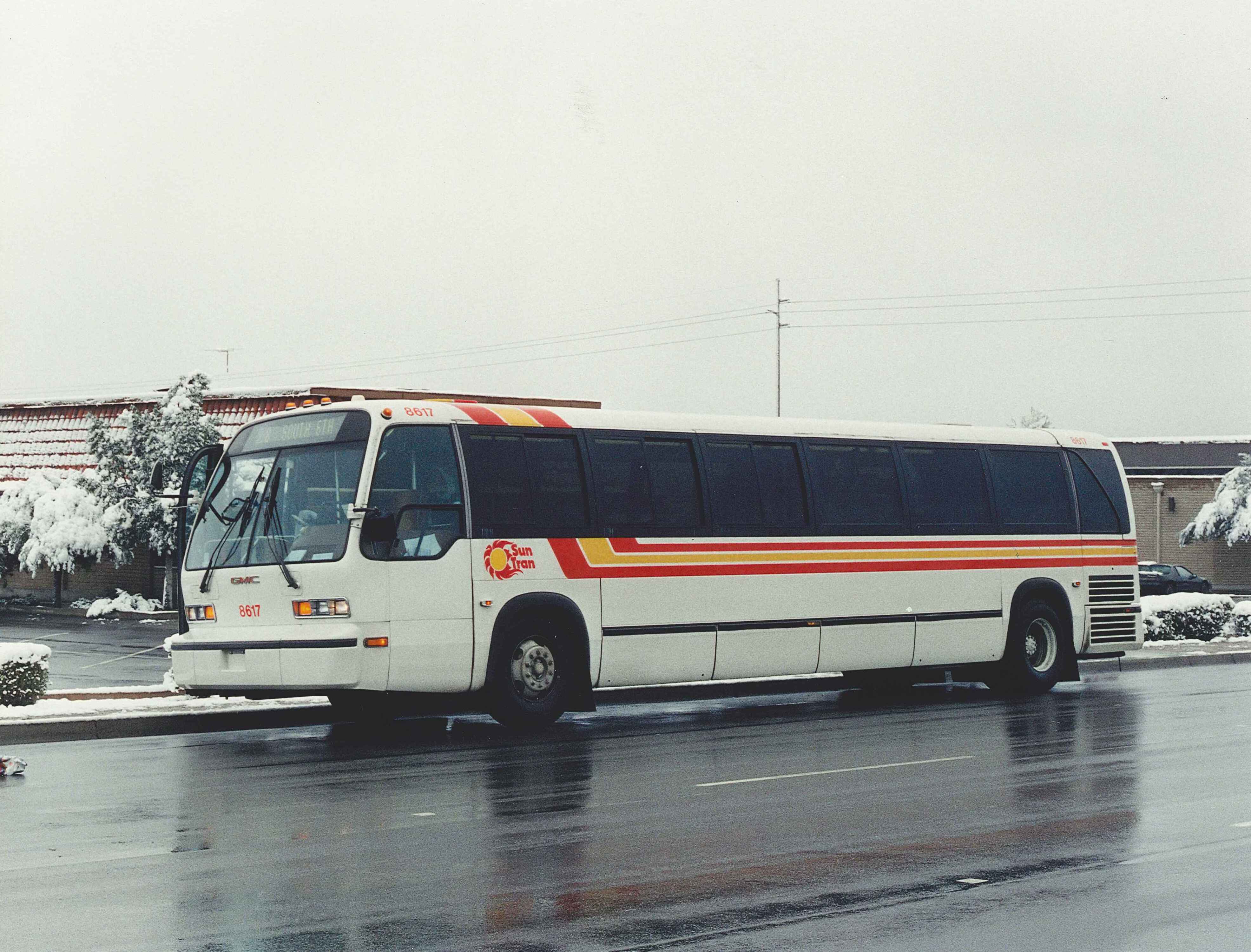
Sun Tran bus 8617 on route 8 in a snowy day, 1987.
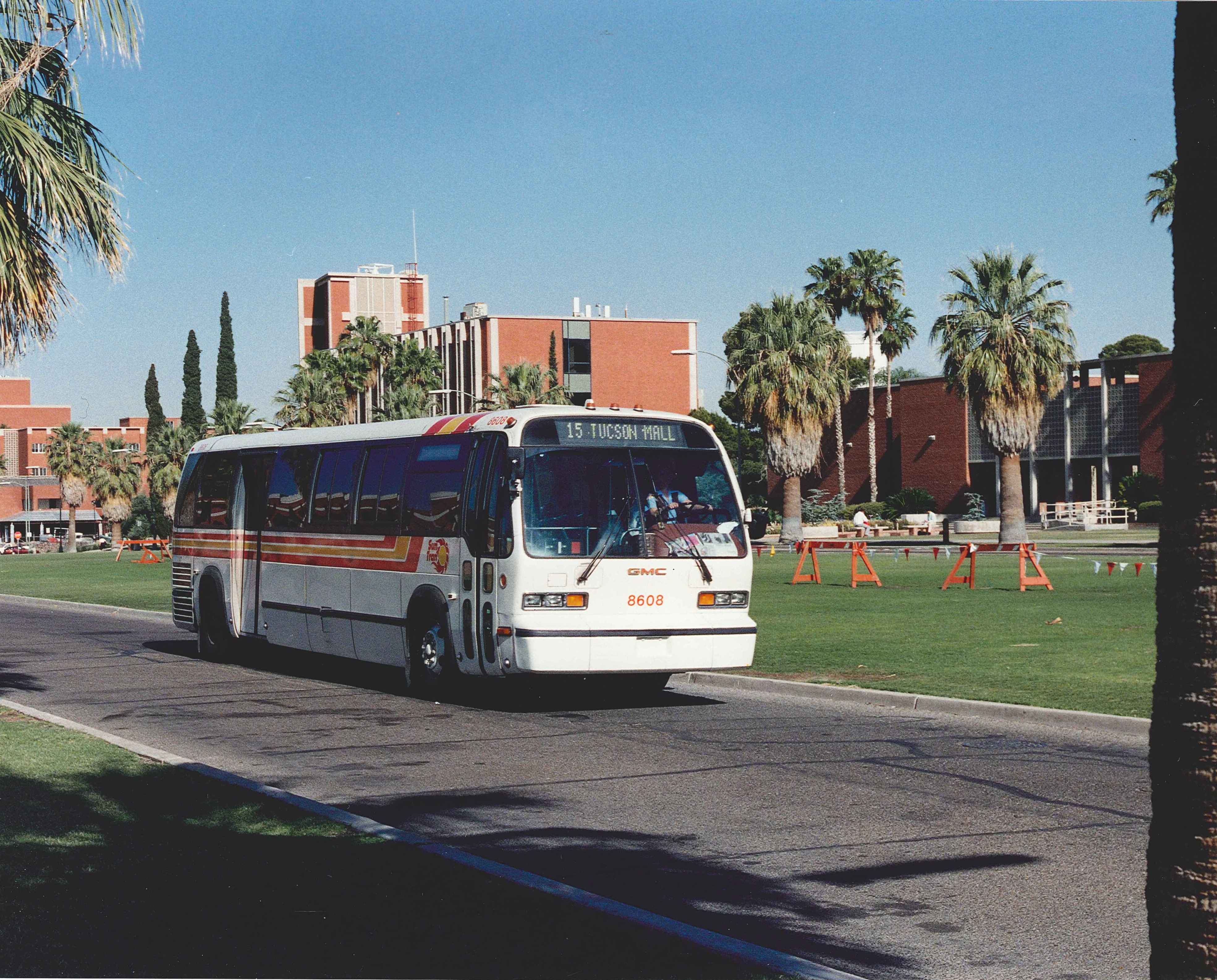
Sun Tran bus 8608 at the Univeristy of Arizona Mall, 1989.
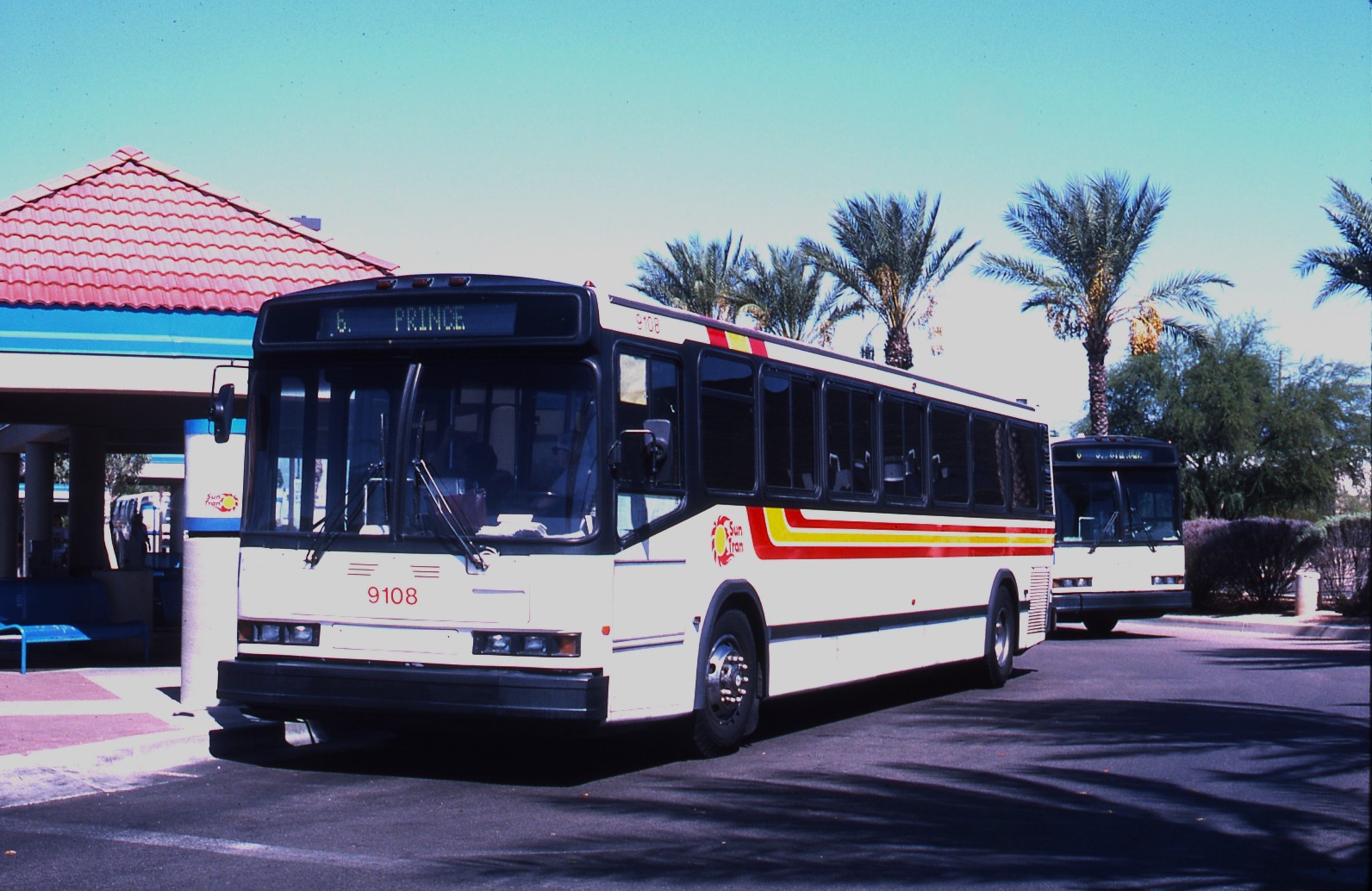
Sun Tran bus 9108 at Laos Transit Center.
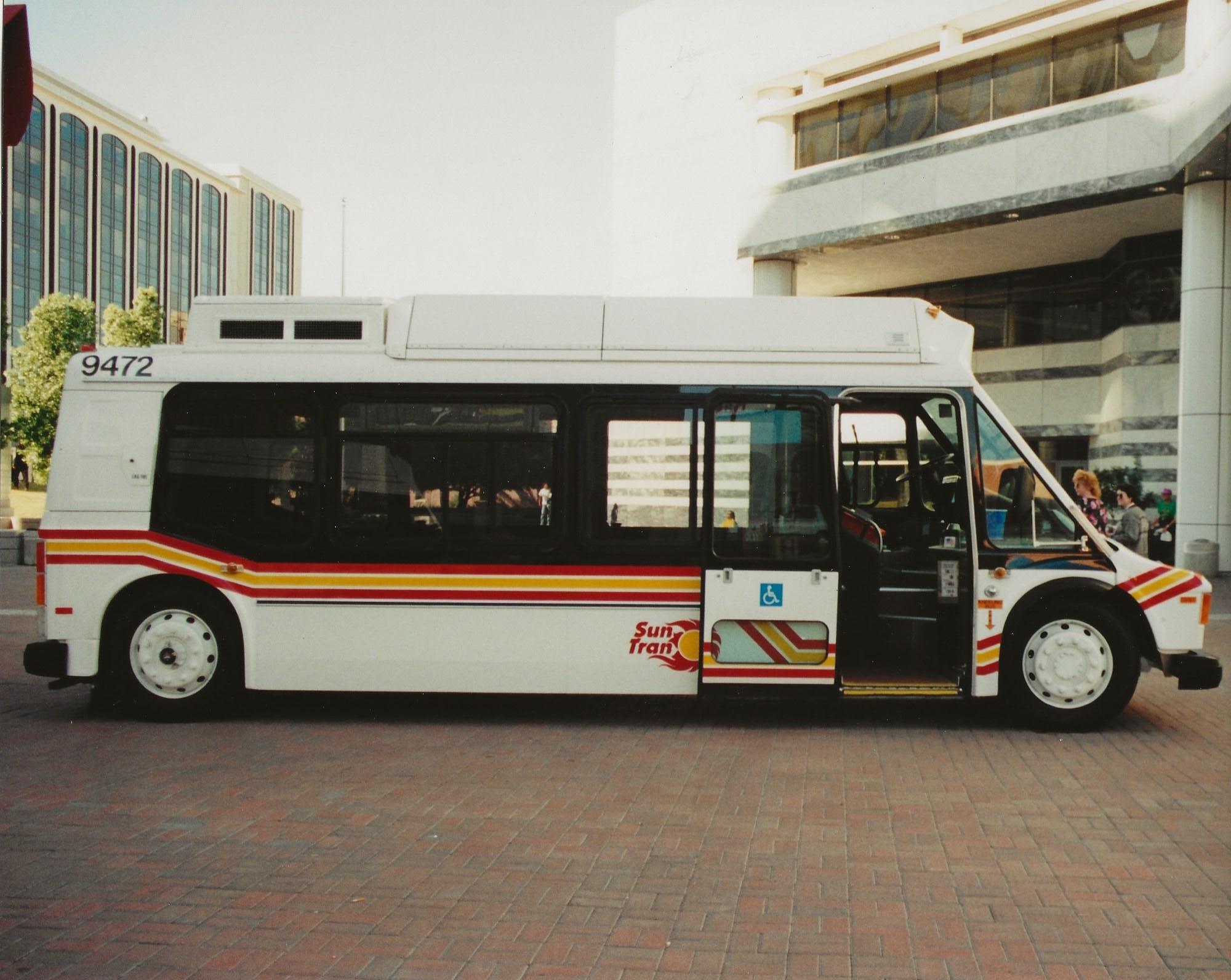
One of Sun Tran’s Mini buses at Jacome Plaza, 1994.

Coonstruction of Tohono Tadai Transit Center, 90s.
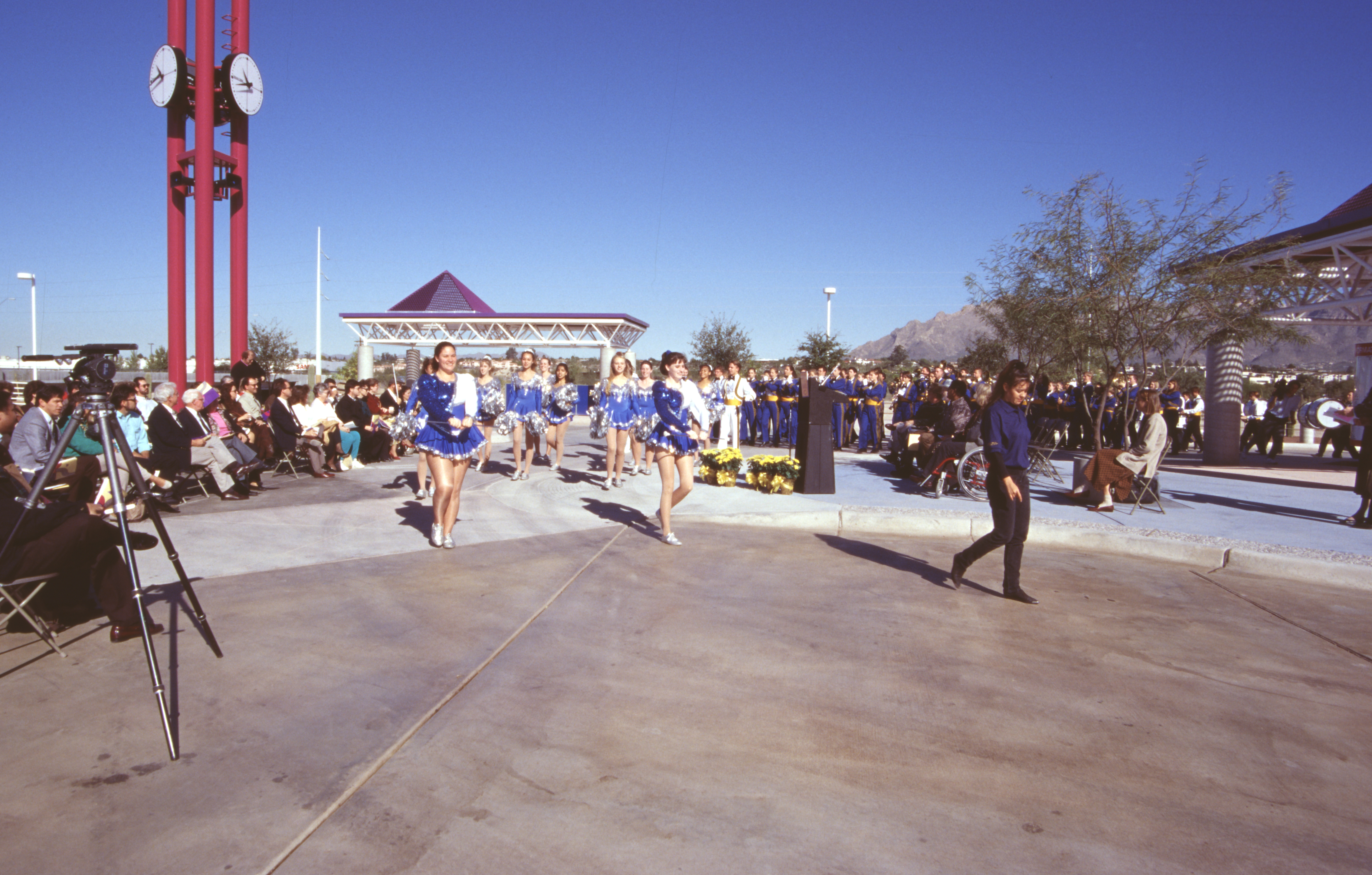
Grand opening of Tohono Tadai Transit Center, 1994.
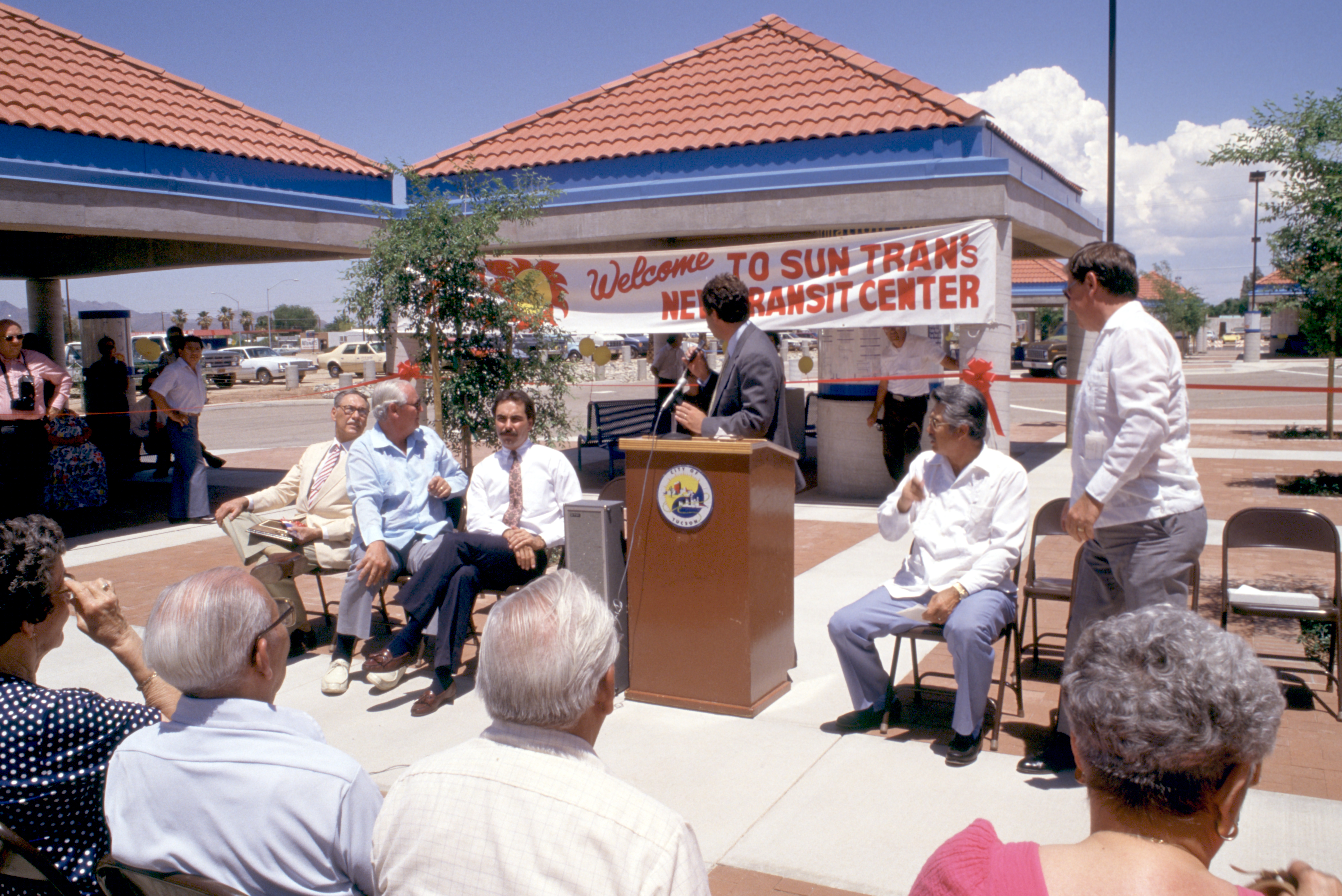
Grand opening of Laos Transit Center, 1987.
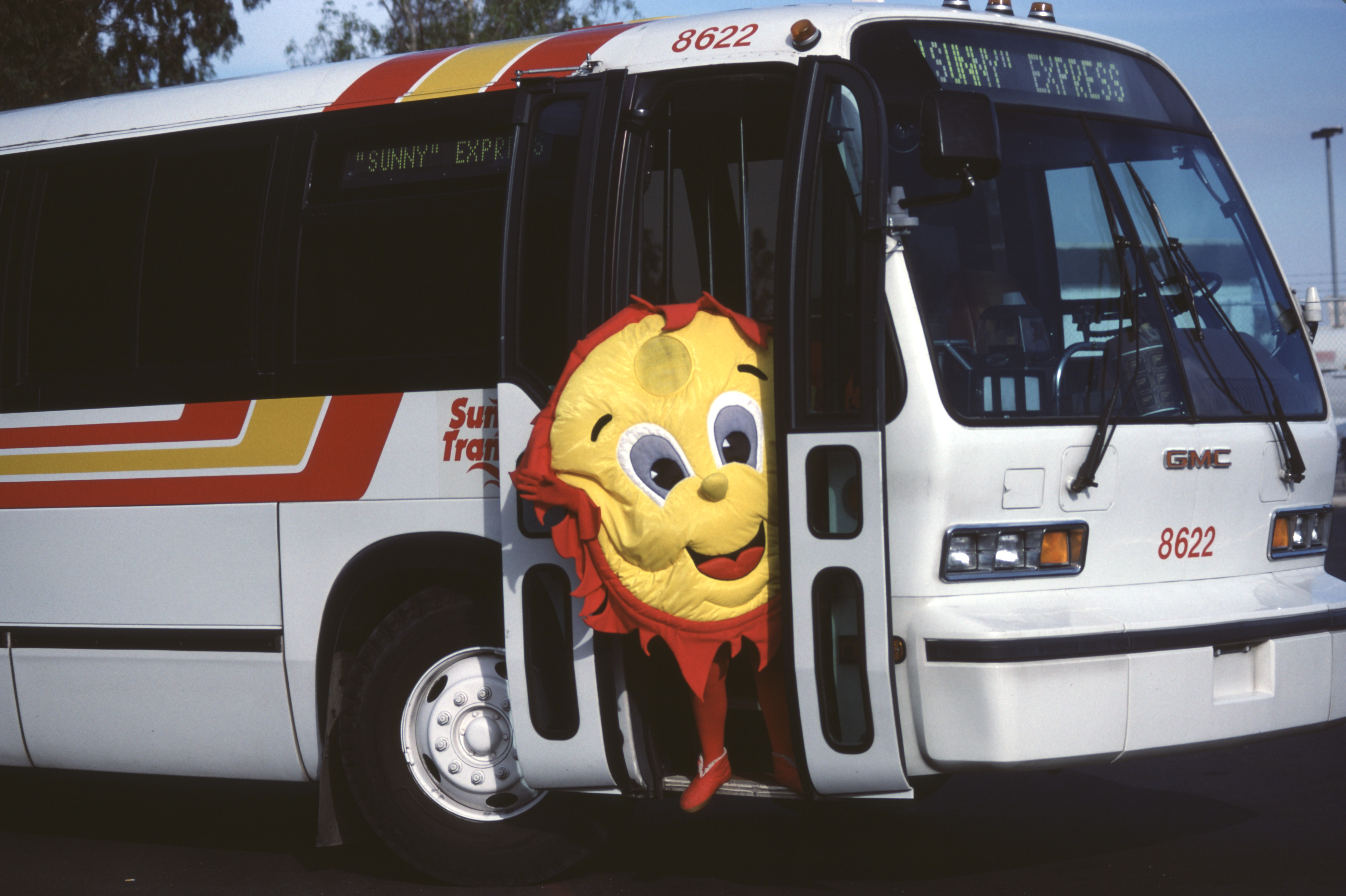
Sun Tran’s mascot Sunny, 1987.
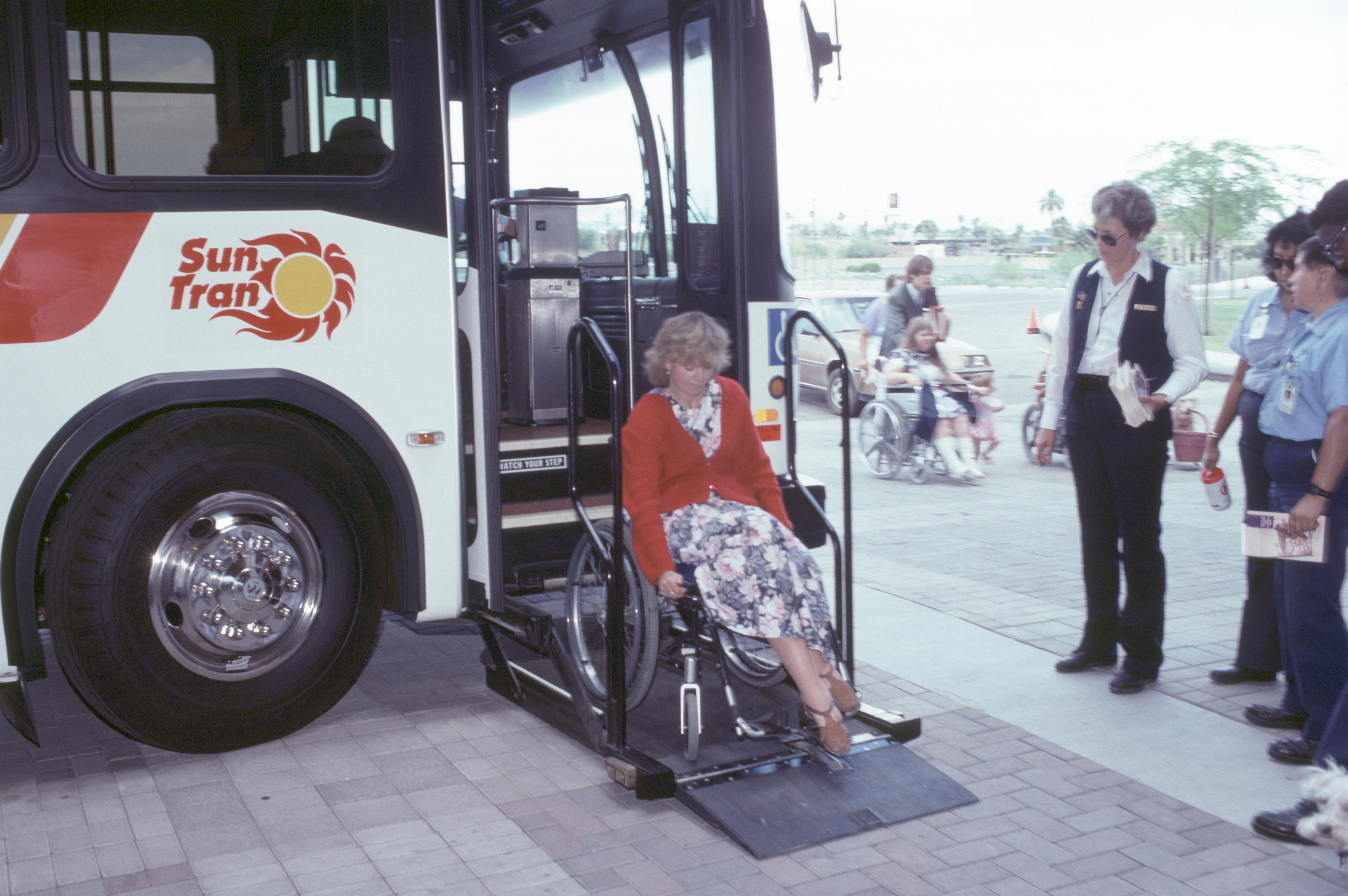
Mobility expo to introduced Sun Tran’s accessibility buses, 1991.
2001 – Present: Transit Today
Bus turning on 6th St, 2003.
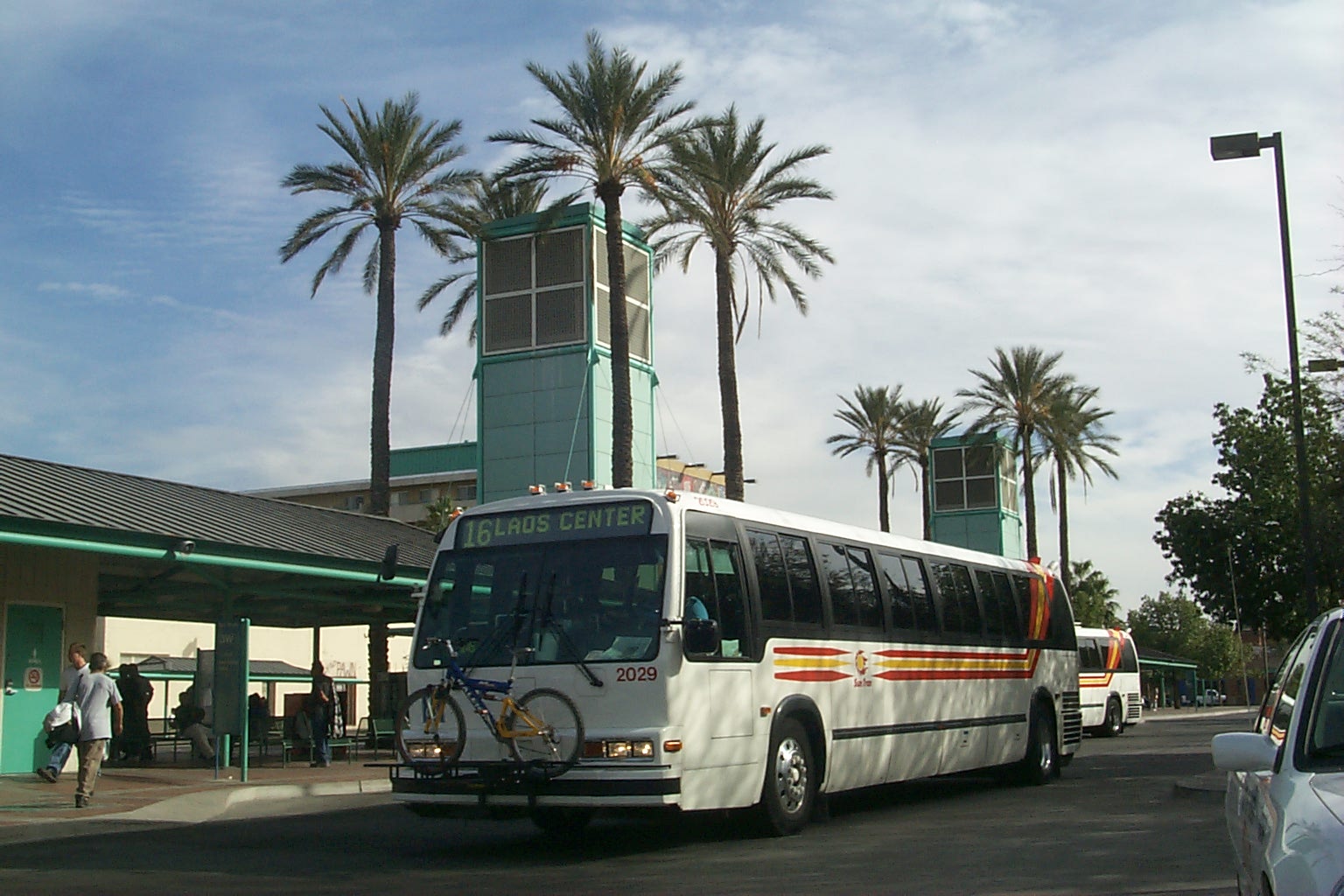
Bus at Ronstadt Transit Center.
New Sun Tran bus look passing by La Placita.
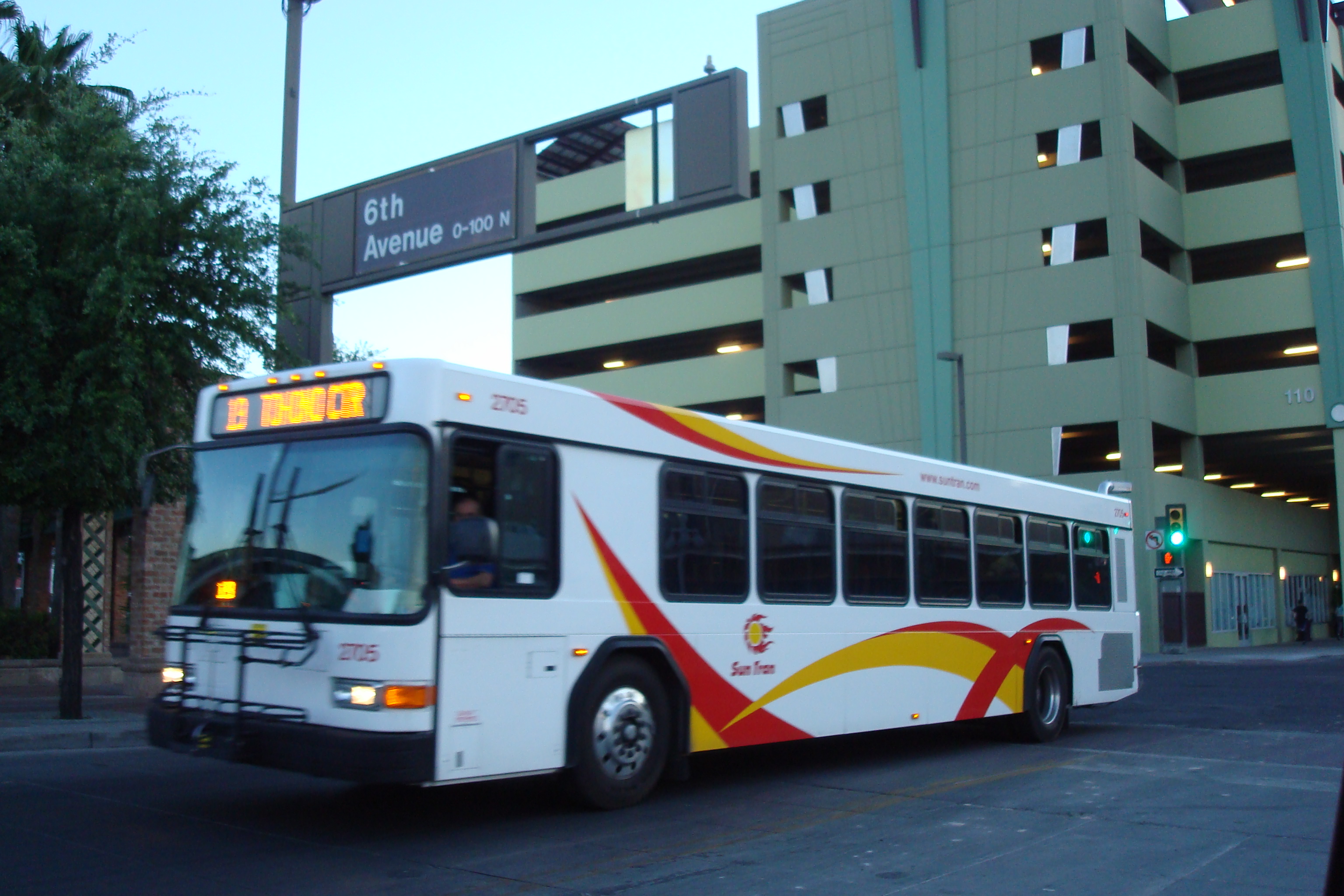
Bus entering Ronstadt Transit Center, 2009.
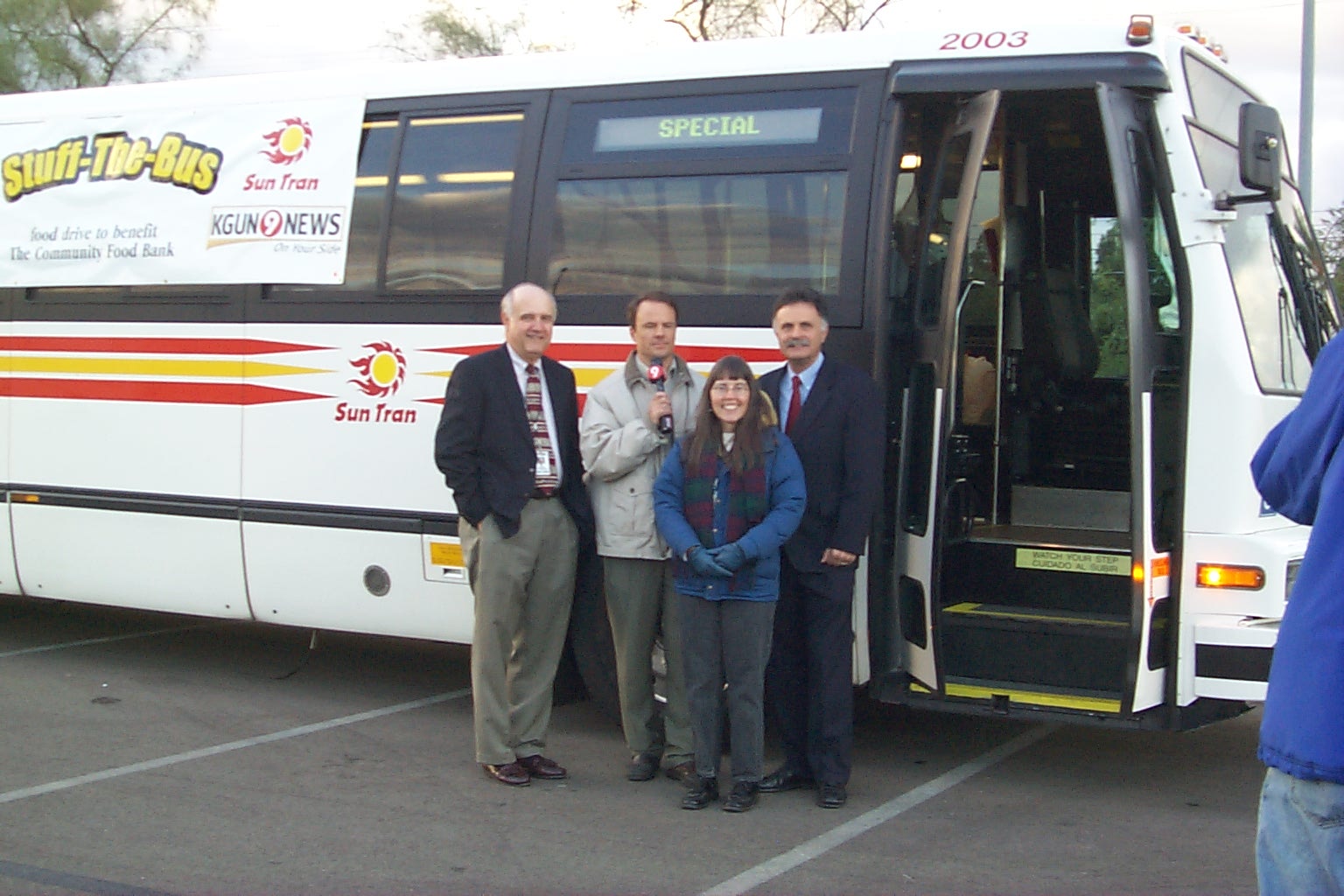
2002 Stuff the Bus.
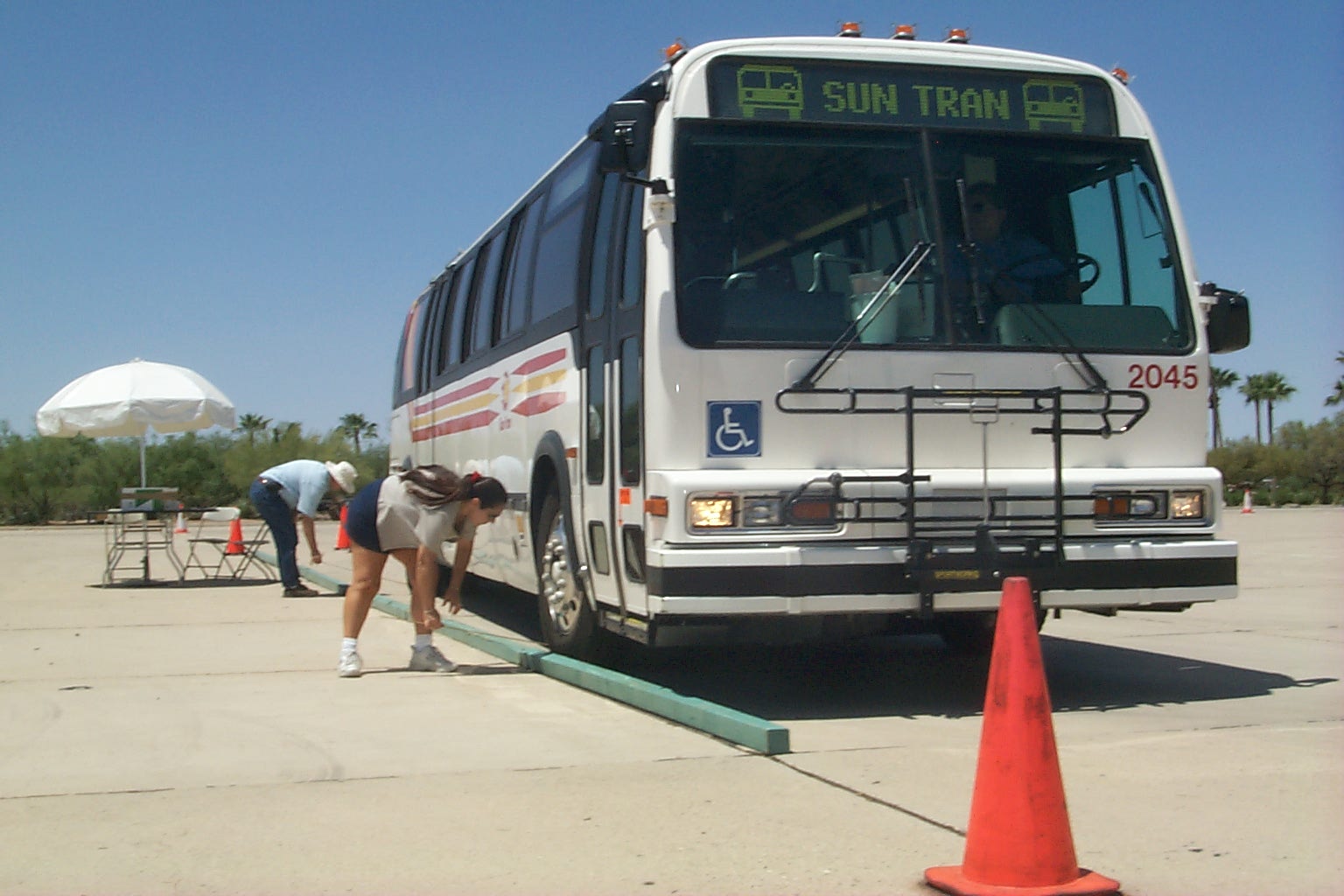
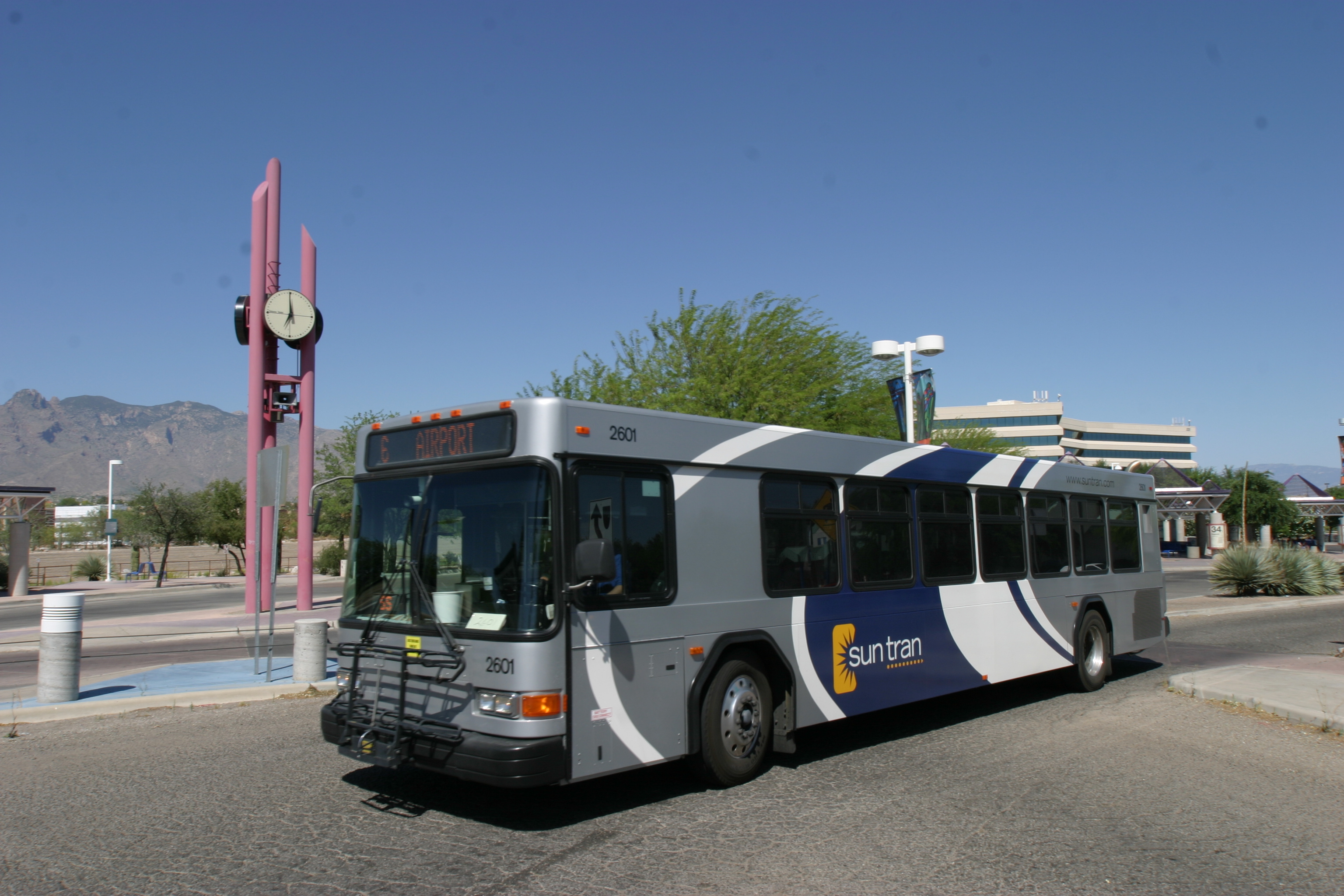
New Sun Tran look, 2010.
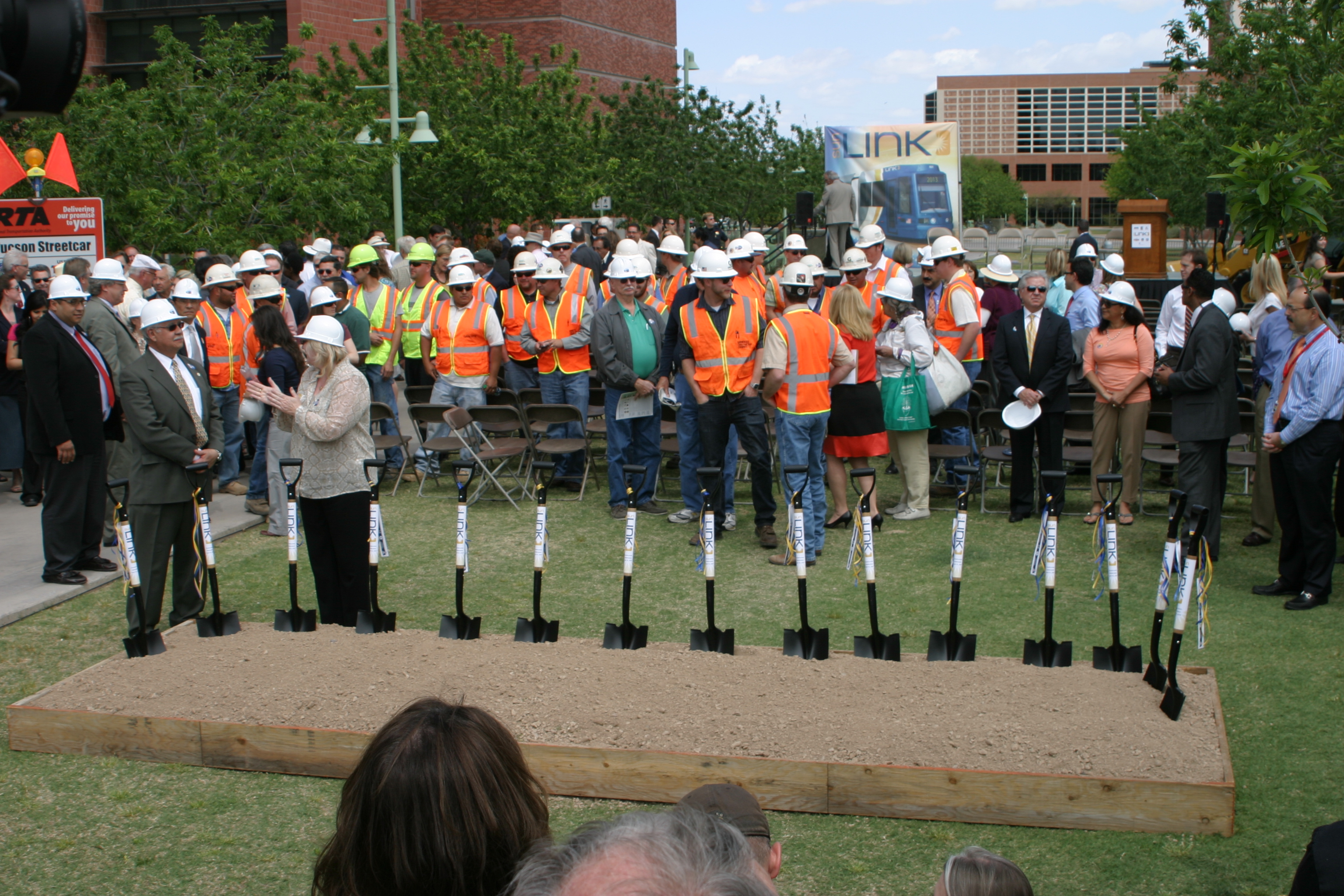
Groundbreaking ceremony for the Sun Link Streetcar, 2012.
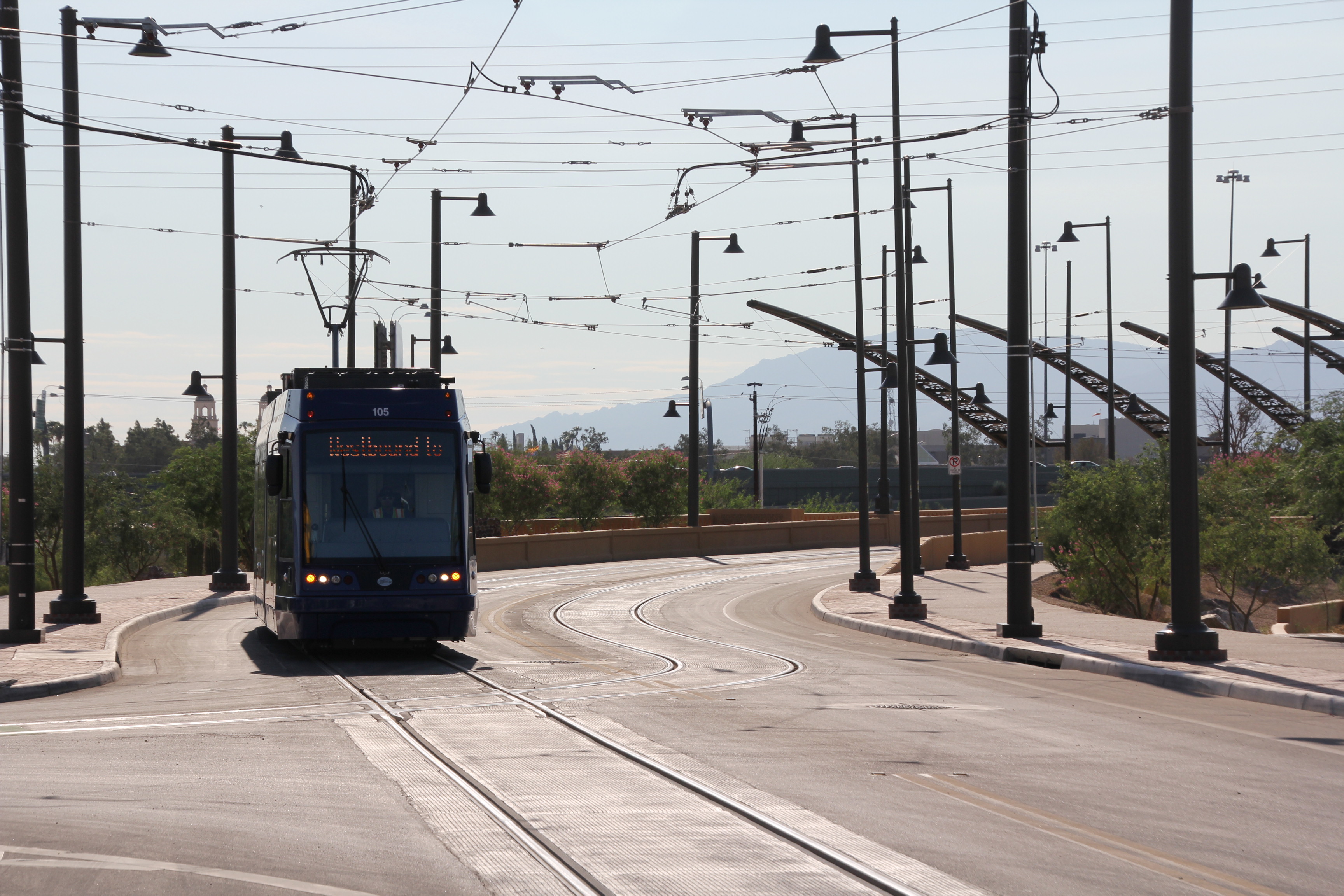
Grand opening of the Sun Link Streetcar, 2014.
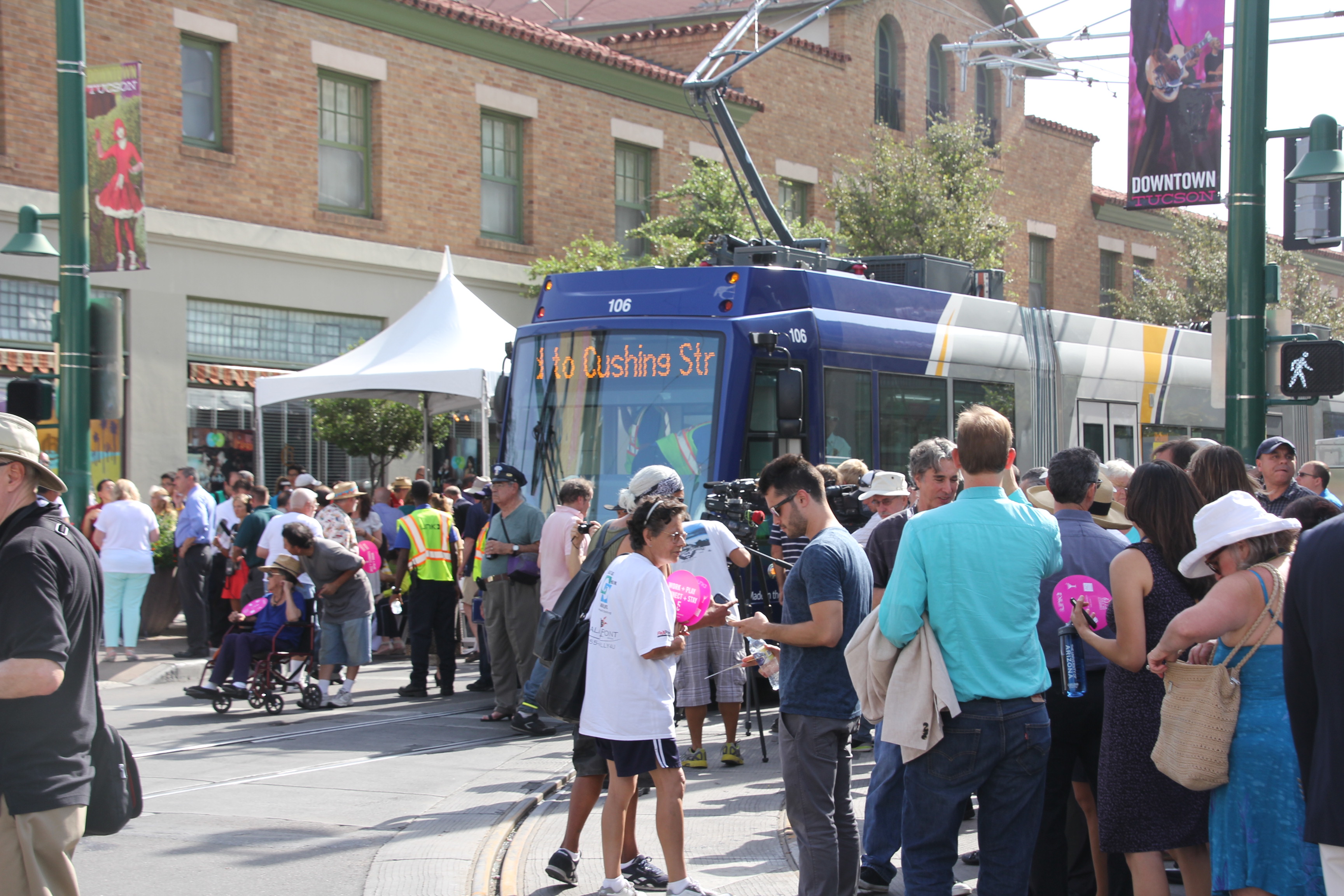
Sun Link Grand opening with hundreds celebrating, 2014.
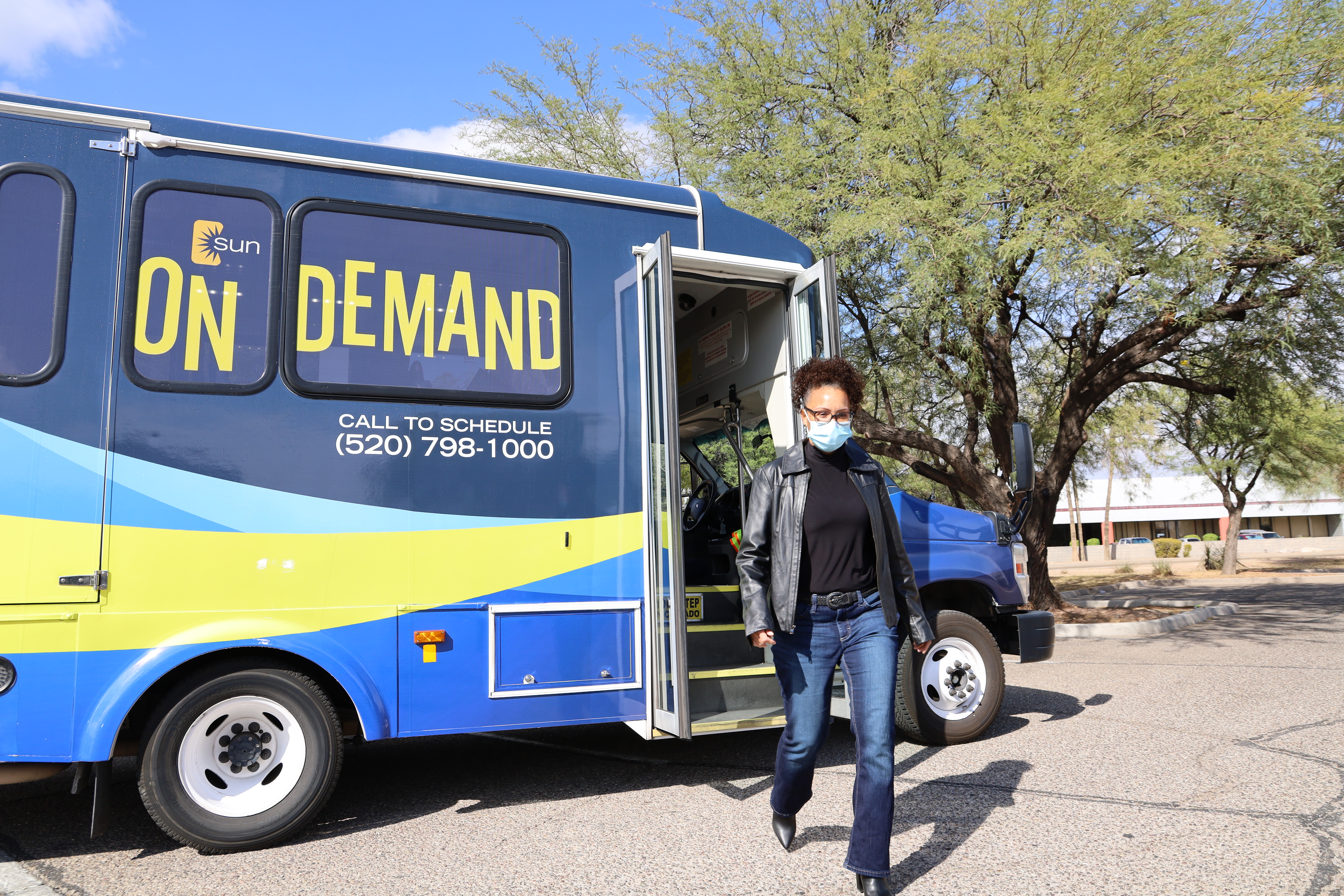
Sun On Demand is launched in 2020.
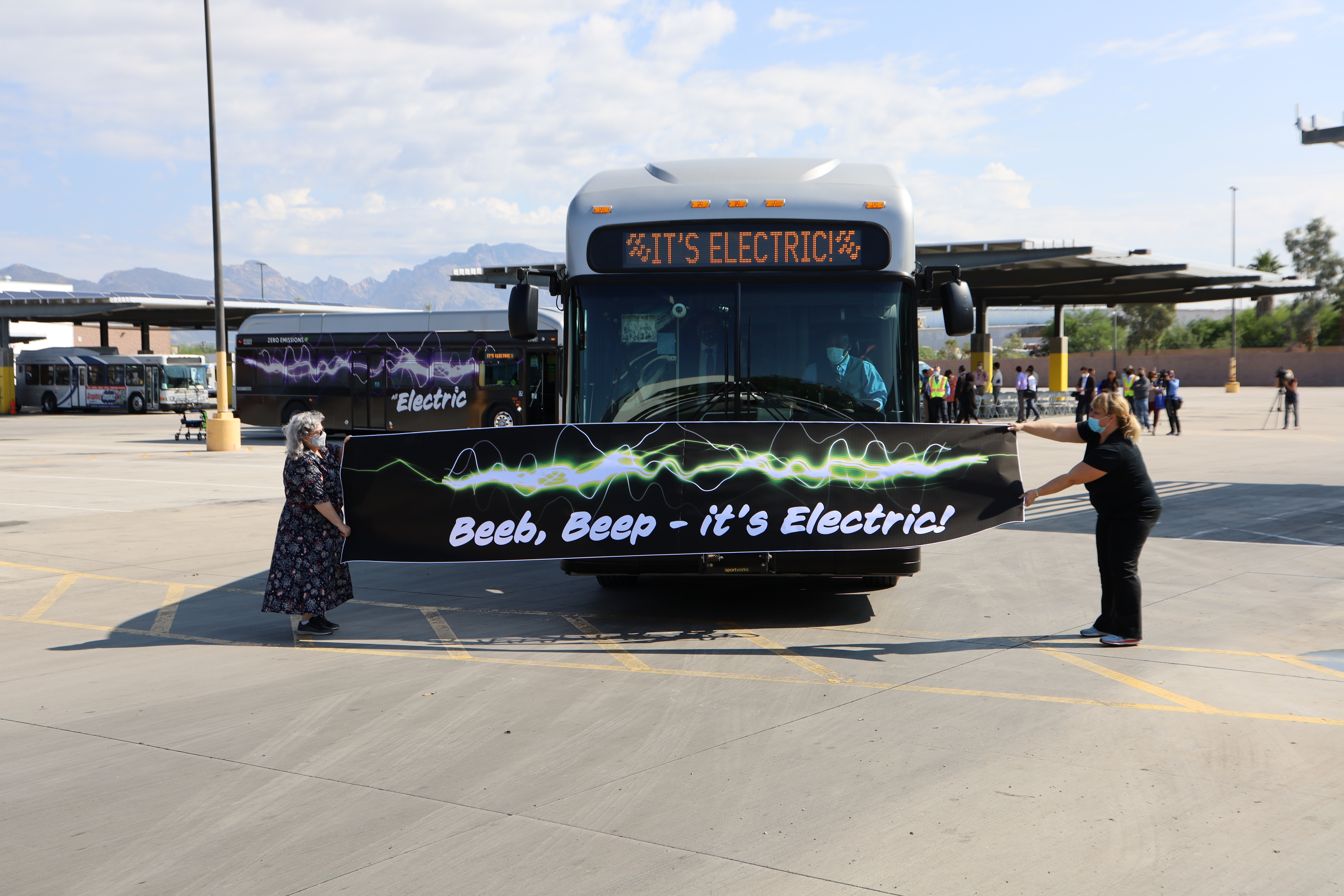
Sun Tran introduces five electric buses, 2021.
Sun Tran was awarded a $21.4 million grant from the FTA to purchase CNG buses, 2023.
Groove Back to 1975 ????
What better way to celebrate Sun Tran’s beginnings than with the sounds of the era? Our specially curated Spotify playlist takes you on a musical journey to 1975, featuring the hits that ruled the airwaves when Sun Tran first hit the streets. Press play, take a seat, and let the music transport you back to a time of disco, rock, and everything in between!

Follow us @Sun Tran Tucson
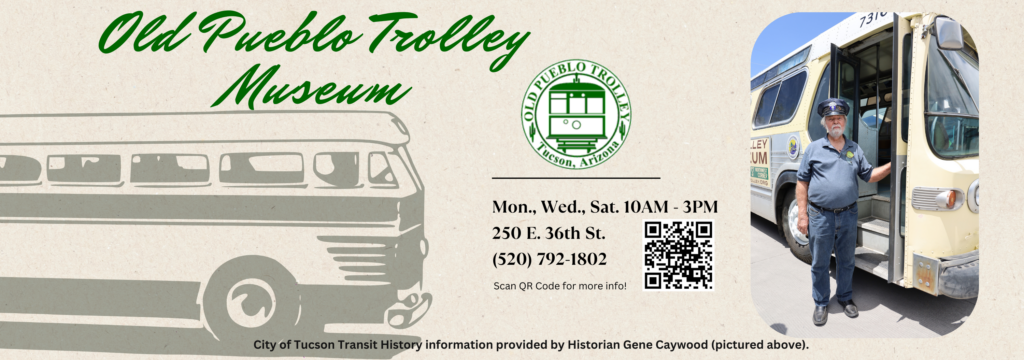
Annual Reports
Read our latest annual reports and learn about our ridership, initiatives and positive community impacts throughout the year.
*The FY24 original report was published with a slight Sun Tran and Sun Van ridership discrepancy. This discrepancy was corrected and the report republished on 8/6/25.
Monthly Operations Reports
Sun Tran tracks performance indicators and routinely analyze the data to improve those metrics and stay competitive with peer systems benchmarks. Browse our latest report for ridership statistics, on-time performance percentages, revenue and expenditure data, and departmental highlights.
Monthly Operation Reports – 2026
Monthly Operation Reports – 2025

Monthly Operation Reports – 2024
Reports, Plans & Surveys
- Transit COA Final Report_2024
- B_Transit COA_Milestone One_Final_2024
- C_Transit COA_Milestone Two_Final_2024
- D_Public Involvement Phase 1 Summary_Final_2024
- E_Public Involvement Phase 2 Summary_Final_2024
- F_Public Involvement Phase 3 Summary_Final_2024
- G_Sun Tran Service Standards_Final_2024
- H_Sun Tran Bus Stop Amenity Policy_Final_2024

Discover how we’re building a better transit system for our community! This section highlights our past and current projects, showcasing the improvements we’re working on and their impact. You’ll also find detailed information about the grants we’ve received, including how the funds are being used to enhance services, improve infrastructure, and support sustainable growth.
Grants
Projects


Protecting The Environment
The service we provide at Sun Tran is essential to improving air quality in our community by taking cars off our busy streets and utilizing clean-burning fuels. Do your part, ride Sun Tran!
How is Sun Tran helping our environment?
Cleaner-Burning Fuels
Now 100 percent of Sun Tran’s fleet uses cleaner-burning fuels, including hybrid technology, Compressed Natural Gas (CNG) and Biodiesel. These fuels reduce emissions because they emit fewer particulates than traditional diesel-fueled vehicles. For more information on Sun Tran’s fleet, visit Fleet Facts.
Environmental Management System (EMS)
Sun Tran’s maintenance facility is one of the first United States transit maintenance facilities to earn EMS certification compliant with the ISO 14001 standard. What does ISO 14001 mean? It’s the system standard established by the International Organization for Standardization. Certification of the EMS to this standard demonstrates that an organization has a strong management system in place for continually improving its environmental performance with regards to regulatory compliance and pollution prevention.
Sun Tran is strongly committed to maintaining a safe and clean environment, preventing pollution and preserving the community’s natural desert resources.
Leadership In Energy and Environmental Design (LEED)
Sun Tran Northwest Facility was constructed as a LEED Gold and Silver Certified building and Sun Link Operations and Maintenance Facility is a LEED Silver Certified.
LEED Projects are certified by the United States Green Building Council. The goal of LEED is to create better buildings that are designed to:
- Lower operating costs and increase asset value
- Reduce waste sent to landfills
- Conserve energy and water
- Be healthier and safer for occupants
- Reduce harmful greenhouse gas emissions
Solar Powered Lights at Bus Shelters
Sun Tran takes advantage of living in sunny Tucson by utilizing solar energy to provide lighting at many bus shelters throughout our community. These shelters reduce the amount of energy we use to provide safe and well lit shelters for our passengers.
What can you do to help our environment?
Ride Sun Tran! Learn how much daily greenhouse gas you save by riding the bus instead of driving.
According to the American Public Transportation Association:
- Public transportation is reducing Americans’ energy bills.
- Each year, public transportation saves more than 45 million barrels of oil, which is equal to approximately one month of oil imports from Saudi Arabia, or half the energy used to manufacture all computers and electronic equipment in the U.S.
- Public transportation produces 95 percent less carbon monoxide and nearly half as much carbon dioxide for every passenger mile traveled.
- For every passenger mile traveled, public transportation is twice as fuel efficient as private automobiles.
Sun Tran, Sun Link and Sun Van are here to ensure our riders arrive safely at their destination as well as provide excellent customer service. Meet the teams that help keep Tucson moving! We’re here to help!
Passenger Safety
Transit Safety and Security Action Plan
The Transit Safety and Security Action Plan (“Safety and Security Plan”) provides a coordinated, system-wide roadmap to strengthen safety for bus operators, riders, and the broader community. Developed in response to Mayor and Council direction, the Plan reflects a comprehensive and ongoing engagement process, a structured set of actionable strategies, and an implementation approach designed to deliver immediate improvements while building toward long-term, sustainable safety outcomes. Click here to read report.
Safe Place
All Sun Tran buses and facilities are a Safe Place for our Tucson Youth. There is a yellow Safe Place sticker logo located on each Sun Tran bus near the front door of the bus. The sticker identifies the places that are safe for youth in crisis. All Operators and Supervisors are trained on what to do for a Youth in crisis. If you are in crisis and need help, board the bus and tell your driver you need help. The Driver will assist you right away.
Human Trafficking Awareness
All of Sun Tran’s buses feature a set of stickers notifying the public of human trafficking. The decals mark the vehicles as a Safe Place for endangered youth, and a haven for anyone experiencing trafficking. Human Trafficking is the use of force, fraud or coercion to get someone to perform labor or sex acts in exchange for money or something else of value such as a place to live or drugs. Click here for more information on Sun Tran’s Human Trafficking Awareness campaign.
Ride with Respect
The “Ride with Respect” Code of Conduct is customer-focused and aimed at creating the best rider experience while discouraging disruptive, intrusive, unsafe, or inappropriate behaviors on a transit vehicle or transit facility. We must all do our part so that our riders and our transit employees feel safe and secure on any Sun Tran, Sun Link, and Sun Van vehicles and/or at any transit facility. The Code of Conduct is enforced at all of our transit facilities, stops, and vehicles. Click here to learn more about the “Ride with Respect” Code of Conduct.
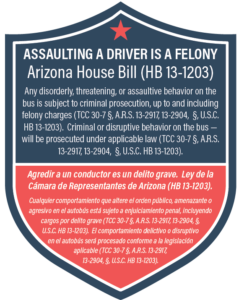
Arizona House Bill (HB 13-1203)- Assaulting a Driver is a Felony
Any disorderly, threatening, or assaultive behavior on the bus is subject to criminal prosecution, up to and including felony charges. Criminal or disruptive behavior on the bus will be prosecuted under applicable law.
Transit facility security
American Guard Services
The American Guard security team works closely with Sun Tran’s Safety & Security team. The American Guard officers routinely monitor Sun Tran’s transit centers, and ride selected buses to ensure the safety of our riders while on Sun Tran properties. If you need help or need to report an incident find an American Guard officer at any transit center.
See something, say something
Report suspicious activity if something does not look or feel right. Let an Operator or Sun Tran, Sun Link or Sun Van employee know of suspicious activity. In case of an emergency, call 911.
Security Cameras
All Sun Tran, Sun Link, Sun Van vehicles and transit centers are monitored by video surveillance cameras. Sun Tran vehicles are also equipped with audio surveillance systems. All surveillance is used for operator and passenger safety and security, training, investigations and other business purposes. The presence of these cameras contributes to a safer environment for passengers.
Bus Locator System
Each bus is tracked at all times using the Automated Vehicle Location (AVL) system which was installed in 1999. This decreases the response time in the event of an emergency.
Do Not Leave Items Behind
Please keep your personal items with you at all times. Items left behind could cause unnecessary security alerts and transportation delays. Call Customer Service (520) 792-9222 for Lost & Found as soon as you realize you forgot your items on any transit vehicle. To learn more about Lost & Found click here.
No Climb Fence at Laos Transit Center
For your security, do not climb the fence located on the east side of the Laos Transit Center. Please use the appropriate sidewalks to exit the transit center.
Transit Personnel
Safety & Security Team
The Safety and Security Department ensures that all Transit facilities are safe and reliable for employees and the public they serve. The department coordinates and responds to illegal behaviors, accident investigations, security upgrades, and manages the security contract.
Safety & Security Team
American Guard Services
American Guard Services is an established, reliable, and accredited security protection firm. The security officers deploy in various ways to monitor routes and facilities for both Sun Tran and Sun Link. Officers assist in providing a safer and more secure experience for transit users and employees. If you need help or would like to report an incident, talk to a security officer.
American Guard Officers
Security officers wear black or blue shirts along with vest.
Operators
Our professional Operators at Sun Tran, Sun Link, and Sun Van are the eyes and ears of Tucson’s transit system. Operators interact with the public, drive transit vehicles, and provide boarding assistance and route information. If you have any questions, need help and/or need to report a problem, talk to your operator.
Sun Tran Operator
Sun Tran Operators wear a blue or light blue shirt and Friday’s operators might wear a red polo. They may also wear a bright reflective safety vest along with their employee badge.
Sun Link Operator
Sun Link streetcar operators wear a blue shirt along with a bright reflective safety vest and employee badge.
Sun Van Operator
Sun Van operators wear a gray, teal or light blue shirt along with a bright reflective safety vest and employee badge.
Supervisors
Sun Tran, Sun Link, and Sun Van supervisors help support each transit operator on their routes, incidents reported, and continuously encourage safe behavior on transit vehicles and transit stations.
Sun Tran Supervisor
Sun Tran Supervisors wear a white polo or button-down shirt, and on Friday’s they may wear a red polo shirt. They may also wear a bright reflective safety vest along with their employee badge.
Sun Link Supervisor
Sun Link streetcar Supervisors wear either gray, charcoal gray or black shirts. They may also wear a bright colored safety vest along with their badges.
Sun Van Supervisor
Sun Van Supervisors wear a black, navy blue, teal, red or blue shirts. They may also wear a bright reflective vest with their employee badge.
Customer Satisfaction
Customer service assists riders with planning trips, informing riders about bus routes, bus times, service changes, detours, and finding accessible services. Riders can also contact customer service about Lost & Found, bus stops, shelter maintenance, and any other questions or comments. Customer Service representatives are also located at Roy Laos Transit Center and Downtown Ronstadt Transit Center. Sun Van reservationist assists ADA-eligible riders in booking their rides around the city of Tucson. Sun Van also allows riders to book and/or view their planned trips on the Sun Van Paratransit app.
Sun Tran Customer Service (520) 792-9222 TDD (520) 628-1565
Sun Van Reservationist (520) 798-1000 TDD (520) 628-1565
Customer Service
Customer Service (520) 792-9222 TDD (520) 628-1565
Hours:
- M-F: 6 a.m. – 7p.m.
- Sa-Su: 8 a.m. – 5 p.m.
Sun Van Reservationist
Call to book a reservation daily 7 a.m.- 4 p.m. (520) 798-1000 TDD (520) 884-5100
To learn more about Sun Van services click here.
Sun Link Right of Way Technicians
Sun Link’s Right of Way (ROW) technicians are most likely out working at Sun Link stations or any part of the streetcar tracks, making sure all rider facilities are safe and in good working condition. The team is either making repairs or inspecting the wires above. When working, ROW Technicians will be in a Sun Link vehicle with warning lights on and safety cones.
Right Of Way Technicians
ROW Technicians wear gray long sleeve, along with their bright colored safety vest and badge.
Operations Team
The operations department is the heart of the company, which has buses running 365 days a year. Operations is made up of supervisors, dispatchers, and the administration team. The administrative team schedules over 600 Operators between Sun Tran, Sun Link, and Sun Van to service Tucson.
Sun Tran Operations
Sun Link Operations
Sun Van Operations
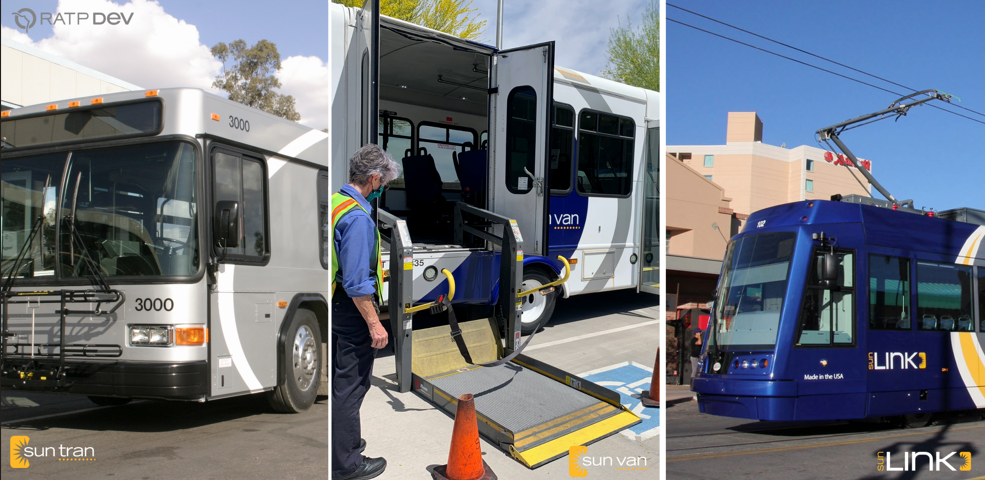
Leadership Team (RATP Dev)
The executive staff of General Manager, Assistant General Manager of Operations, Assistant General Manager of Sun Link, Assistant General Manager of Sun Van and Director of Safety & Security. The contracted management team is RAPT Dev and provides direction to further Sun Tran’s mission of providing quality transportation services to the greater Tucson community. The team is tasked with overseeing the day-to-day operations of Sun Tran, coordinating activities of all Sun Tran departments, and serving as a liaison with City of Tucson’s Department of Transportation.
Customer Satisfaction (Sun Tran, Sun Link and Sun Shuttle)
Sun Tran’s Customer Satisfaction team includes representatives who receive, respond to, and track customer feedback; provide trip planning assistance and other service information. Representatives are available by phone Monday through Friday from 6 a.m.-7 p.m. and Saturday/Sunday from 8 a.m. – 5 p.m. Representatives are available at Laos and Ronstadt Transit Center booths Monday-Friday from 8:30 a.m. to 4:30 p.m. Lost & Found is available by appointment at 3920 N. Sun Tran Blvd. Monday-Friday 8a.m.- 4 p.m. Representatives can be reached at (520) 792-9222 TDD (520)628-1565 or by emailing suntraninfo.com. Special holiday hours may affect availability.
Reservations (Sun Van & Sun On Demand)
Sun Van and Sun On Demand Reservationist includes representatives who provide trip booking, planning assistance and other service information. Representatives are available by phone Monday through Sunday 7 a.m.-4 p.m. Representatives can be reached by calling (520) 798-1000 TDD (520) 884-5100 or by emailing suntraninfo.com. Special holiday hours may affect availability.
Facilities
The Facilities Department manages the upkeep and operations of Sun Tran’s three transit centers, two bus maintenance facilities, administrative building, and nearly 2,100 bus stops. Working closely with the Maintenance Department, the team ensures all facilities meet safety, compliance, and environmental standards while supporting Sun Tran’s Environmental Management System.
Key responsibilities include maintaining buildings, infrastructure, and critical systems such as HVAC, plumbing, electrical, and elevators; providing janitorial services and sanitation efforts; and handling emergency and routine repairs. The department also oversees security and fire safety systems, environmental and sustainability initiatives, groundskeeping, and compliance with ADA, OSHA, and fire codes. In addition, Facilities plays a role in capital projects, infrastructure upgrades, and inspections to ensure safe, efficient, and accessible transit operations.
Procurement
The Procurement Department manages capital and operational purchases for Sun Tran, Sun Link, and Sun Van, while overseeing vendor contracts and competitive bidding opportunities. The team ensures all acquisitions — from vehicles and equipment to construction, technology, and services — are conducted with transparency, compliance, and fiscal responsibility.
Core responsibilities include purchasing buses, vans, parts, and fare systems; contracting for construction, maintenance, security, IT, and other services; and ensuring adherence to federal, state, and local procurement laws, including FTA guidelines. The department also manages budgets, conducts cost-benefit analyses, evaluates and monitors vendors, and supports sustainability and equity goals such as DBE participation and environmentally responsible purchasing. Procurement bidding and vendor opportunities can be found at suntran.com/opportunities
Finance & Accounting
The Finance and Accounting Department safeguards Sun Tran’s financial integrity by managing a $90 million budget, maintaining the general ledger, and overseeing fixed assets. The team develops and monitors annual operating and capital budgets for Sun Tran, Sun Van, and Sun Link, while also processing payroll for nearly 800 employees and managing accounts payable and receivable.
Key functions include financial planning and reporting, grant management, and ensuring compliance with federal, state, and local funding requirements. The department handles payroll and employee benefits, prepares financial statements and audits, tracks revenue sources, and manages debt, investments, and cash flow. By maintaining strong internal controls, Finance ensures transparency, accountability, and the efficient use of public funds.
Human Resources
The Human Resources Department supports Sun Tran by recruiting, training, and retaining a skilled workforce while ensuring compliance with labor laws and fostering a positive workplace culture. HR manages employee benefits, labor relations, and policies that promote diversity, equity, and inclusion across the organization.
Core responsibilities include hiring and onboarding staff, administering benefits and compensation, and supporting labor union negotiations and contract compliance. The department coordinates training programs for safety, compliance, and professional development, enforces workplace policies, and addresses employee relations issues. HR also partners with Risk Management on health, safety, and wellness initiatives, including drug and alcohol testing for safety-sensitive roles, to maintain a safe and supportive work environment.
Maintenance
The Maintenance Department is responsible for keeping Sun Tran’s fleet, facilities, and equipment safe, reliable, and efficient. This includes servicing 185 buses (126 CNG, 10 hybrids, 10 battery-electric, and 39 diesel), maintaining transit centers and garages, and ensuring compliance with all safety and regulatory standards. The department plays a vital role in minimizing service disruptions, reducing costs, and supporting rider safety and satisfaction.
Key functions include preventive and corrective vehicle maintenance, diagnostics, cleaning, and component replacement. The team also manages infrastructure and facility upkeep, oversees garage and fueling equipment, and ensures safe operation of tools and systems. Additional responsibilities include inventory and parts management, technician scheduling and training, data-driven maintenance planning, and emergency response to breakdowns or incidents. Through strong compliance practices and workforce development, the Maintenance Department ensures Sun Tran’s transit system operates smoothly and efficiently.
Management Information Systems
The MIS department manages Sun Tran’s network infrastructure, phone, and computer systems, as well as the on-board cameras. Support for the company’s e-mail and internet access is provided by MIS. The department is also responsible for the automated vehicle locator (AVL), fleet maintenance, fixed route scheduling, and customer information software systems.
Marketing
The Marketing Department promotes Sun Tran, Sun Link, and Sun Van services to increase ridership, enhance public perception, and ensure clear communication with the community. Its focus includes building brand awareness, encouraging transit usage, and maintaining a positive image across all platforms.
Key responsibilities include managing strategic marketing campaigns, advertising, and targeted outreach for specific rider groups. The team handles public information, service alerts, and crisis communications, while maintaining the website, social media, email, and SMS channels. Marketing also conducts market research, analyzes ridership data, and develops creative content such as graphics, videos, and copy for both digital and print materials. Additional duties include designing wayfinding signage, producing transit guides, coordinating community engagement events, promoting fare incentives and partnerships, and managing media relations and public relations efforts to maintain Sun Tran’s positive reputation.
Operations
The Operations Department is responsible for delivering Sun Tran’s daily transit services, deploying 379 drivers, 23 supervisors, and 6 administrative staff to run buses safely and efficiently 365 days a year. Frontline coach operators interact with the public, provide route information, and ensure smooth boarding, while supervisors support drivers, monitor on-time performance, and manage daily service delivery.
Key responsibilities include managing vehicle operations, operator scheduling, and route planning, as well as monitoring service in real time through the Transit Control Center. The department handles incident response, emergency management, and service adjustments, while ensuring compliance with safety regulations, union agreements, and licensing requirements. Operations coordinates closely with Maintenance, Customer Service, and IT to maintain reliable service, tracks performance metrics such as on-time performance and ridership, and supports special events, fare enforcement, and frontline customer interactions.
Safety & Security
The Safety and Security Department protects Sun Tran’s passengers, employees, assets, and infrastructure while ensuring compliance with state and federal regulations. The team oversees security operations, enforces safety protocols, coordinates emergency preparedness, investigates incidents, and manages risk to maintain a safe and reliable transit system.
Key responsibilities include physical security and fare enforcement, monitoring surveillance systems, conducting patrols, and coordinating with law enforcement. The department manages safety programs for employees and vehicles, performs hazard inspections of facilities, and conducts accident investigations and safety audits. It also develops and executes emergency response plans, trains staff on crisis procedures, and ensures regulatory compliance through audits and documentation. Additional duties include risk assessment, corrective actions, and public safety education campaigns to promote safe rider behavior and community awareness.
Service Planning & Development
The Service Planning & Development Department designs, monitors, and optimizes Sun Tran’s transit services to ensure safe, reliable, and equitable operations. The team develops routes, schedules, and driver work assignments, monitors on-time performance, analyzes ridership trends, and coordinates with Operations, Marketing, and city departments to support efficient service and infrastructure improvements.
Key responsibilities include route and schedule planning, performance monitoring using tools like GIS and AVL, and adjusting services for demand, construction, or special events. The department conducts community outreach and public input processes, ensuring compliance with Title VI and Environmental Justice requirements. Staff also support long-range transit planning, policy development, and grant/funding documentation to align services with regional mobility goals and future transit expansion projects.
Explore our fleet facts! Get an inside look at the vehicles that power Sun Tran, Sun Link, Sun Van, and Sun On Demand. This section features a detailed fact sheet highlighting fleet sizes and vehicle sizes.